Match the fix to when green returns
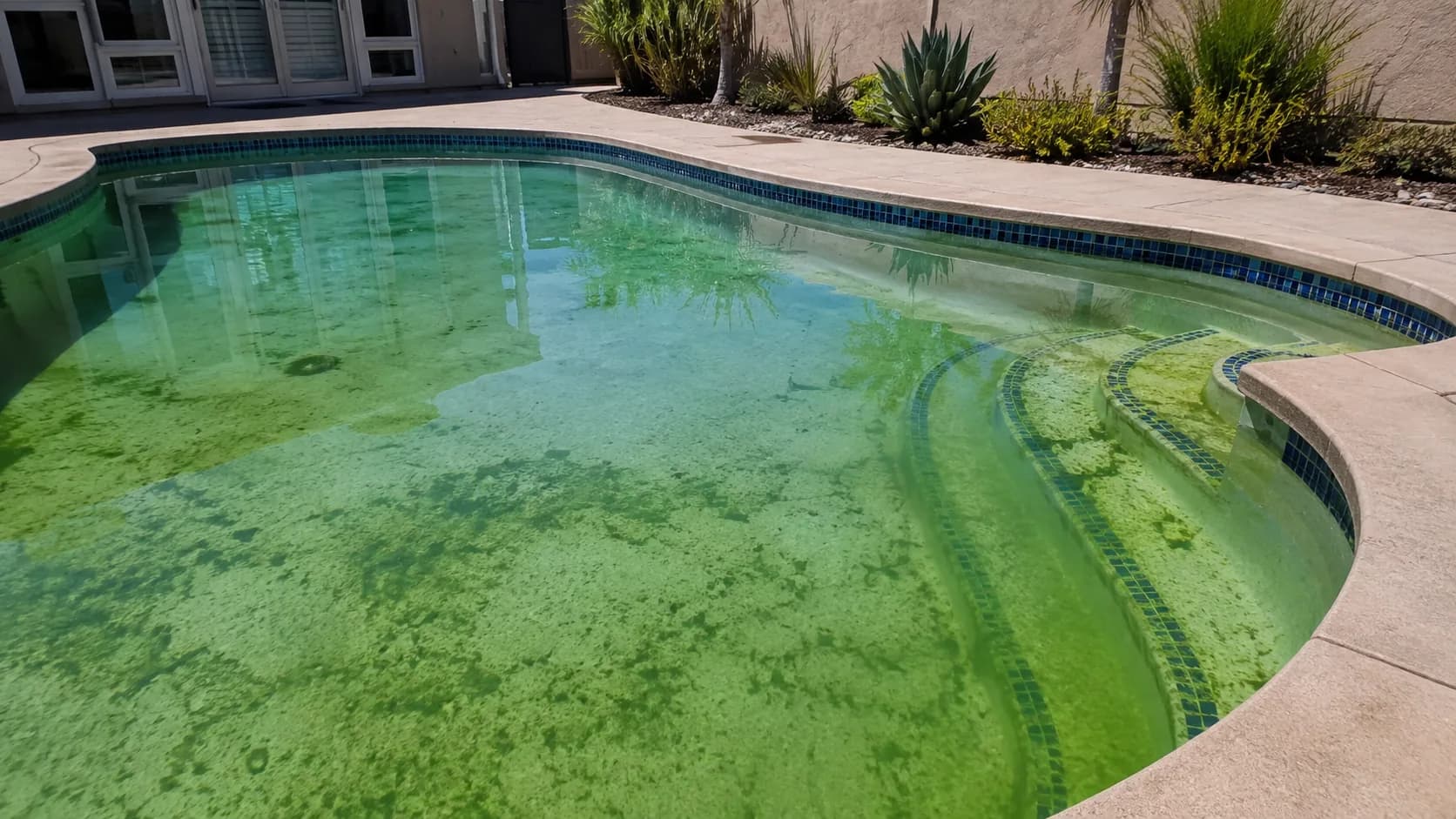
Your pool keeps turning green because algae survive treatment or chlorine protection drops again between treatments. Green patches returning in the same corners suggest brushing or circulation gaps, while transparent green water immediately after chlorine calls for a metals test.
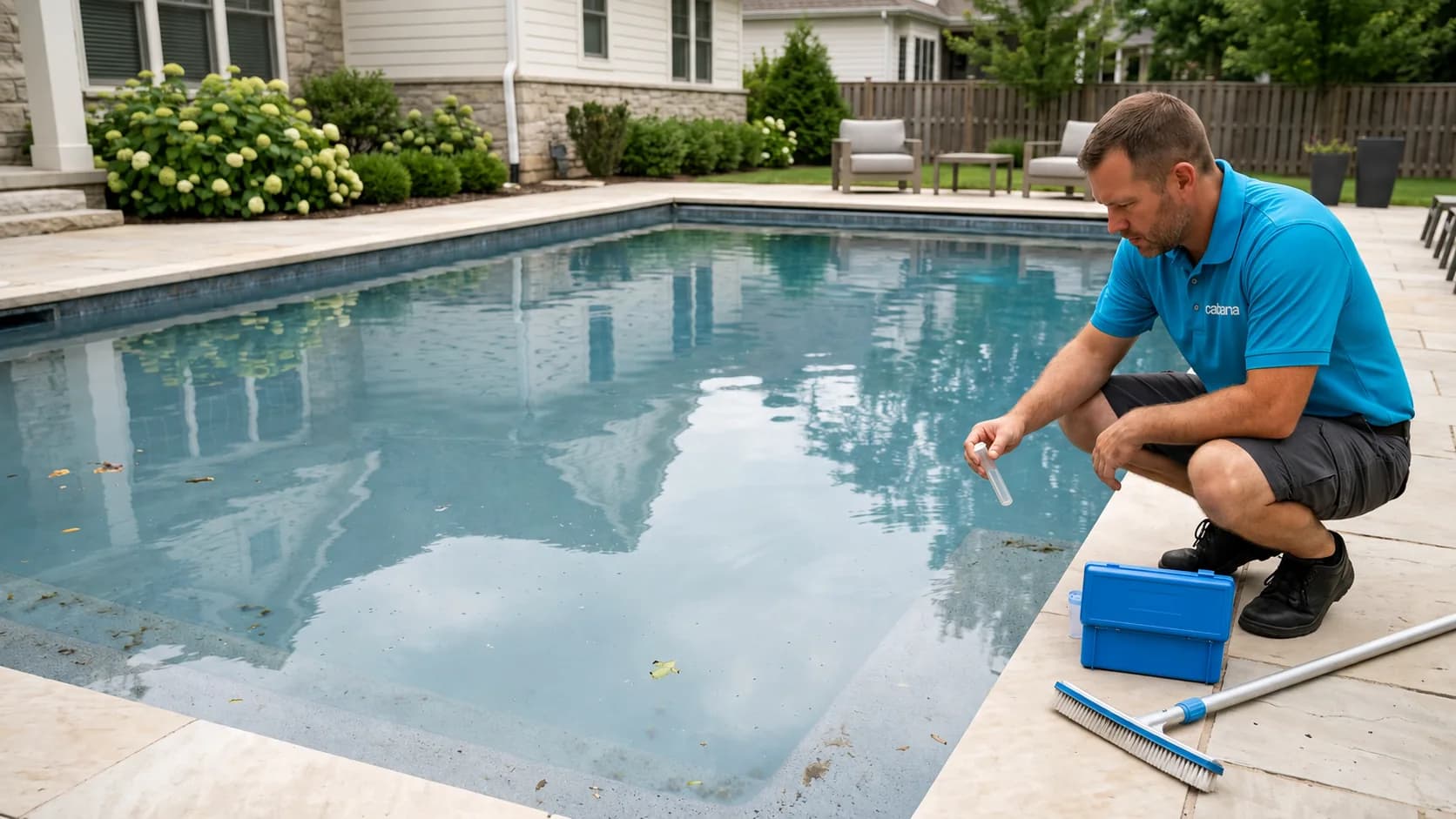
For a recurring problem, record when the pool cleared, when green returned, and where it appeared first. Those details help separate an unfinished cleanup from a chlorine supply that cannot keep up.
| Which pattern matches your pool? | What it suggests | Where to focus below |
|---|---|---|
| Green returns within days of clearing | Algae may have survived, or chlorine may have fallen too low after treatment. | Read chlorine and stabilizer together, then confirm recovery with the overnight check. |
| Green returns only around the same steps or corners | Attached algae may be escaping brushing or receiving poor water movement. | Use the brushing and circulation checks in the cleanup section. |
| Green follows wind, hot afternoons, or heavy swimming | The usual chlorine supply may no longer cover demand. | Check whether your chlorine schedule keeps up in hot or windy weeks. |
| Water turns transparent green right after adding chlorine | Chlorine may have reacted with dissolved metals, including copper. | Have the water tested for metals before repeating algae treatment. |
Color and timing guide the next test; they do not establish the cause alone. For water that changes color immediately after dosing, our guide to green pool water and the right fix explains how the treatment decision changes.
Read chlorine and stabilizer together
A pool can show some chlorine and still grow algae because its stabilizer level is too high for that chlorine reading. A familiar reading may stop being enough after months of using products that add stabilizer.
Stabilizer, also called cyanuric acid or CYA, protects chlorine from sunlight but reduces how much is immediately active. For outdoor pools using manually added chlorine, a commonly used working minimum for free chlorine is roughly 7.5 percent of CYA. At 40 parts per million, or ppm, CYA, that means at least 3 ppm free chlorine. At 80 ppm CYA, the same rule calls for at least 6 ppm.
That difference explains why repeating last month's dose can allow another outbreak. Keep enough margin above the minimum to cover the time between additions. Clearing an active outbreak requires a separate treatment target; salt systems also have their own operating guidance.
For many outdoor pools using conventional chlorine, 30 to 50 ppm CYA is a common operating range. Salt chlorine generators often specify higher levels. If CYA exceeds your system's intended range, address it before repeating the same treatment. If the test reaches its upper limit, confirm the actual concentration before planning water replacement.
Check the active ingredient on your tablet or shock container. Trichlor and dichlor add stabilizer with each dose. Evaporation leaves CYA behind, so topping off the pool does not remove accumulated stabilizer. Test CYA about monthly while regularly using these products, and before treating another outbreak.
Controlled partial draining and refilling with lower-CYA water is the practical, reliable way to reduce accumulated stabilizer. Replacing about half the water with CYA-free water roughly halves the reading after thorough mixing. Our technicians assess the pool and site before planning replacement. Do not empty the pool yourself.
Changing to an unstabilized chlorine source can prevent further CYA buildup. Liquid chlorine does not add calcium, making it useful where calcium hardness is already high. Have the feeder's compatibility checked before changing products, and keep different chemicals separate during storage and dosing.
- Free chlorine reads zero: the chlorine supply has been exhausted, unless the reading is unreliable. Check the kit's measuring range before assuming another dose is needed.
- Chlorine registers but green returns: compare free chlorine with CYA and verify that the previous cleanup was complete.
- pH falls outside 7.2 to 7.8: correct it according to product directions as part of restoring water balance.
Use a kit that measures free chlorine separately from total chlorine. High chlorine can interfere with some tests, including common pH tests, so follow the kit's limits after treatment. For the cleanup sequence, see our guide to removing pool algae and keeping it gone.
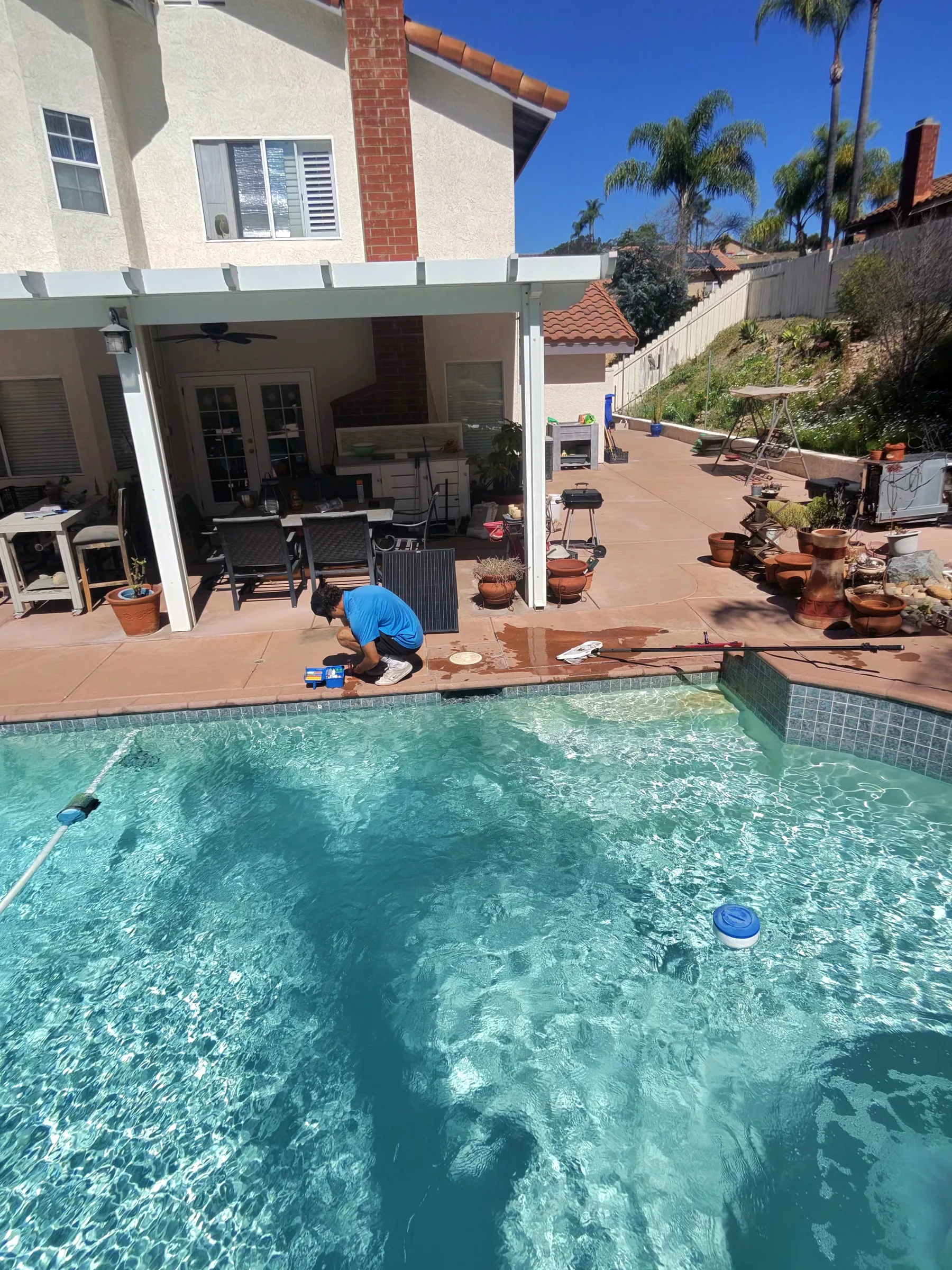
Check whether your chlorine schedule keeps up in hot or windy weeks
A schedule that worked during mild weather can fall short during hotter weeks. Inland Southern California and Sacramento Valley summers can use up chlorine faster. Test before the next scheduled dose, not only after adding chlorine, to see whether protection lasts through the interval.
Record readings at a consistent time over several days. Pair them with swimming activity and dosing times. A reading that falls below your CYA-based minimum before each dose points toward a maintenance schedule that needs adjustment.
After Santa Ana winds, remove leaves and floating debris promptly, empty skimmer baskets, and recheck chlorine. Dirt, pollen, and leaves add material that consumes chlorine. Waiting for the usual cleaning day can leave the pool without enough protection.
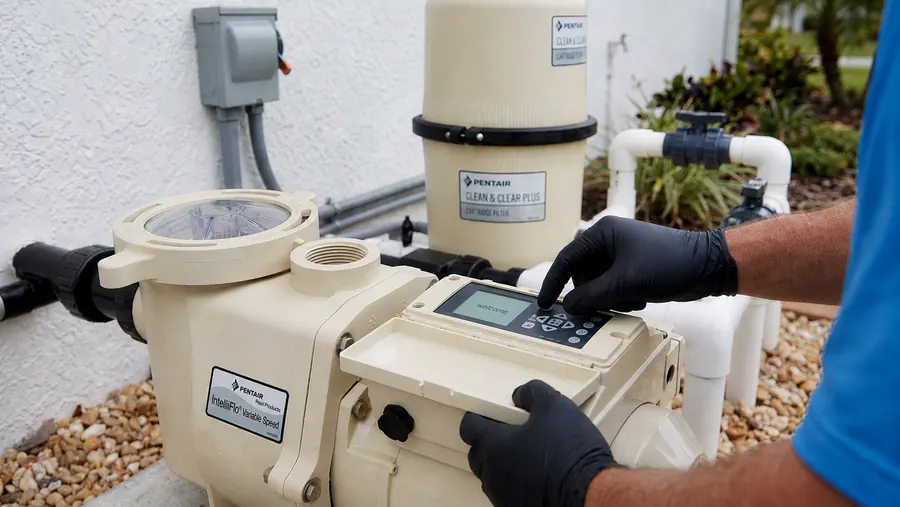
For salt pools, chlorine production depends on operating hours, output settings, and the cell's condition. The pump running does not prove the cell is producing chlorine. Check for a shortened schedule, an incorrect clock, or a flow, salt, or cell warning. Photograph unfamiliar warnings and follow the equipment manual. Do not add salt solely because the pool is green.
Southern California's hard source water also makes scale worth checking when salt-cell performance declines. High calcium hardness and high pH favor scale formation. A technician should confirm the cell's condition before cleaning or replacement.
Confirm algae are gone and clean the filter
Stopping treatment when the water first looks better can leave living algae behind. Before returning to routine chlorine dosing, confirm that the water stays clear, walls brush clean without a green cloud, and chlorine holds overnight with no more than 1 ppm loss.
For the overnight check, measure free chlorine after sunset once the last dose has fully circulated. Test again before sunrise using a kit precise enough to measure a 1 ppm change. Keep circulation running, but add no chlorine between readings. Temporarily disable automatic chlorine feeding or salt-cell production, then restore it after the morning test.
A loss greater than 1 ppm means something is still consuming chlorine overnight and needs investigation. If brushing releases green or the water remains cloudy, continue cleanup according to treatment directions even if the overnight result passes. One test alone cannot confirm recovery.
When algae return around the same steps, ladder, or corners, brush those locations carefully and check return-jet direction. Brushing loosens attached growth so treatment can reach it. Inspect behind removable accessories where practical. Recurrence in one spot deserves a circulation check even when the main body of water looks clear.
Clean or backwash the filter after an algae cleanup to remove captured algae and organic debris. Sand and many DE filters can be backwashed; cartridge filters need their cartridges removed and cleaned. Follow the equipment instructions, including replenishing DE, the filter powder used in that filter type, where required. Our guide explains how to backwash a pool filter and check the results.
During cleanup, many filters need cleaning when pressure rises roughly 20 to 25 percent above their clean reading. Follow the manufacturer's threshold, and compare readings at the same pump speed and valve settings. Do not wait until cleanup finishes if pressure reaches that threshold sooner. Shut the pump off and release pressure according to the manual before opening a filter. Never move a filter valve while the pump runs.
Weak return flow with higher pressure can indicate a dirty filter or another restriction after the pump. Weak flow with low pressure or persistent air can indicate a problem supplying water to the pump. These patterns guide inspection; they do not identify a failed part by themselves.
If flow stays weak after routine maintenance, arrange an equipment check. Our technicians confirm the cause after seeing the equipment. Pool pump troubleshooting and repair may be appropriate when the pump loses prime, meaning it cannot maintain its water supply, or repeatedly stops.
Longer pump operation cannot compensate for inadequate chlorine. It also adds electricity use, an important consideration with California rates. Confirm useful circulation and chlorine production before extending the schedule.
Send these details when you arrange service
Arrange help when green repeatedly returns despite measured treatment, readings remain difficult to interpret, or equipment cannot maintain normal flow. Keep the current settings recorded so a technician can see what the pool has been doing.
- Send dated free-chlorine, pH, and stabilizer readings, including when you last added chemicals.
- Include any overnight chlorine readings and whether brushing still releases green.
- Photograph chemical labels, pump schedules, chlorinator warnings, and the filter gauge.
- Describe whether green returns throughout the water or starts in the same spots, and how soon it returns after clearing.
- Include the dates of recent filter cleaning and any changes to equipment settings.
For recurring green water, our pool algae removal service can address the cleanup alongside the maintenance conditions that need correction. If equipment stops moving water or the pump runs dry, turn it off and arrange service promptly instead of waiting for another treatment cycle.