Six reasons pool water turns green
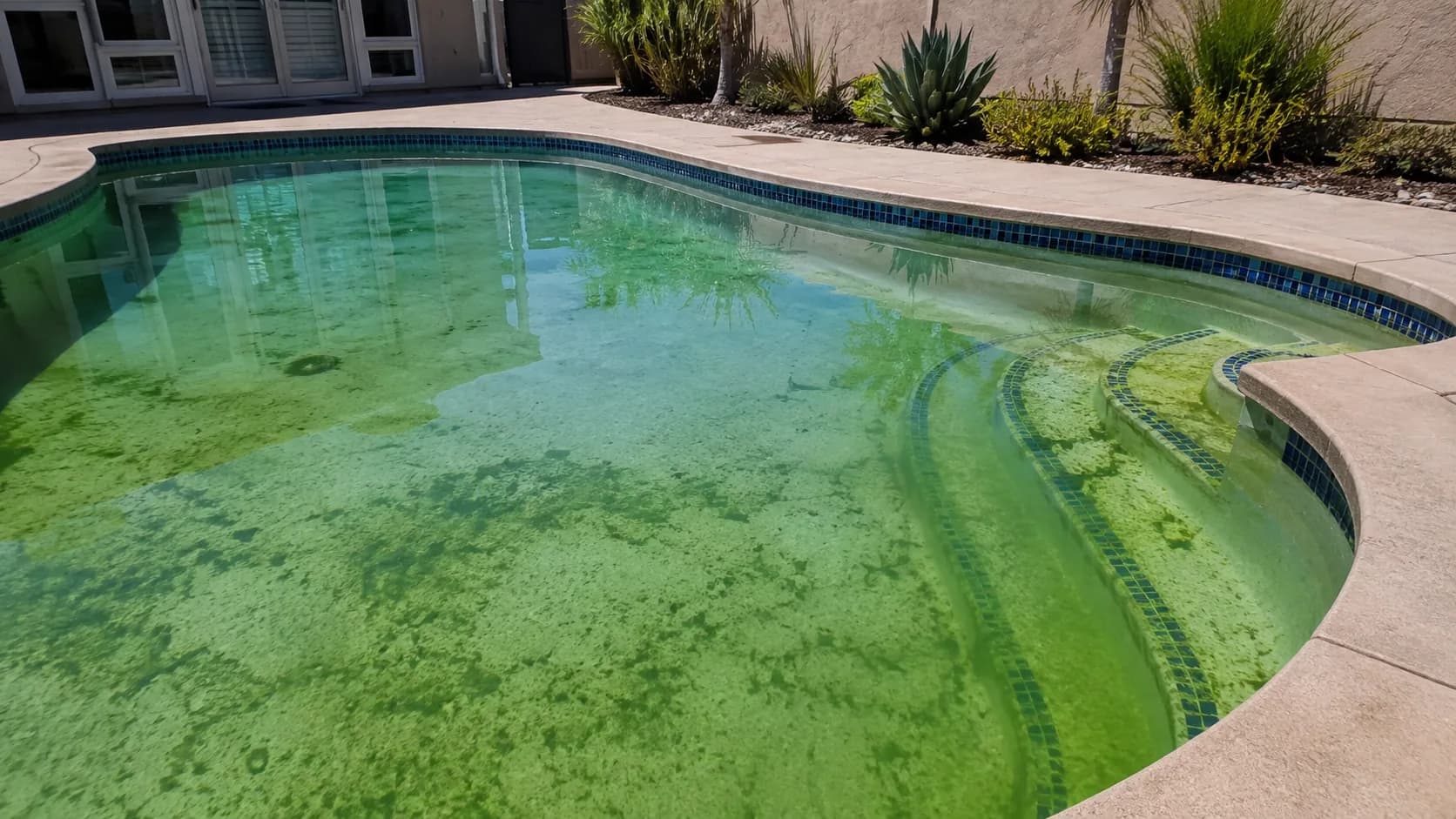
Your pool is usually green because algae have grown faster than chlorine can control them. Cloudy green water suggests algae; transparent green water, especially after adding chlorine, calls for a metals test before more treatment.
- Chlorine runs out: heat, missed service, or pump downtime can leave insufficient sanitizer, especially when chlorine delivery depends on circulation.
- Stabilizer builds up: excess cyanuric acid, or CYA, reduces chlorine's activity at a given free chlorine reading.
- pH rises: high pH can reduce chlorine's effectiveness and complicate water balance.
- Filtration or circulation weakens: clogged filters and weak flow leave debris and poorly treated areas.
- Nutrients accumulate: leaves, pollen, and dirt increase sanitizer demand and introduce nutrients, including phosphates, that support algae.
- Metals change color: dissolved copper can turn water green after chlorine oxidizes it.
| Your choice | When it makes sense | What it requires |
|---|---|---|
| Treat it yourself | Light growth, visible floor, working equipment | Accurate testing, repeated dosing, brushing, and filter attention |
| Pause additional chemicals | Transparent water changed color immediately after treatment | Metals testing and a review of recent products |
| Call our team | Hidden floor, weak flow, recurring green water, or uncertain chemistry | Diagnosis before choosing treatment |
Keep swimming on hold while the cause remains unresolved. Pool volume, debris, chemistry, and equipment condition affect treatment scope. See our pool algae removal service and pricing factors.
Chlorine gaps and spring warming explain recurring outbreaks
On our San Diego routes, the middle 80 percent of free chlorine readings spans 0 to 5 ppm across over 26,000 readings. In Los Angeles, it spans 0 to 10 ppm across over 11,000 readings. Zero chlorine is a recurring maintenance finding. Check between visits when heat, debris, or equipment interruptions increase demand.
Our over 1,900 green-pool and algae treatment visits cluster in spring: March accounts for 39 percent, April for 30 percent, and May for 18 percent. As water warms, a winter sanitizer routine can fall behind. Review chlorine delivery and pump schedules before summer heat arrives.
Across our San Diego, Los Angeles, and Sacramento routes, CYA has a median of 40 ppm across over 13,000 readings. The middle 80 percent runs from 20 to 70 ppm. That spread changes the chlorine level needed to control algae. Measure CYA before choosing a treatment target instead of copying a neighbor's dose.
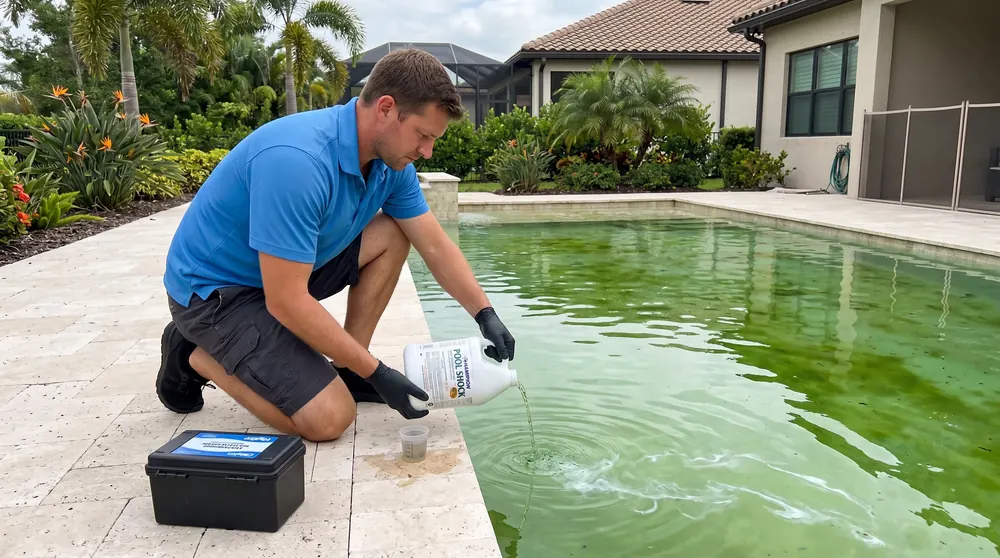
Can over shocking a pool make it green?
Adding chlorine can turn dissolved metals into colored compounds. Copper is one possible cause of transparent green water after treatment. The color change does not automatically mean you need another dose.
If water changed immediately after shocking, test for metals and review recent products. Some algaecides contain copper. Tell our technicians what you added, how much, and when.
Cloudiness and slippery surfaces make algae more likely, but appearance alone cannot settle the diagnosis. High chlorine can also interfere with some test methods. Follow the test kit's measurement limits before acting on a surprising result.
How do you clear a green pool fast?
For confirmed algae, combine chlorine treatment with physical removal and working filtration. Chlorine alone will not clear suspended dead algae and debris.
- Remove leaves and debris. Empty accessible baskets so accumulated material does not restrict flow.
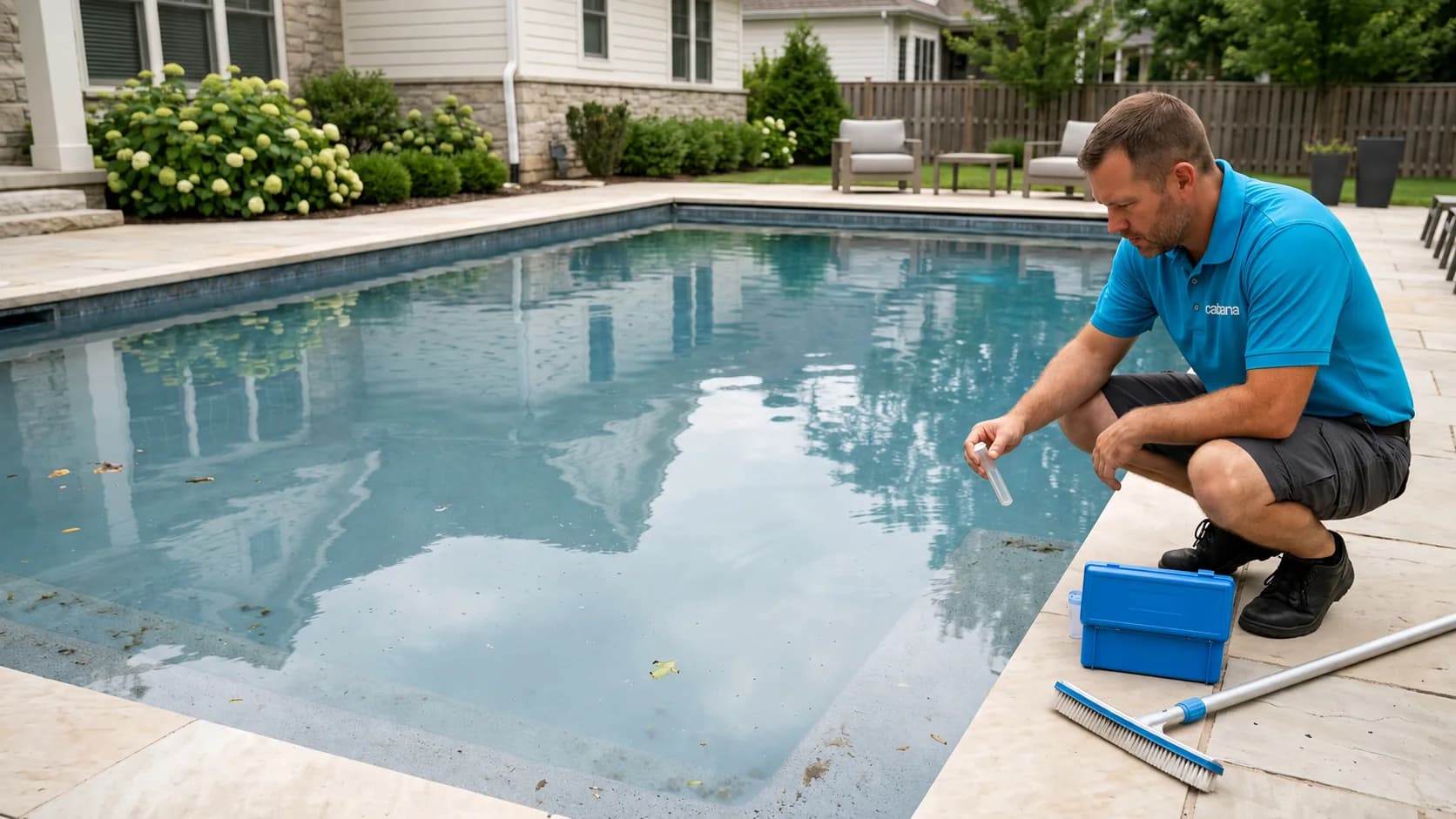
- Record starting chemistry. Measure free chlorine, CYA, and pH. Confirm pool volume before calculating doses.
- Confirm circulation and brush. Check return flow and compare filter pressure with its normal clean reading. Brush with a tool suitable for the surface.
- Adjust pH, then shock. Before raising chlorine, bring pH into the normal 7.2 to 7.8 range, preferably near 7.2 to 7.4 for treatment. Raise free chlorine to an algae-treatment shock level scaled to measured CYA, using a CYA-based treatment guide and compatible product directions. Our technicians can establish the target if you are unsure.
- Hold the treatment level. Retest frequently at the treatment instructions' intervals and replenish chlorine to maintain that target until water clears. A single dose may be consumed before the algae are controlled.
- Remove captured material. Vacuum debris and clean or backwash the filter according to its manufacturer's guidance.
Resolve weak flow before relying on longer pump operation. Our pool filter cleaning service addresses accumulated material that restricts filtration.
Check compatibility before combining treatments in the pool. Never mix pool chemicals together. Follow each label's application and swimming reentry instructions.
How long does it take to turn a pool from green to clear?
Light algae typically clears in about 1 to 3 days with sustained treatment and effective filtration. Heavy algae often takes 3 to 7 days, sometimes longer. Recovery time varies with chemistry, algae severity, and equipment condition.
High CYA lengthens recovery when chlorine is inadequate for the stabilizer level. A clogged filter or weak flow slows removal of dead algae. Green water becoming cloudy gray can indicate progress, but filtration still has work to do.
If a scheduled recheck shows no improvement, investigate chemistry, diagnosis, and circulation before repeating the same dose. Temporary extended filtration may help, but California electricity rates make running a restricted system longer especially wasteful. Resume swimming only when visibility and chemistry meet safe operating conditions and product reentry directions.
California water and weather change chemical choices
Southern California's hard, mineral-heavy supply makes chemical selection important. Calcium hypochlorite adds calcium as well as chlorine. Check calcium hardness before choosing it for repeated treatment, especially where evaporation concentrates minerals.
Sacramento and East Bay source water is generally much softer. Test actual hardness before applying the same balancing routine used for a Southern California pool.
Cooler coastal water usually has lower chlorine demand than hot inland water. Sunny afternoons still break down unstabilized chlorine, even after gray mornings. During inland heat, check whether sanitizer delivery keeps pace.
After Santa Ana winds, remove leaves and empty baskets promptly. A day's debris can change treatment needs between scheduled visits. Our weekly pool cleaning service supports ongoing chemistry and equipment checks.
Your next check determines whether equipment needs attention
Gather chemistry results, product names, filter pressure, and a description of return flow. Note whether green water appeared gradually or immediately after treatment.
- Normal flow and improving clarity: continue the prescribed treatment and retesting schedule.
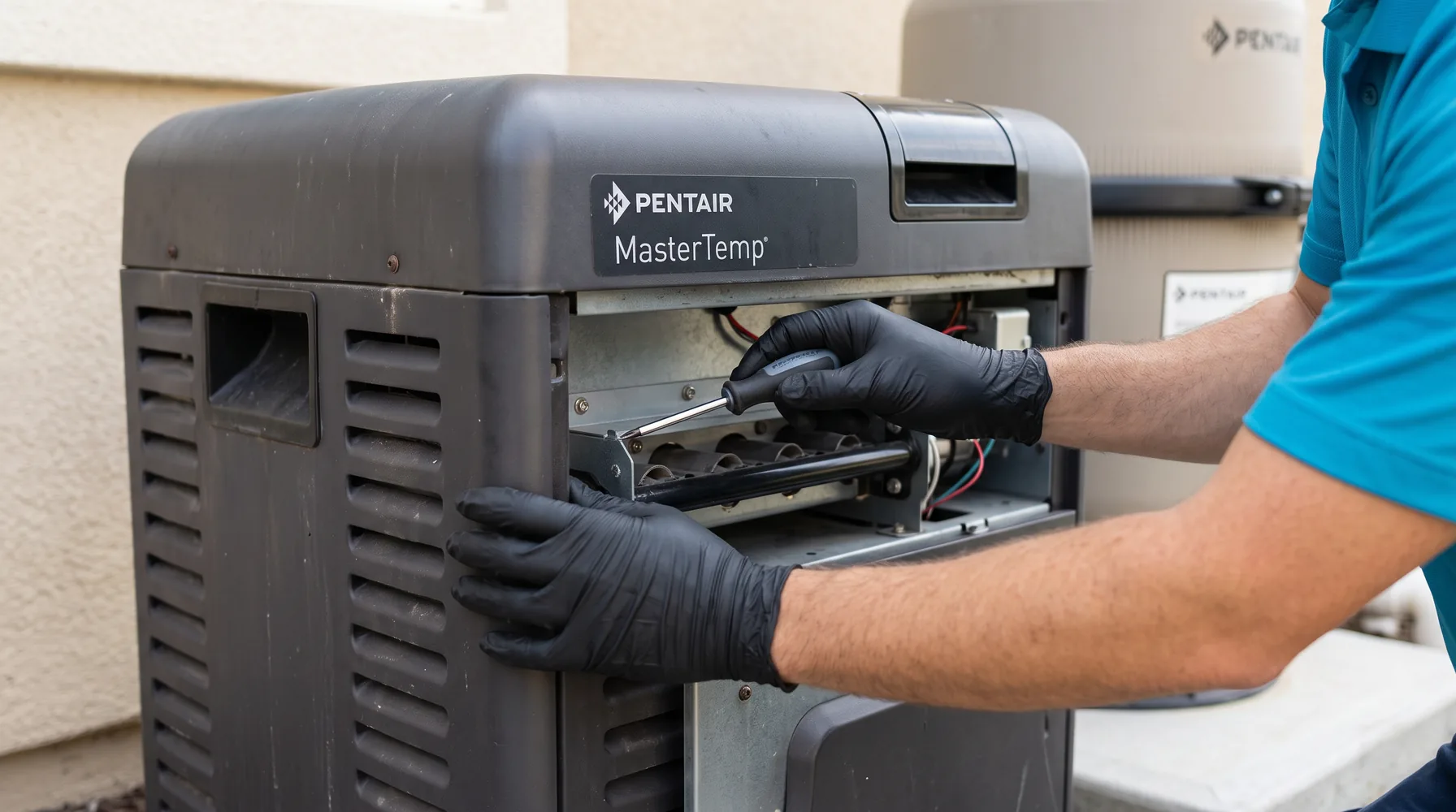
- Weak flow or a pump losing prime: arrange equipment diagnosis.
- Green water returning after treatment: have sanitizer delivery, CYA, and filtration checked together.
Green water alone is not a reason to replace a pump. Our technicians confirm whether cleaning, repair, or replacement makes sense after seeing the equipment. For unresolved circulation problems, request pool pump diagnosis and repair.