Phosphates feed algae, but a reading alone does not mean trouble
Phosphates in a pool are compounds containing phosphorus and oxygen that algae can use as nutrients. A high phosphate reading alone does not mean your pool needs treatment: check chlorine, water clarity, and recurring algae first.
Phosphates enter through soil, fertilizer runoff, decaying leaves, some refill water, and certain stain-control products. Removing those sources helps limit new phosphate, but does not remove what has already dissolved.
Chlorine controls algae and germs; phosphate remover reduces one nutrient algae need. A pool can contain phosphates and still remain clear with appropriate chlorine and regular cleaning. Removal can help when algae repeatedly returns despite verified chlorine levels and working circulation, but it does not replace either.
There is no universal phosphate concentration at which every residential pool needs treatment. A remover label's target is a treatment instruction, not a swimming safety threshold. Decide what problem needs fixing before buying a product to lower the number.
Where do phosphates in a pool come from?
If readings keep rising, check what enters the water before repeating treatment. The timing of debris, refills, and chemical additions can help identify a source.
- Leaves, dirt, and garden runoff: skim leaves, vacuum settled debris, and keep fertilizer and irrigation runoff out of the pool. Removing material promptly limits what can break down in the water.
- Refill water: evaporation leaves dissolved material behind. Topping up can introduce more phosphate if the incoming water contains it. Hot inland valleys and Sacramento's dry summers mean more evaporation and top-ups than along the mild Southern California coast. If readings climb during summer or after substantial refilling, test hose water and pool water with the same method. Replacing water won't help if your tap water carries phosphate too.
- Stain-control products: some products used to keep metals from staining contain phosphorus compounds that can eventually contribute phosphate. Record the products added before an unexplained increase. Do not stop needed stain control solely to lower a phosphate reading.
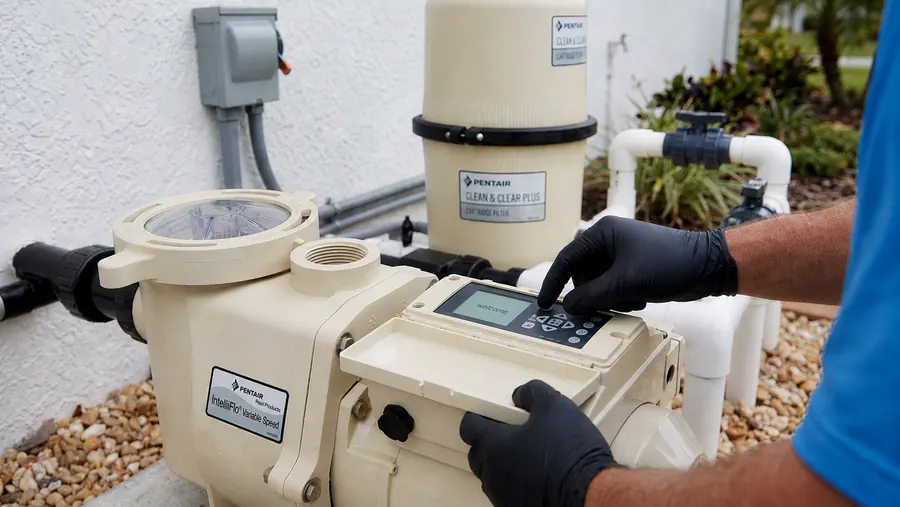
Southern California's Santa Ana winds, mostly in fall and winter, can load pools with leaves, dirt, and pollen in a day. Inspect the pool after a wind event instead of waiting for the next scheduled cleaning. Empty baskets and remove settled material before it breaks down. Follow equipment instructions when opening the pump basket.
How can you tell whether your pool has phosphates?
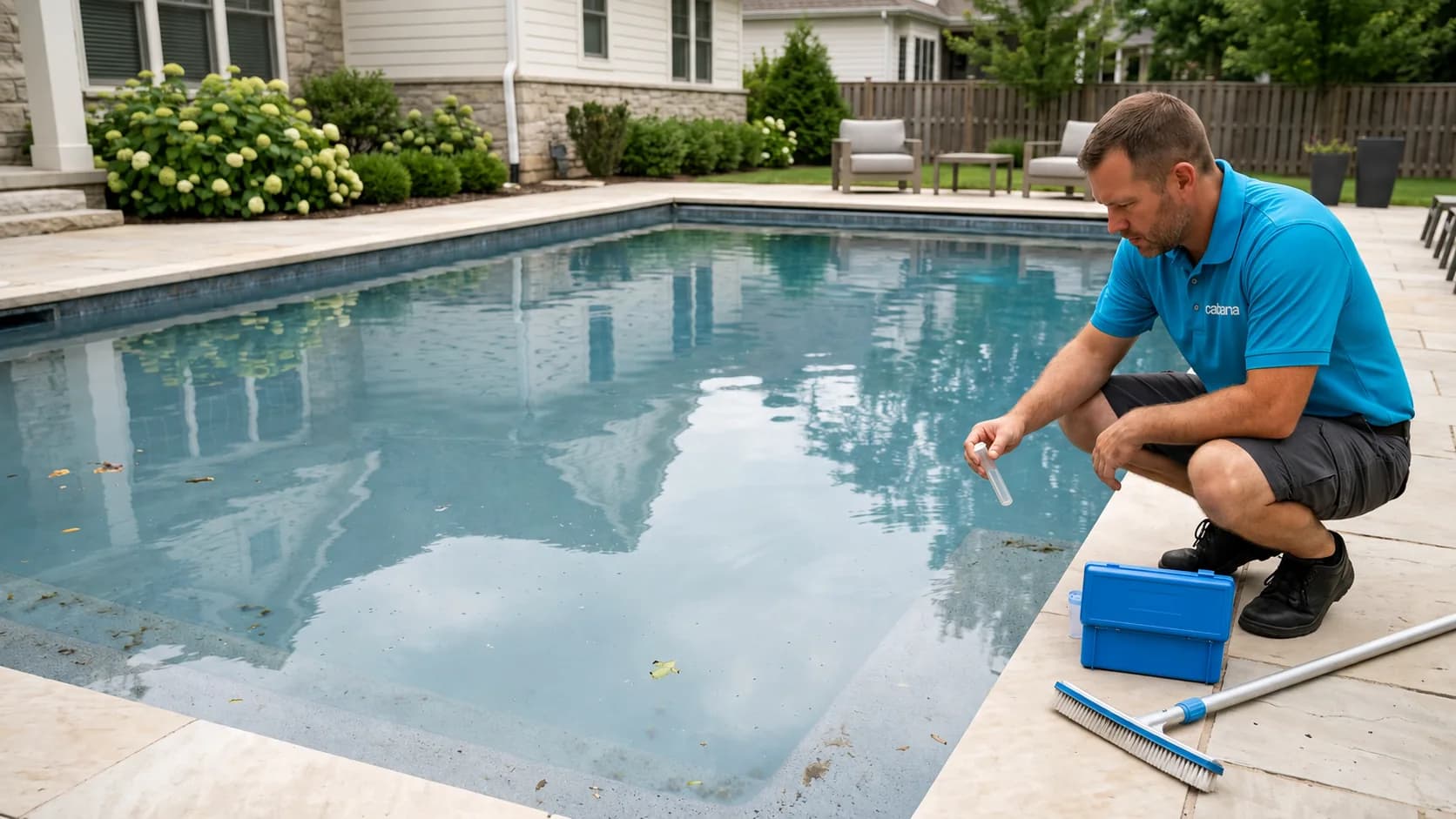
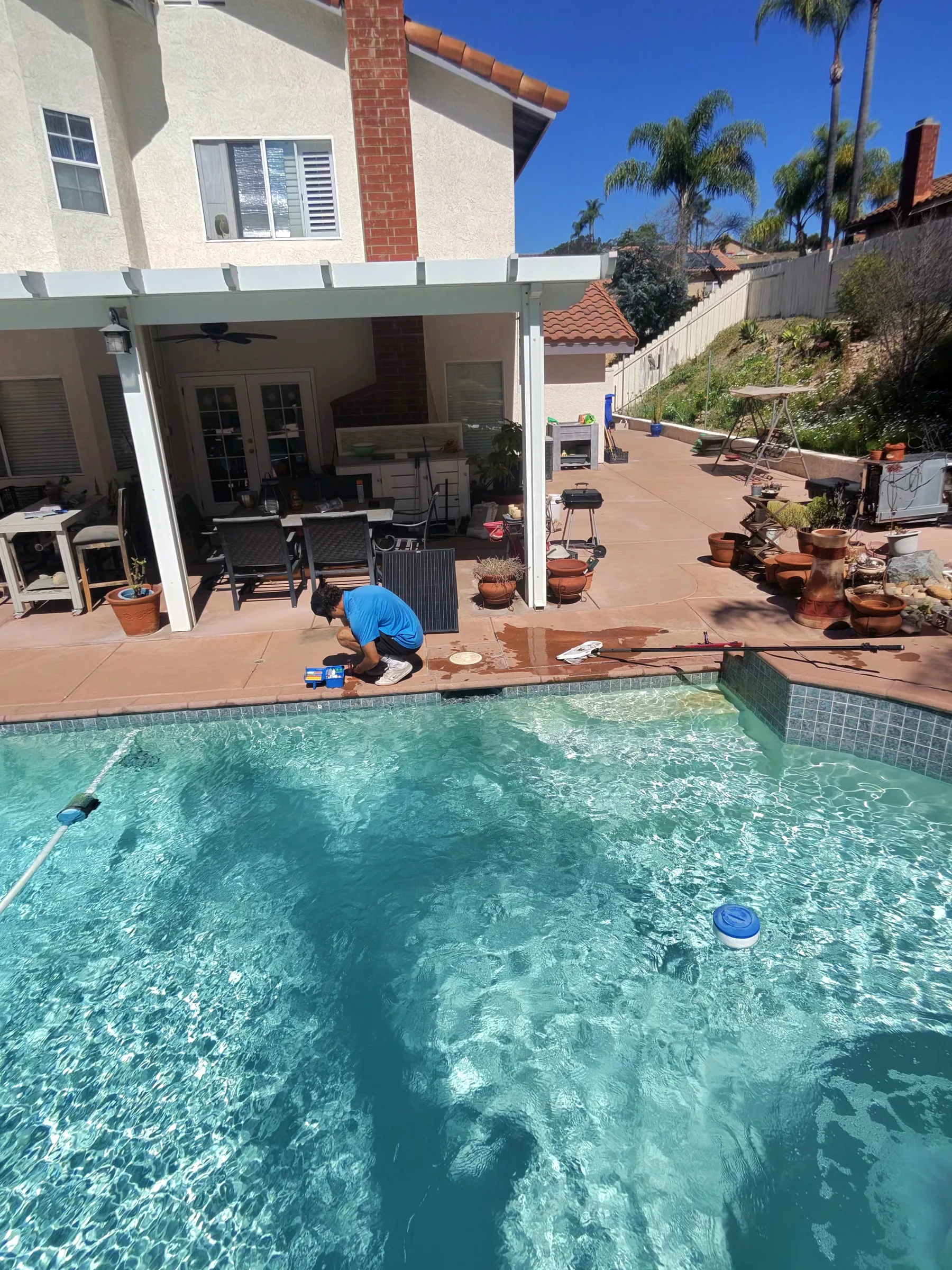
You cannot identify dissolved phosphates by looking at the water. Green water, slippery walls, and cloudiness have several possible causes. A separate phosphate test is needed; most routine chlorine and pH kits do not measure phosphates.
Start with free chlorine, the chlorine available to sanitize water, plus pH and stabilizer. Stabilizer, also called cyanuric acid, protects chlorine from sunlight and affects the chlorine level your pool needs. Keep pH between 7.2 and 7.8, and assess free chlorine alongside the stabilizer reading.
Pool phosphate tests commonly report parts per billion, or ppb. 1,000 ppb equals 1 part per million, or ppm. Confirm the units before comparing a result with a product label or calculating a dose.
| What you find | What to do next |
|---|---|
| Clear water, stable chlorine, no recurring algae | Continue normal care. An elevated phosphate number alone does not require treatment. |
| Low chlorine or an unknown stabilizer level | Resolve those readings before blaming phosphates. |
| Recurring algae despite verified chlorine levels and circulation | Include phosphate testing in a broader equipment and water check. |
| A result above the test kit's range | Follow its dilution instructions or obtain a test that measures higher levels before calculating a dose. |
Follow the kit's sampling, timing, and interference instructions. Many homeowner kits measure readily available phosphate, called orthophosphate, rather than every phosphorus-containing compound. Keep the test method consistent when comparing results over time.
Record the result with recent refill events and chemical additions. Our weekly pool cleaning service provides a regular opportunity to review those changes alongside chlorine, circulation, and filter condition.
Does shocking a pool remove phosphates?
No. Adding extra chlorine, often called shocking, does not remove dissolved phosphate. It can kill algae and break down organic material, sometimes releasing phosphate that a test can detect.
Phosphate itself does not directly consume free chlorine. Algae and other contamination can increase chlorine demand, meaning how fast the pool uses up chlorine. Phosphate remover will not restore falling chlorine or correct excessive stabilizer.
If chlorine keeps falling, test between routine service visits. A satisfactory reading just after dosing does not establish that enough remains until the next visit. Review dosing, stabilizer, and equipment operation; our guide to raising free chlorine in a pool explains that immediate task.
When removal makes sense, plan for the filter work
Consider phosphate reduction as an additional maintenance step when a confirmed reading and recurring algae justify it after chlorine, cleaning, and circulation are addressed. Remover does not kill growing algae, so clear active algae first. If the water is green or walls remain slippery, our pool algae removal service can help with that first step.
Many removers contain lanthanum compounds that bind dissolved phosphate into tiny solid particles. Filtration captures those particles so they can be removed from the system. Ordinary pool filtration does not reliably capture phosphate while it remains dissolved.
Temporary cloudiness and increased filter pressure can follow treatment. If pressure is already high or water flow is weak, address that before adding remover.
- Confirm the dose. Use the measured phosphate level, pool volume, and specific product label. Concentrations differ between products.
- Check the filter first. Confirm product compatibility. Record pressure with a clean filter at the pump speed you will use for treatment. Compare later readings at that same speed.
- Follow the application instructions. Observe the label's circulation time, chemical spacing, and swimming restrictions. Do not pour remover into the skimmer unless the label directs it. Never mix concentrated pool chemicals.
- Watch pressure and flow. Clean or backwash at the filter manufacturer's recommended pressure increase. Backwashing reverses water flow to flush debris from a compatible filter. Cartridge filters require cleaning instead; diatomaceous earth filters need the correct replacement filter powder after backwashing.
- Retest at the stated time. Allow treatment and filtration to finish before judging the result. Haze can be treatment particles awaiting filtration, not a reason to add another dose.
Our pool filter cleaning service can help prepare the filter and remove captured treatment residue. We confirm the cleaning method after seeing the equipment.