Run these five checks before buying chemicals
To get rid of green algae in your pool, brush surfaces and maintain free chlorine at about 40 percent of your cyanuric acid reading, with a minimum treatment level of 10 ppm. Filter continuously until the water clears, no algae remains, and overnight chlorine loss is 1 ppm or less with combined chlorine at 0.5 ppm or less.
First, spend ten minutes checking whether home treatment makes sense. Bring a test kit, a brush suitable for your pool surface, and your phone. Finish the stabilizer test before choosing a chlorine dose.
| Time | Check | Decision rule |
|---|---|---|
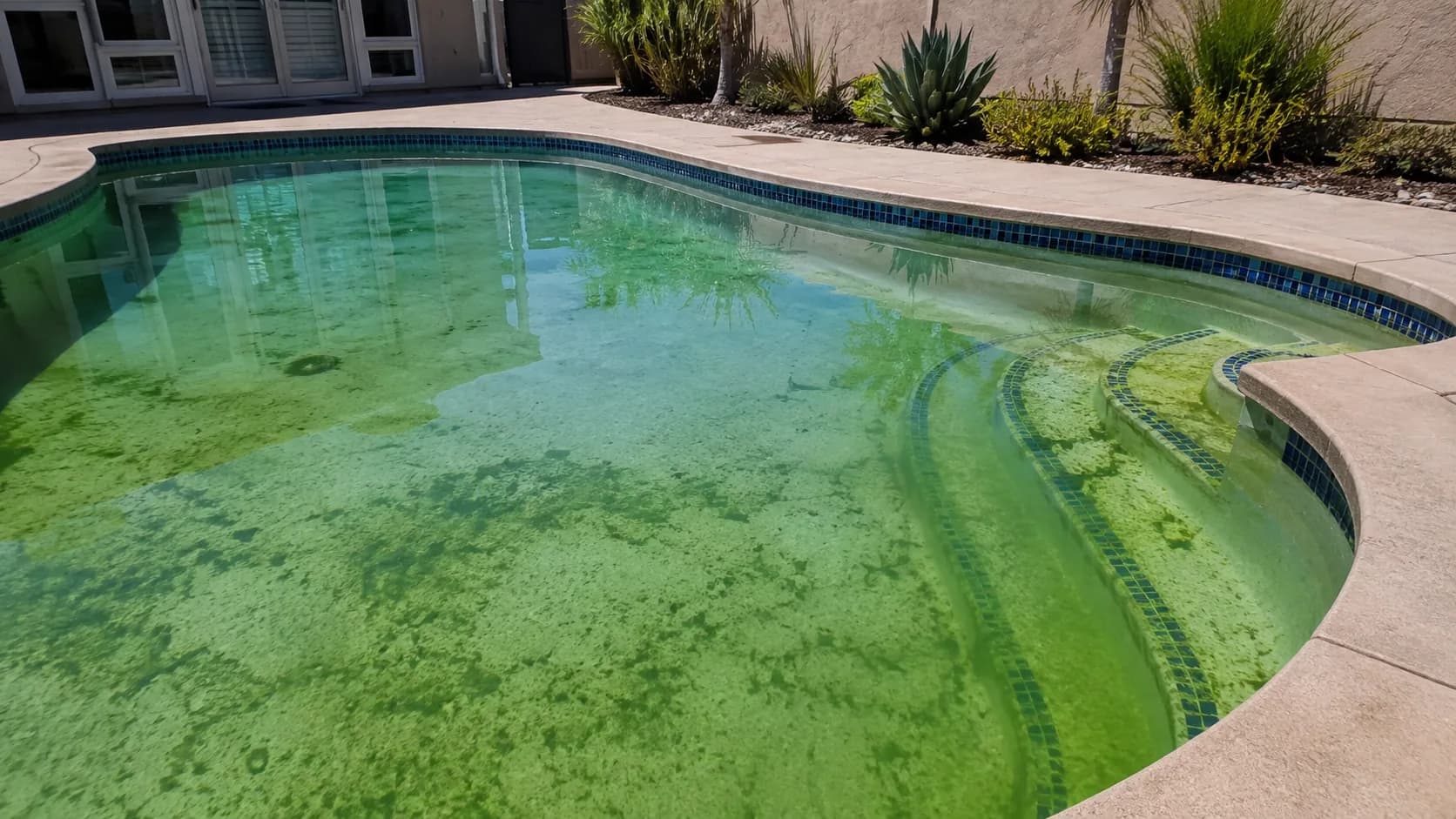
| Minutes 1 to 2 | Check visibility from the deck. | If you cannot clearly see the bottom, keep everyone out. Arrange help if you cannot safely monitor debris removal. |
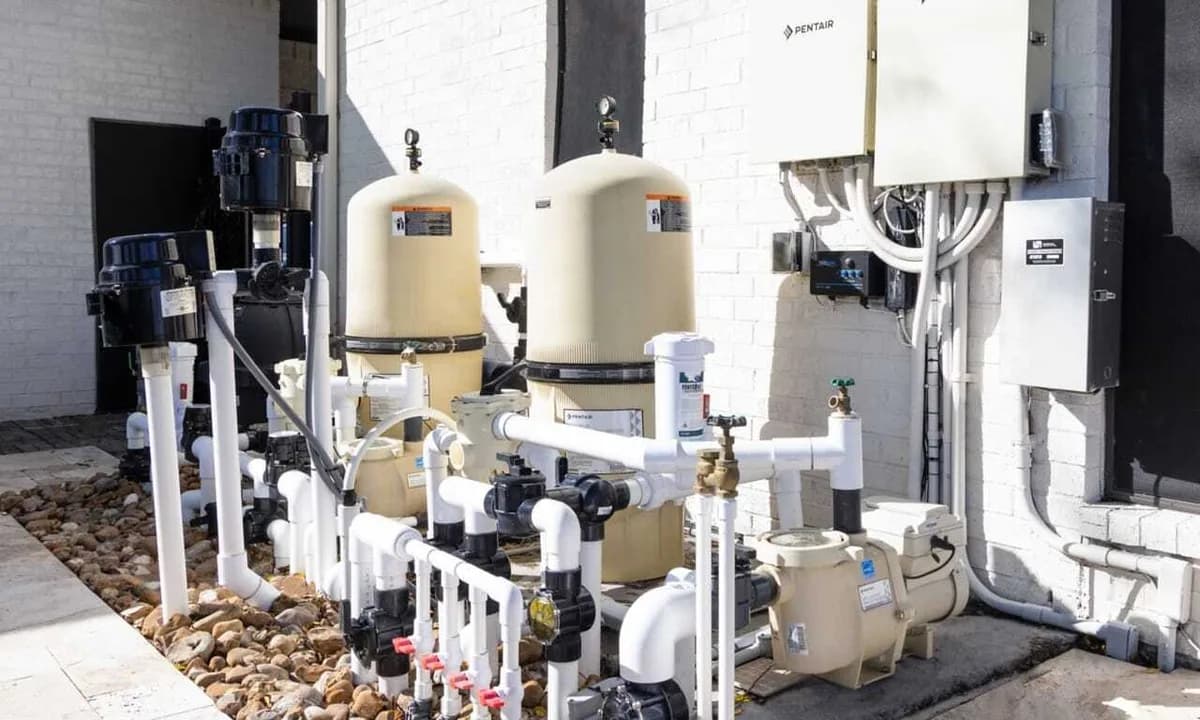
| Minutes 3 to 4 | Check return flow and the pump basket through its clear lid, if fitted. | Weak returns, persistent air, or repeated shutdowns require equipment attention before treatment. |
| Minute 5 | Compare filter pressure with its clean reading at the same pump speed. | A rise of about 20 to 25 percent commonly signals cleaning is due. Follow your filter manual's threshold. |
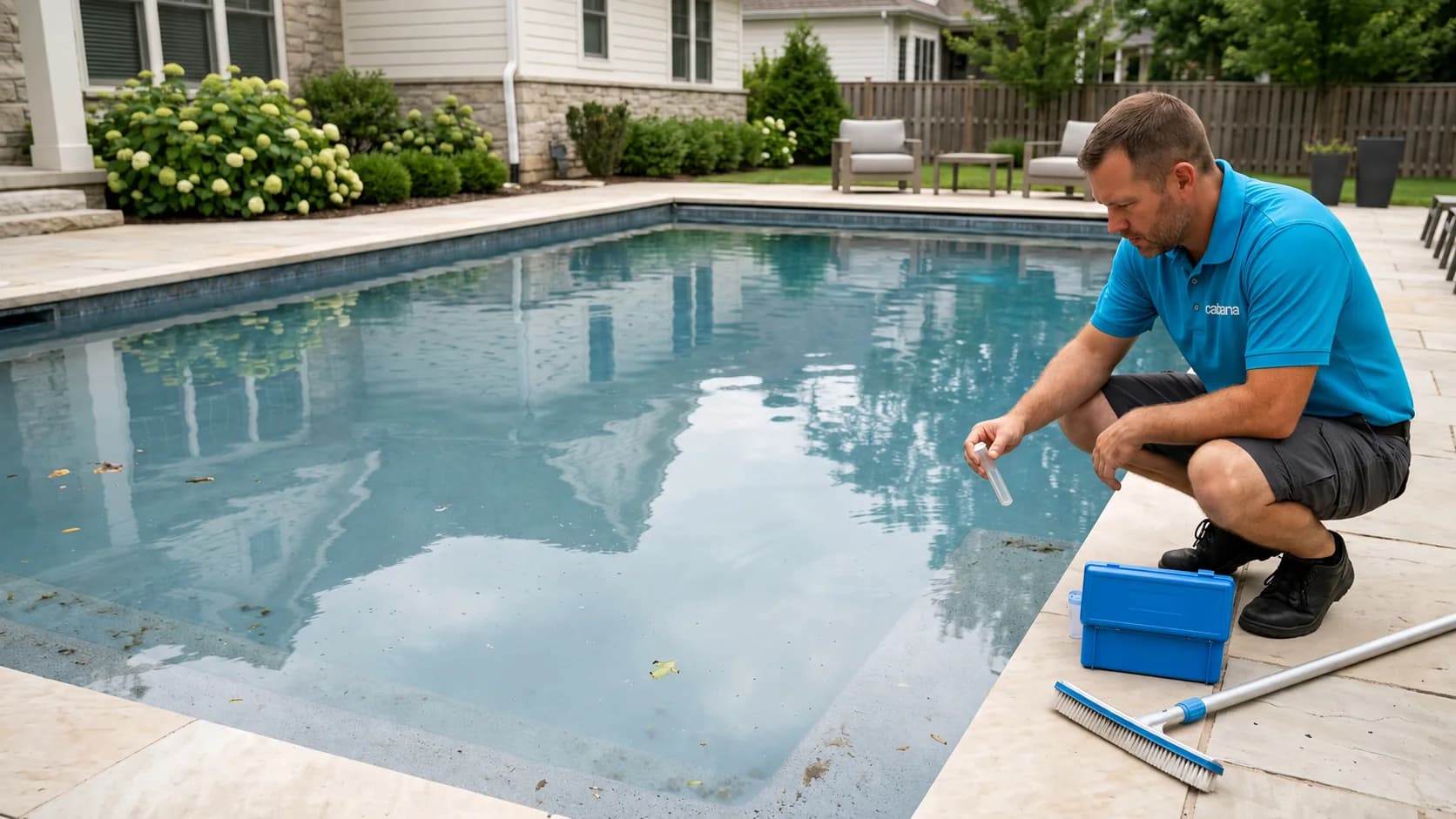
| Minutes 6 to 9 | Measure free chlorine, combined chlorine, pH, and cyanuric acid. | Use a kit that measures treatment-level chlorine accurately. Confirm pool volume before calculating a dose. |
| Minute 10 | Brush one reachable affected patch from the deck. | Loose green growth usually suits the treatment below. Attached black spots or recurring yellow deposits need a different assessment. |
Do not open a running pump or pressurized filter. If the pump runs dry, switch it off and arrange service.
Set the chlorine target from your stabilizer reading
Across over 13,000 readings on our San Diego, Los Angeles, and Sacramento routes, cyanuric acid has a median of 40 ppm. The middle 80 percent ranges from 20 to 70 ppm. At 40 ppm stabilizer, a practical green-algae treatment target is 16 ppm free chlorine, substantially above the 10 ppm starting target used for unstabilized water.
Cyanuric acid protects chlorine from sunlight, but also reduces its immediate activity. Use your own reading to select a target. These rounded targets apply to ordinary green algae in residential chlorine pools, including saltwater pools.
| Cyanuric acid | Free chlorine treatment target |
|---|---|
| 0 to 20 ppm | 10 ppm |
| 30 ppm | 12 ppm |
| 40 ppm | 16 ppm |
| 50 ppm | 20 ppm |
| 60 ppm | 24 ppm |
| 70 ppm | 28 ppm |
Does chlorine kill algae? Yes. Will shock get rid of algae? Yes, chlorine shock can kill it when you maintain sufficient free chlorine for your stabilizer level. One dose may disappear before treatment finishes. Nonchlorine shock is not a substitute for this algae-killing chlorine treatment.
If stabilizer exceeds 70 ppm or your test cannot measure it reliably, have our technicians assess it before escalating treatment. High stabilizer makes the required chlorine level harder to manage. Repeated use of stabilized chlorine raises it further.
Adjust pH to 7.2 to 7.4 before raising chlorine, following chemical labels. Many standard pH tests become unreliable above roughly 10 ppm free chlorine. Do not add acid in response to an unreliable pH result.
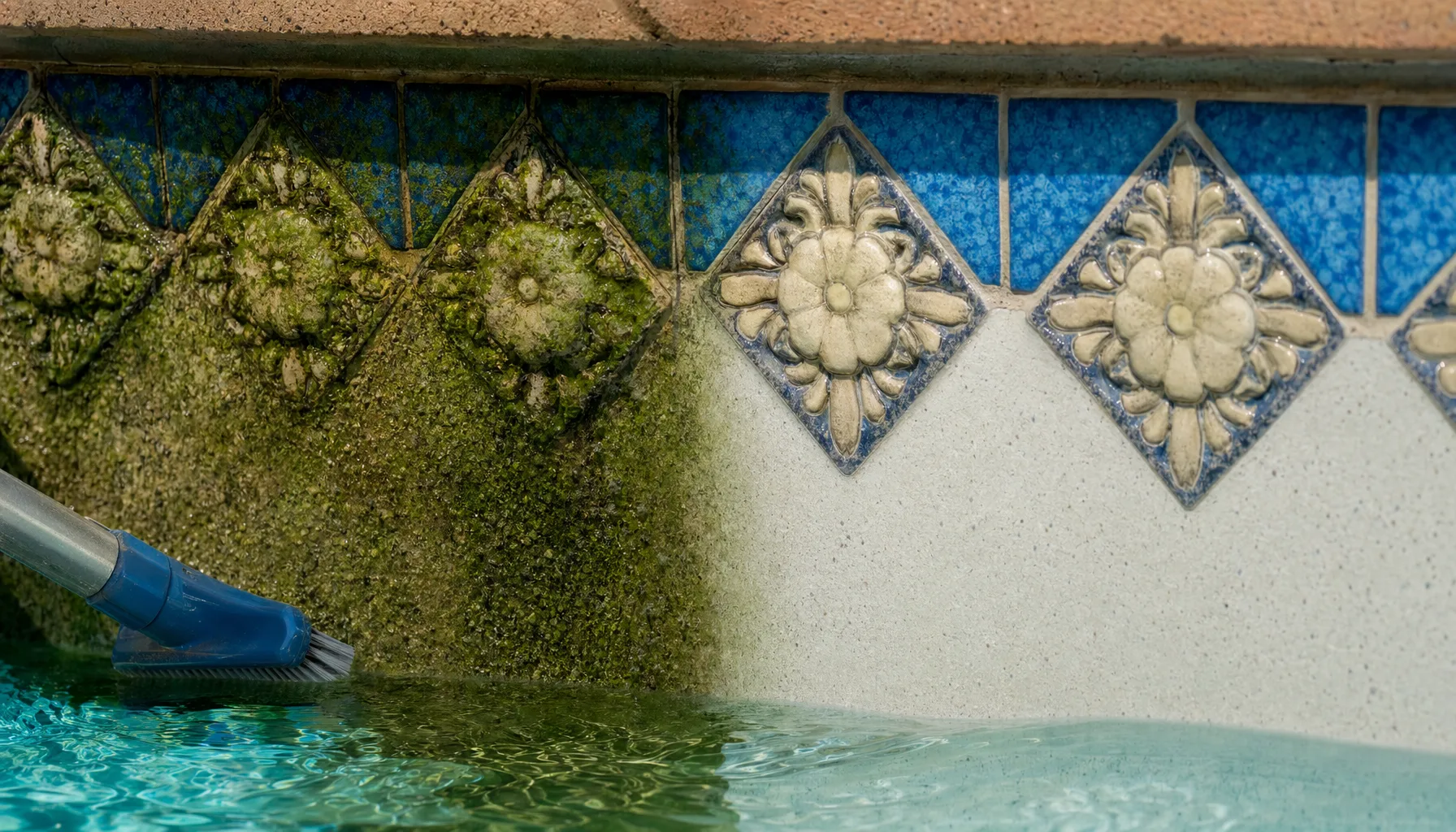
Maintain the target while brushing and filtering
Start home treatment only when circulation works, tests are reliable, and pool volume is known. Use the target above alongside the chlorine product's application directions and equipment limits.
- Remove leaves and loose debris. Skim and empty accessible baskets with equipment switched off as required. Debris consumes chlorine and restricts flow.
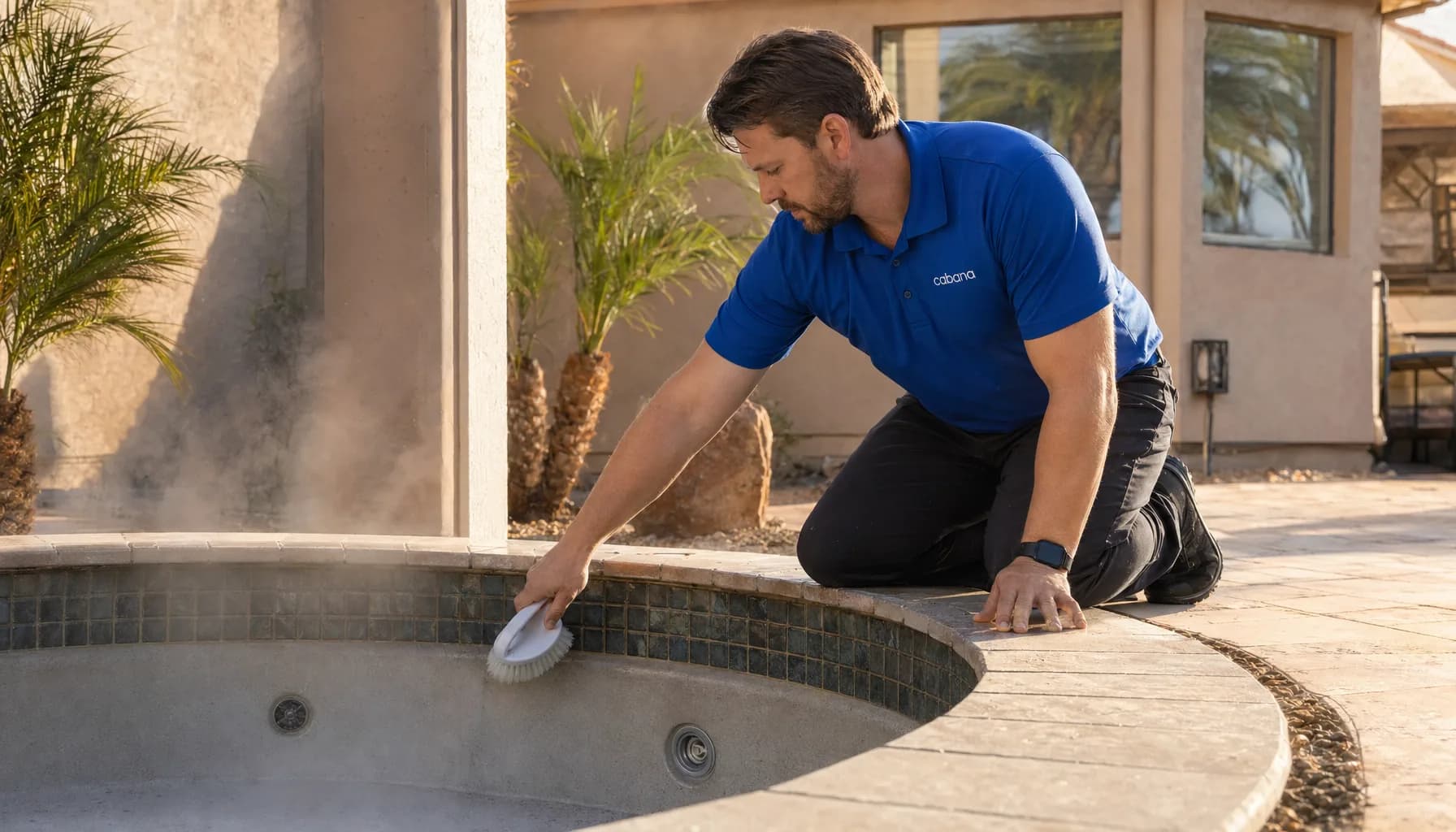
- Brush the affected surfaces. Use a brush approved for your pool finish. Include steps, corners, and other areas with weak circulation.
- Calculate the chlorine addition. Account for pool volume, current free chlorine, target level, and product strength. There is no universal number of bags that suits every pool.
- Retest and replenish. During the first day, check every two to four hours while awake, allowing each dose to circulate before testing. Restore the target whenever it falls. Heavy growth may consume chlorine rapidly.
- Remove captured and settled material. Brush daily during treatment, vacuum with a method compatible with your equipment, and monitor filter pressure.
Run the pump continuously during active cleanup where equipment permits. If continuous operation is impractical, use extended hours that maintain effective circulation and filtration. Continue until the water clears and chlorine holds overnight. A normal short maintenance schedule can leave dead algae suspended longer.
California's high electricity rates make speed selection important. Title 20 efficiency requirements mean many replacement residential pool pump motors offer variable or multiple speeds. Use a lower speed that maintains reliable circulation and filtration, increasing it when vacuuming or equipment flow requirements demand it. The lowest setting is not automatically sufficient.
Compare pressure readings at the same speed. Our filter cleaning guide by equipment type explains cleanup when pressure rises.
Never mix chlorine with acid or other chemicals, or combine different chlorine products. Follow label application and separation requirements.
Treat persistent spots according to their cause
Firm spots can be black algae or mineral staining. Mustard algae more often appears as yellow or tan dust in shaded areas. It brushes away easily but may return quickly.
| What you see | Likely cause | Next step |
|---|---|---|
| Attached dark spots that resist brushing | Black algae | Repeated surface-appropriate brushing helps disrupt the protective layer. Arrange targeted treatment if spots persist; ordinary green-algae treatment may be insufficient. |
| Yellow deposits returning in shaded areas | Mustard algae, sometimes confused with pollen | Confirm the diagnosis. Treatment may require a higher chlorine target and cleaning brushes, vacuum equipment, toys, and swim gear to prevent reintroduction. |
| Fixed discoloration without loose growth | Mineral or metal staining | Arrange a stain assessment before adding more shock. Additional chlorine can worsen some metal stains. |
What kills algae besides chlorine? Certain algaecides kill or suppress algae when used according to their labels. Polyquat products can support control; copper products can also work but introduce staining risk. Choose a product compatible with your finish and treatment plan rather than combining several treatments.
Phosphate removal is a supporting step for recurring problems when testing confirms elevated phosphates. It reduces a nutrient source but does not directly kill an existing bloom or replace sanitizer. Treat the active growth first, then consider nutrient control if recurrence continues despite adequate chlorine and circulation. Phosphate treatments can increase filter loading, so monitor pressure afterward.
Tighten spring testing and choose chemicals for local water
Across over 1,900 green-pool and algae treatment visits on our San Diego, Los Angeles, and Sacramento routes, March accounts for 39 percent, April for 30 percent, and May for 18 percent. Tighten testing before March rather than waiting for summer heat. Check chlorine and pH at least twice weekly during spring, increasing to daily checks when readings fall or growth appears.
Southern California's hard source water and evaporation can leave pools with elevated calcium hardness. Check hardness before choosing calcium hypochlorite, which adds calcium as well as chlorine. Liquid chlorine adds neither calcium nor stabilizer, making it useful when either is already elevated.
Sacramento area and East Bay source water is generally softer. Test your own hardness rather than copying a Southern California chemical routine.
Inland heat increases chlorine demand and evaporation. During active treatment, include an afternoon chlorine check instead of relying on a satisfactory morning result. After Santa Ana winds, remove deposited leaves and dirt promptly so they do not consume the next chlorine addition.
Use an overnight test to decide when treatment is finished
Maintain the treatment target until all three conditions are met: clear water with no visible algae, combined chlorine at 0.5 ppm or less, and overnight free chlorine loss of 1 ppm or less. Treatment may take several days. A fixed 24-hour deadline cannot account for growth severity or filter performance.
- After sunset, restore the treatment target and let the dose mix thoroughly.
- Turn off automatic chlorine dosing or the salt chlorine generator for the test. Keep circulation running.
- Measure and record free chlorine and combined chlorine with an accurate drop-based kit.
- Before direct sunlight reaches the pool, measure free chlorine again without adding chlorine first.
- Subtract the morning reading from the evening reading. If loss exceeds 1 ppm, continue treatment and repeat the check the next night.
Once all three conditions pass, stop replenishing to the treatment target and resume routine sanitation matched to stabilizer. Keep swimmers out until the bottom is clearly visible and sanitizer and pH meet the product's swimming reentry instructions.
Arrange service if chlorine repeatedly disappears, attached spots persist, or circulation prevents effective cleanup. Send us your readings, recent chemical additions, filter pressure, and photographs of the water and equipment labels. Include the pump speed used for the pressure reading.
Our pool algae removal service and pricing page explains treatment options. The work required depends on algae severity, water balance, debris load, equipment condition, and follow-up needs. We confirm the cleanup method after seeing the equipment.