Choose your alkalinity target before adding chemicals
To adjust alkalinity in a pool, use sodium bicarbonate to raise it or pool acid to lower it. A common target is 80 to 120 parts per million (ppm), with the exact target depending on your sanitizer and equipment.
If your pH keeps changing after treatment, check alkalinity. Total alkalinity measures how well water resists a drop in pH. The pH reading tells you how acidic or basic the water is right now. They work together, but need separate tests.
Low alkalinity lets pH bounce and drop into a corrosive range that can damage metal equipment. A reading of 40 ppm is low compared with the usual target and generally needs correction. It means 40 parts per million, not 40 percent.
High alkalinity keeps pushing pH upward. Together with high calcium hardness, it increases the risk of cloudy water and scale, the hard mineral deposits that collect on equipment. Choose a target within your equipment's guidance instead of automatically aiming for 120 ppm.
Test alkalinity and pH before choosing a product
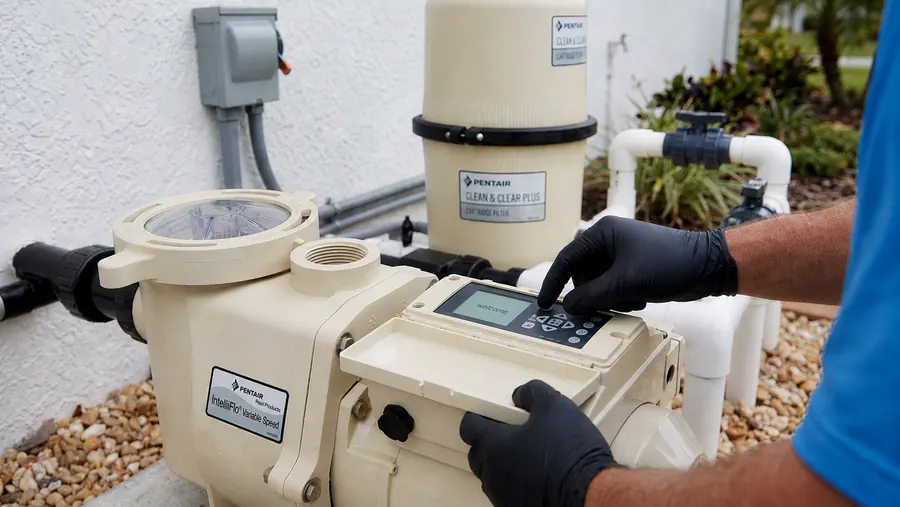
Confirm that the pump moves water through the pool before dosing. Weak return flow or a pump that has lost water flow needs attention first. Chemicals need moving water to spread throughout the pool.
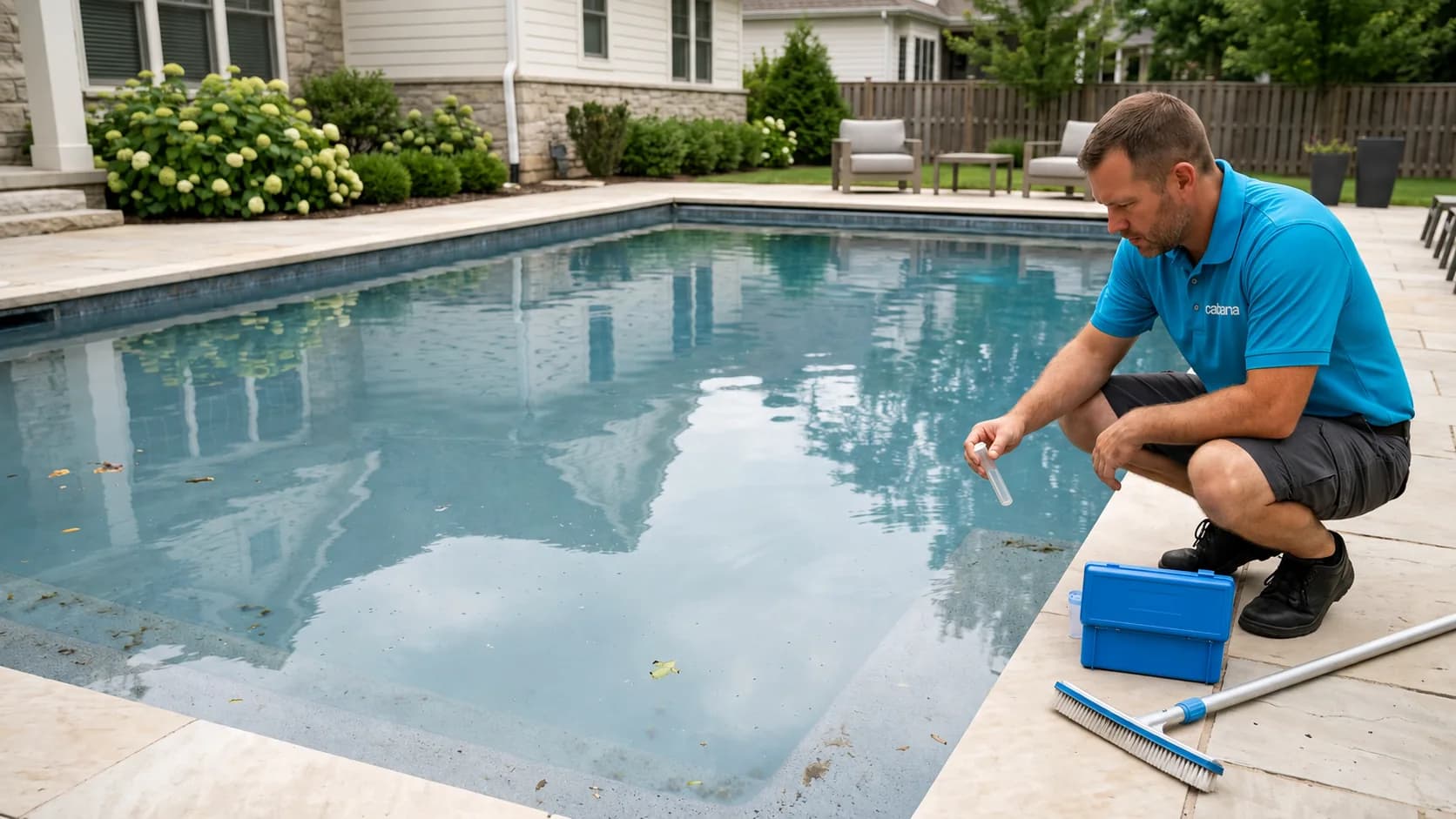
- Take a sample about 12 to 18 inches below the surface, away from return jets and chemical addition points.
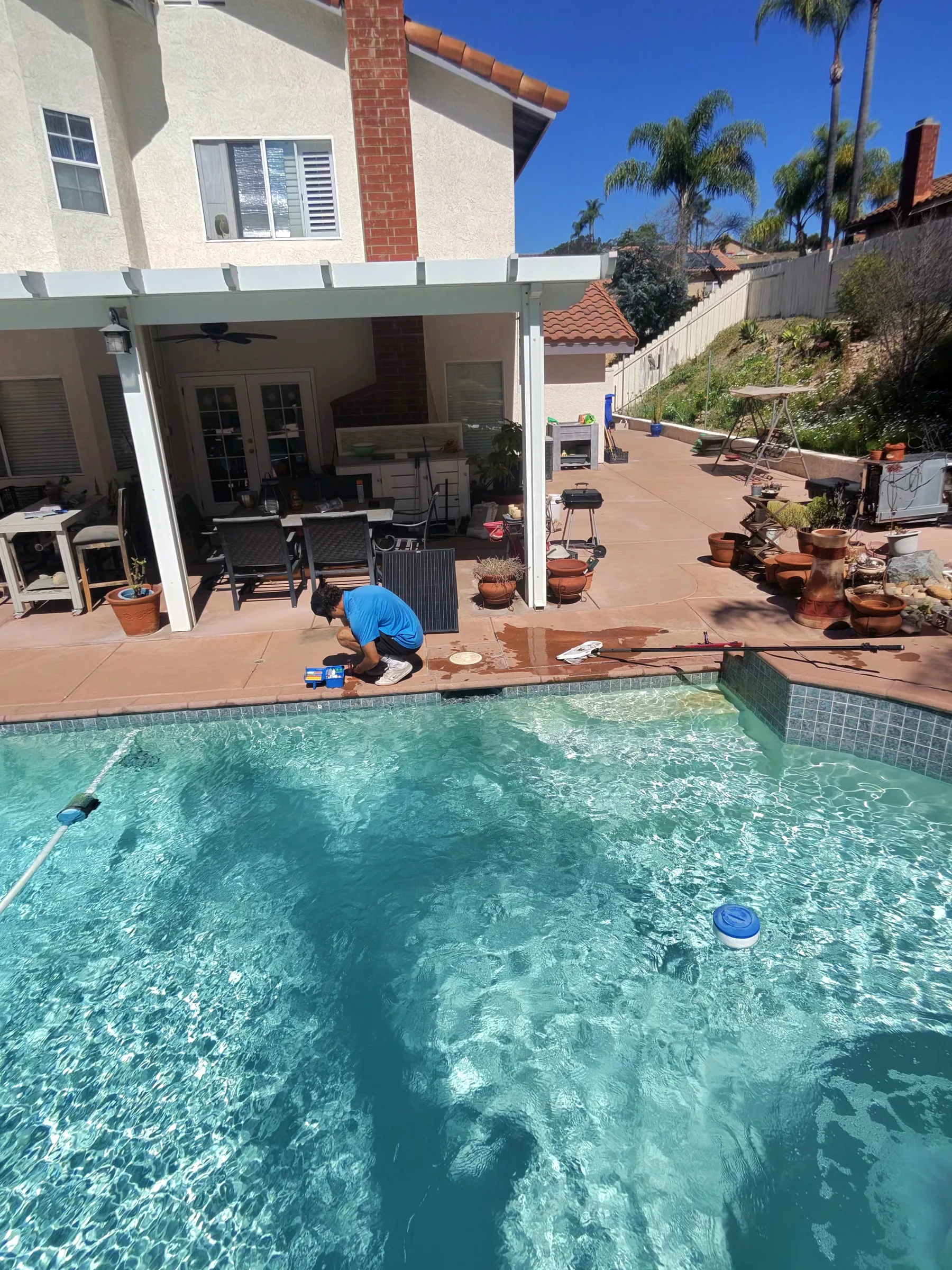
- Test alkalinity and pH using fresh samples collected at the same time. Follow the kit's sample-volume instructions.
- For a drop-based alkalinity test, count drops to the specified color change and calculate ppm using the kit instructions.
- Repeat an unexpected result before choosing a dose. Check reagent expiration dates and instructions for interference from high chlorine.
If you recently added chemicals, wait until the treatment has mixed before sampling. A reading taken too soon can lead to a second, unnecessary dose.
Check calcium hardness, which measures dissolved calcium, and stabilizer, also called cyanuric acid. Stabilizer contributes to measured total alkalinity, which matters when evaluating scale risk. Do not subtract it from your reading by guesswork.
Southern California's mineral-heavy supply makes the calcium check especially useful when pH rises or white deposits appear. Around Sacramento and the East Bay, softer source water makes low calcium a separate concern. Baking soda will not correct low calcium hardness.
Decide whether alkalinity needs to go up or down
Usually, adjust alkalinity before making the final pH adjustment because alkalinity treatments also change pH. The exception is already-low pH: restore it before using acid to lower alkalinity. For routine balancing, use a pH range of 7.2 to 7.8.
| Your readings | Your next step |
|---|---|
| Alkalinity 50 ppm, pH 7.4 | Raise alkalinity with sodium bicarbonate, then retest both readings. |
| Alkalinity 40 ppm, pH below 7.2 | Begin correcting low alkalinity with sodium bicarbonate, then retest and address any remaining low pH before swimming. |
| Alkalinity 160 ppm, pH 8.0 | Lower alkalinity with measured acid additions, limiting each dose by its effect on pH. |
| Alkalinity 160 ppm, pH 7.2 or lower | Use aeration to raise pH before considering more acid. |
| Alkalinity 90 ppm, pH 7.5 | Stop if both readings meet your sanitizer and equipment targets. |
| Alkalinity on target, pH outside 7.2 to 7.8 | Correct pH in small steps and monitor alkalinity rather than choosing a new alkalinity target. |
A slightly out-of-range alkalinity result does not automatically need correction if your equipment permits it and pH stays stable. Persistent pH drift matters more than forcing every reading to the middle of a chart.
Raise alkalinity with a measured baking soda dose
Use sodium bicarbonate, sold as baking soda or alkalinity increaser, when alkalinity needs to rise. About 1.5 pounds raises alkalinity 10 ppm in 10,000 gallons. Confirm the product's active ingredient and follow its label.
Calculate pounds needed as: 1.5 × pool gallons ÷ 10,000 × desired ppm increase ÷ 10. For example, raising a 10,000-gallon pool from 50 to 80 ppm takes approximately 4.5 pounds in total.
Start with half the calculated amount, or less if the label limits each application. In that example, begin with about 2.25 pounds. Apply it as directed with circulation running, allow it to mix, then retest before calculating the next addition. Do not automatically add the remaining half.
Soda ash (sodium carbonate) raises pH much more than alkalinity. Use soda ash only if pH also needs to rise; otherwise use baking soda.
Use the guide to raising alkalinity with baking soda for full worked examples and follow-up checks.
Lower alkalinity with acid without dropping pH too far
For muriatic acid at 31.45 percent strength, about 25 to 26 fluid ounces lowers alkalinity 10 ppm in 10,000 gallons. Scale that amount by pool gallons and the desired reduction. Different acid strengths require different amounts.
This estimates the total acid needed across treatment cycles, not a safe single dose. Start with no more than half the calculated amount, and use less if needed to keep pH from falling below 7.2. Check a pool dosing calculator or your kit's acid-demand test, which estimates acid needed for a chosen pH, before each addition.
For example, a 20 ppm reduction in 10,000 gallons requires about 50 to 52 fluid ounces overall. Half is 25 to 26 fluid ounces, but the current pH may allow much less in the first treatment.
After mixing, retest both readings. If pH approaches 7.2 while alkalinity remains high, stop adding acid. Use aeration, bringing water into contact with air, to raise pH without raising alkalinity. Direct a return toward the surface or run an existing water feature.
Aeration lets dissolved carbon dioxide escape and may take hours. Once pH recovers, retest and calculate the next acid dose from the new readings. Adding baking soda to restore pH would replace some alkalinity you just removed.
A pH rise after aeration does not mean alkalinity rose too. Check both before repeating acid. The guide to lowering alkalinity and keeping it stable covers full worked examples and repeated treatment cycles.
Add chemicals separately and allow full mixing
Keep swimmers out during treatment. Follow each product's instructions for application, circulation, protective equipment, and the interval before another chemical addition.
- Wear suitable eye protection and chemical-resistant gloves as directed on the label.
- Never mix acid with chlorine or combine different chemicals in a bucket.
- Do not pour acid into a skimmer or chemical feeder.
- Avoid breathing acid fumes. Postpone handling if wind blows fumes toward you.
- Dilute or predissolve a product only when its label directs it. Add chemical to water, never water to concentrated chemical.
Allow the label's mixing interval and enough circulation to distribute the treatment throughout the pool. Thirty minutes on a clock does not prove the water has mixed evenly. Sample away from the addition point before deciding whether another dose is needed.
Retest and stop when both readings meet your targets
Stop adjusting alkalinity once it reaches your chosen target and pH remains manageable. Make any final pH correction in small steps, then check both readings again the next day.
- Both readings meet their targets: stop dosing. Small differences can reflect the test kit's resolution.
- The result barely changed: verify the test, pool volume, product strength, and circulation before increasing the dose.
- Alkalinity is on target but pH keeps rising: review water-feature use and salt-system operation before adding more chemicals.
- You want to swim: meet the product's waiting period and confirm acceptable pH and sanitizer readings. Clear-looking water alone is not a clearance test.
If corrections keep reversing after top-ups, test fill-water alkalinity and calcium separately, especially during hot inland weather. Keep a short log of readings and additions, then use the linked raise or lower guide to investigate the pattern.
Check alkalinity weekly and after substantial water replacement. Check pH and sanitizer more frequently, especially during heavy use.
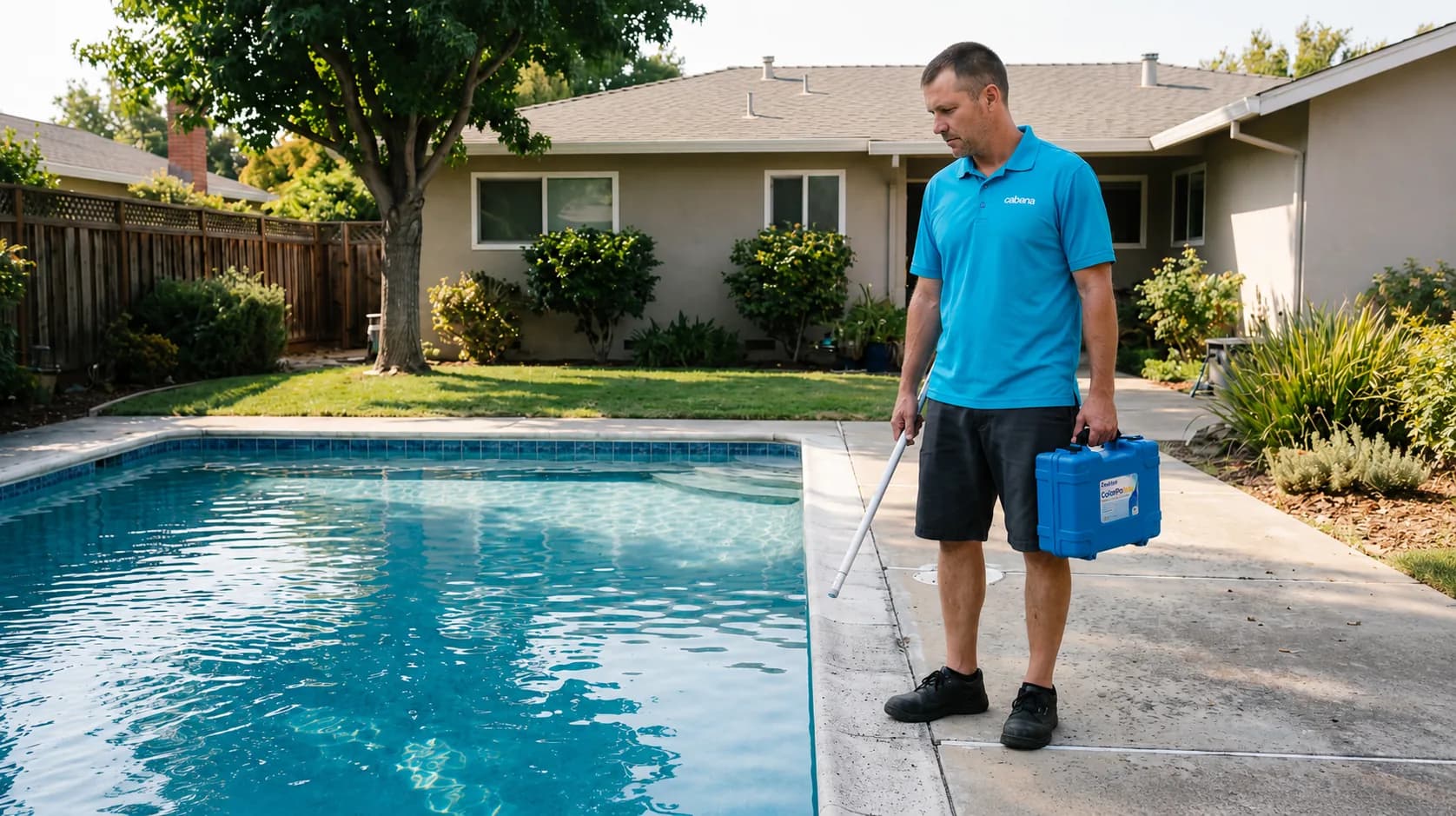
If measured adjustments still leave you alternating between acid and alkalinity increaser, arrange a water-balance check through our weekly pool cleaning service. Have your recent readings, chemical labels, and treatment times ready. Our technicians confirm the appropriate target and adjustment after checking the water and equipment.