Baking soda raises alkalinity with a measured dose
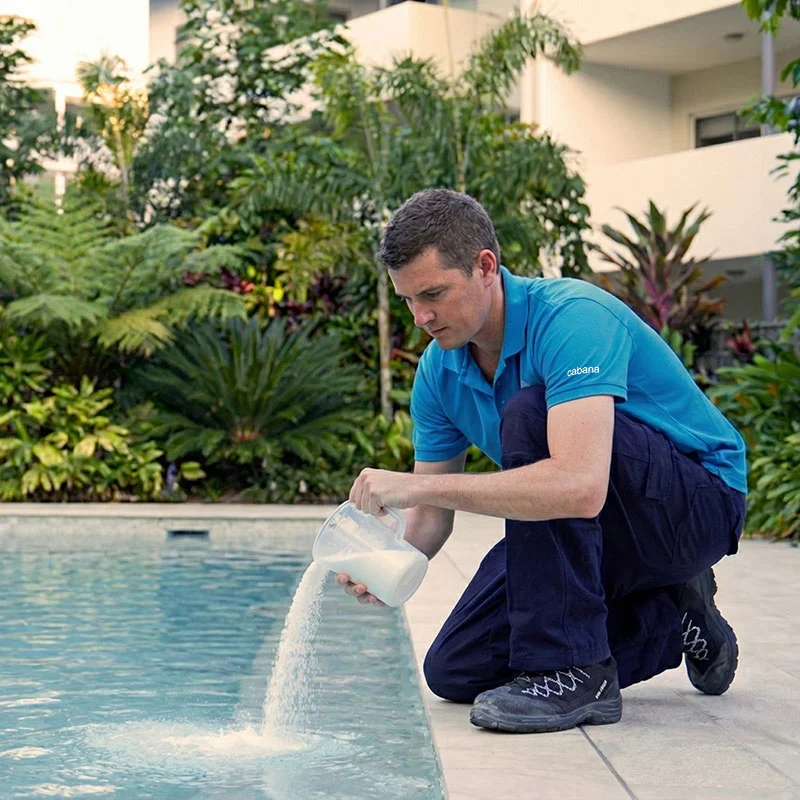
Raise pool alkalinity with sodium bicarbonate, or baking soda: about 1.5 pounds raises total alkalinity by 10 parts per million (ppm) in 10,000 gallons. Test first, calculate the needed increase, then add a partial dose with circulation running according to the product label.
Use 80 to 120 ppm as a common starting range, then refine the target for your sanitizer, equipment instructions, and pH behavior. Reaching the upper end is unnecessary if your water stays balanced near the lower end.
Across over 43,000 readings on our San Diego, Los Angeles, and Sacramento routes, total alkalinity has a median of 100 ppm. The middle 80 percent runs from 70 to 120 ppm. Measure your actual shortfall before adding a bag: a pool already near its chosen target may need little or no adjustment.
What happens when pool alkalinity is low?
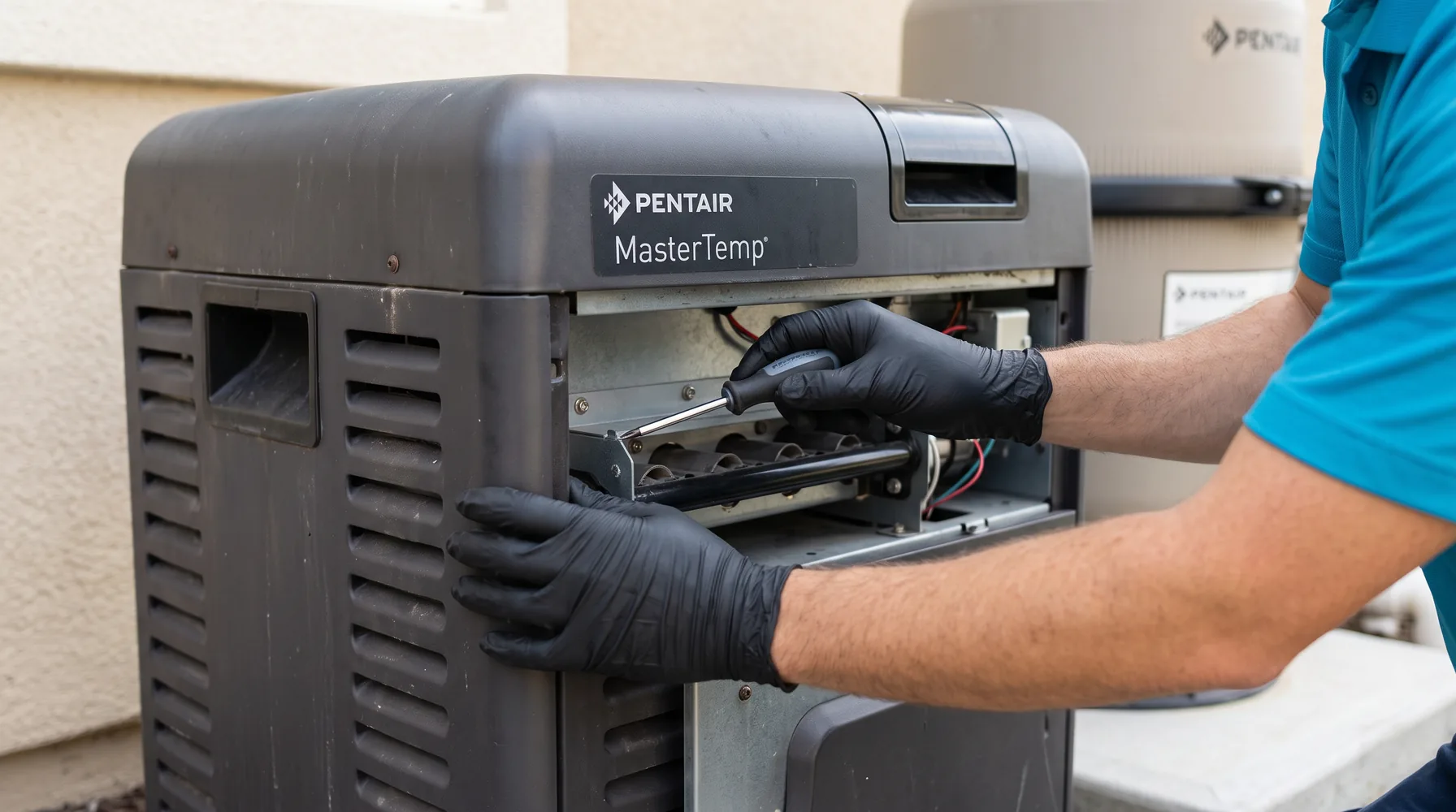
Low alkalinity lets pH swing more easily and drop into a corrosive range that damages metal equipment, including heater components. Check both alkalinity and pH before deciding how urgently to correct the water.
Total alkalinity measures the water’s ability to resist acid-driven pH changes. It differs from pH, which describes how acidic or basic the water is now. A pool can have acceptable pH today but little buffering against the next acid addition.
Our Sacramento area total alkalinity median is 70 ppm across over 5,700 readings. The middle 80 percent is 60 to 110 ppm. If your reading is around 70, pair it with a pH test and recent treatment history before choosing a dose. A reading common on local routes still needs attention if pH keeps falling.
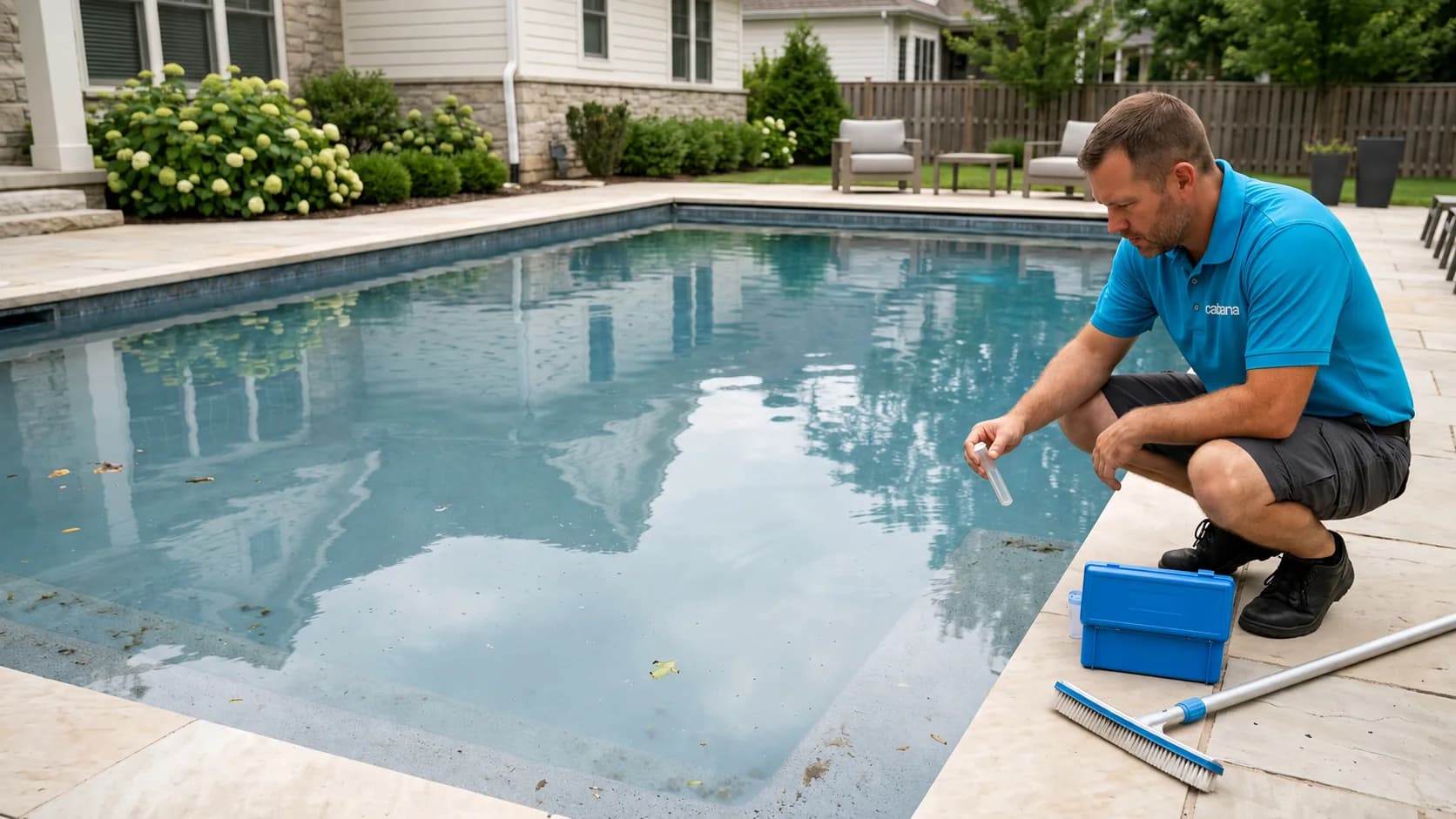
Use a drop-based alkalinity test with fresh reagents. Collect water away from return jets and chemical addition points, following the kit’s sampling instructions. Repeat an unexpected result before treating it. A single strip reading near a color boundary is a weak basis for a large adjustment.
Local alkalinity patterns and your fill water
Test fill water separately when repeated top-ups change your pool’s balance. Our Los Angeles and San Diego routes both have a median alkalinity of 100 ppm, compared with Sacramento’s lower median. Those Southern California medians cover over 16,000 readings in Los Angeles and over 21,000 readings in San Diego.
The regional difference makes a neighbor’s dosing routine a poor substitute for your own test. Check alkalinity and calcium hardness separately, especially after a substantial refill.
Southern California’s imported Colorado River and State Water Project supplies are generally hard and mineral-heavy. Evaporation leaves minerals behind, and repeated top-ups can increase calcium hardness. Where pH already rises frequently, pushing alkalinity toward the upper end can make managing that drift harder.
Sacramento area supplies from the American River and Folsom Lake, and East Bay supplies from the Mokelumne River, are generally softer. Baking soda raises alkalinity but does not correct low calcium hardness.
| Water pattern | Useful decision |
|---|---|
| Hard fill water and recurring high pH | Consider the lower end of the suitable alkalinity range, consistent with equipment guidance. |
| Soft fill water and low alkalinity | Measure calcium hardness as well as alkalinity before declaring the water balanced. |
| Frequent top-ups during inland heat | Compare pool and fill-water readings before repeating the previous dose. |
How do I raise alkalinity without raising pH?
Use sodium bicarbonate for an alkalinity increase with only a modest pH rise. Sodium carbonate, also called soda ash, raises pH much more strongly and also increases alkalinity. Choose bicarbonate when alkalinity is low but pH is already acceptable.
Our Los Angeles pH median is 7.8 across over 17,000 readings. The middle 80 percent ranges from 7.6 to 8. If your pool already sits near the upper end, avoid products intended mainly to raise pH.
Los Angeles and San Diego share the same alkalinity median, yet San Diego’s pH median is lower at 7.6 across over 28,000 readings. That difference is a practical reason to check both values: the same alkalinity reading can accompany different pH conditions.
No bicarbonate dose promises absolutely unchanged pH. The response depends on starting chemistry and carbon dioxide balance.
If pH is already above your operating range, avoid alternating large bicarbonate and acid additions. Acid lowers both pH and alkalinity, so one treatment can undo part of the other. A coordinated adjustment is more useful than chasing each number independently.
Aeration from fountains, spillovers, or return jets can raise pH without raising total alkalinity. That explains why pH may climb even when the alkalinity reading barely changes.
Dose calculations and the order of addition
Calculate the dose from your pool’s volume and the gap between its current alkalinity and chosen target. If a 15,000-gallon pool measures 60 ppm and the initial target is 80 ppm, the needed increase is 20 ppm. That requires approximately 4.5 pounds of sodium bicarbonate.
The working formula is: pounds needed = pool gallons divided by 10,000, multiplied by the desired ppm increase divided by 10, multiplied by 1.5.
For this example, the calculation is 1.5 × 2 × 1.5 = 4.5 pounds. Treat that as an estimated total, then split the adjustment to allow for testing and volume uncertainty. Confusing a 10,000-gallon pool with a 15,000-gallon pool changes the required amount substantially.
- Record alkalinity, pH, pool volume, and the intended target.
- Weigh a partial dose, such as half the calculated total. Use weight rather than kitchen cup measurements.
- Run circulation and add the product exactly as its label directs. Follow its dosing limits and keep swimmers out during application.
- Keep chemicals separate. Never mix bicarbonate with acid or chlorine in a container, and do not pour it into the skimmer unless specifically directed.
- Allow thorough mixing for the label’s stated interval, then retest alkalinity and pH before adding more.
If the label gives no retesting interval, allow several hours of effective circulation before checking again. Poor circulation can leave an uneven concentration, making an early sample misleading. Calculate any remaining dose from the new reading after mixing.
A seven-day record can explain repeated low readings
Keep a week of readings and chemical additions to distinguish a one-time correction from an ongoing cause. Record acid doses, sanitizer type, significant refilling, alkalinity, and pH. Compare tests taken under similar conditions, after chemicals have dispersed.
Repeated acid additions lower alkalinity. Acidic sanitizers, including trichlor tablets, can also consume it over time. Rain or replacement water can dilute alkalinity when the incoming water has a lower concentration.
In hot inland areas, evaporation means more top-ups, but evaporation alone does not remove alkalinity from the pool. Check whether a falling reading follows acid additions or water replacement. Coastal pools under the marine layer may need less replacement water, so the same dosing calendar may not fit both settings.
Most California pools run year-round. Use our guide to pool cleaning frequency to organize ongoing care, including after a large refill or seasonal equipment change. If cloudiness persists after alkalinity reaches its target, follow our cloudy pool water troubleshooting guide instead of adding more bicarbonate.
The next-dose decision after your retest
Base your next step on the paired alkalinity and pH readings after circulation. Stop adding bicarbonate once you reach the chosen target. A higher reading is not automatically better protection.
- Still below target, with acceptable pH: use the remaining shortfall to size a smaller follow-up dose.
- At target, with stable pH: return to routine testing and record the amount used.
- Low alkalinity with high pH: arrange a coordinated balance adjustment before continuing large additions.
- Repeated decline after correction: use your treatment record to identify what happens between the stable reading and the next drop.
Our weekly pool cleaning and water chemistry service provides ongoing testing and adjustment. Keep recent readings and product labels available so our technicians can assess the pattern. If dosing equipment may be involved, we confirm the right fix after seeing the equipment.