How a pool heater warms your water
A swimming pool heater warms water as the pool pump circulates it through the heating equipment and back into the pool. Gas heaters burn fuel, heat pumps move heat from outdoor air, and solar systems collect heat from sunlight.
The heater adds warmth to a moving stream of water. The whole pool warms gradually as heated water returns and mixes with cooler water. Your temperature setting tells the equipment when to stop adding heat, rather than how quickly to heat.
Follow the water from the pump through the heater
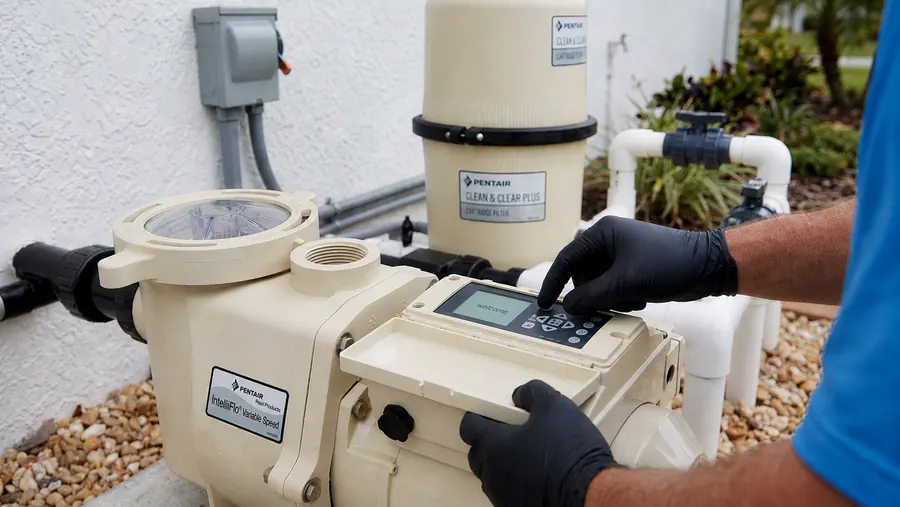
In a typical equipment setup, the pump pulls water from the pool and pushes it through the filter. Filtered water then passes through the heater before returning to the pool. The heater warms moving water in small increments; it does not heat the entire pool at once.
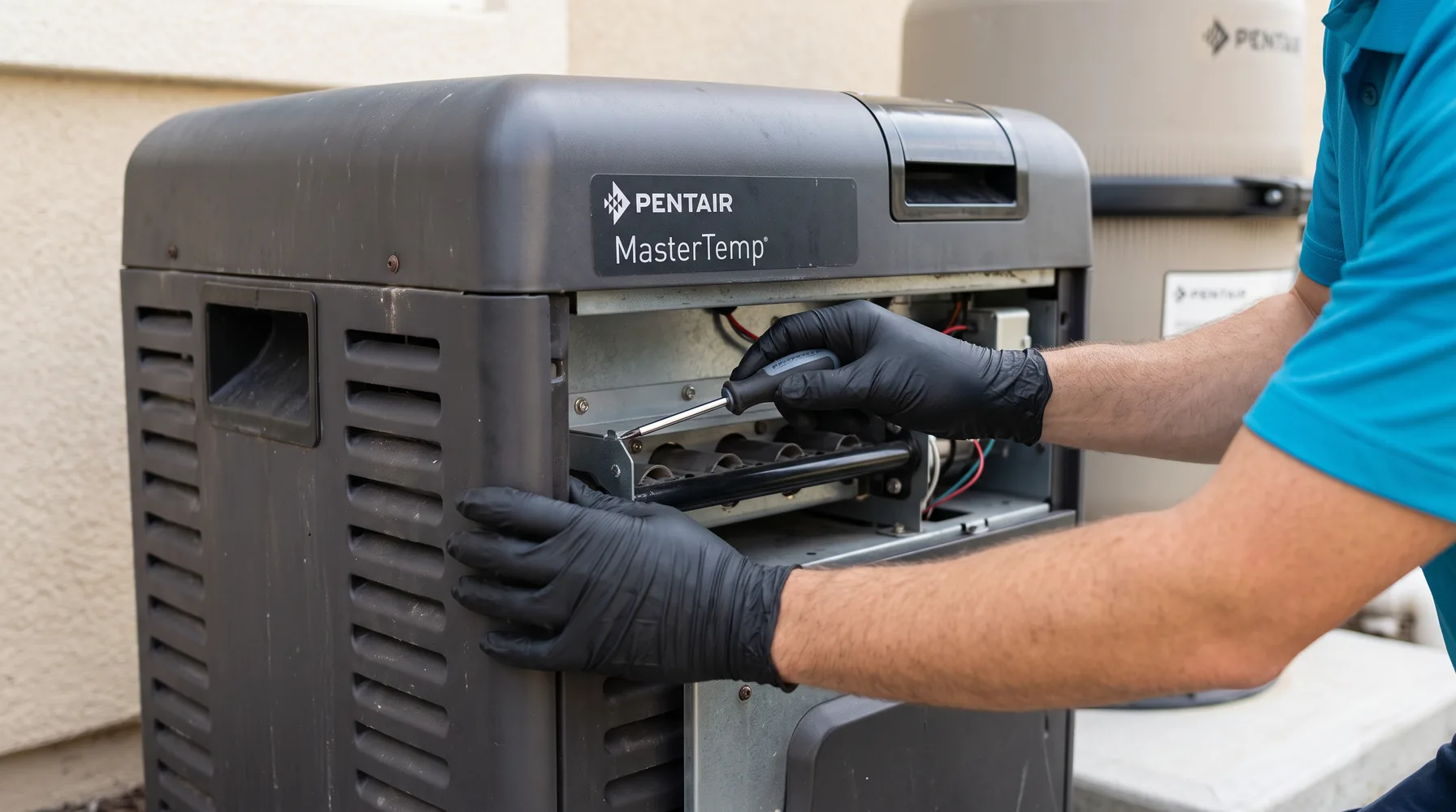
Inside gas heaters and heat pumps, water passes through a heat exchanger, a component that transfers heat across a separating surface. Pool water stays separate from the flame or refrigerant, the fluid that carries heat inside a heat pump.
The returning warm water mixes with the cooler pool water. That explains why a working heater may produce only mildly warmer water at the returns while the overall temperature climbs slowly. Feeling one return with your hand is less useful than tracking the pool temperature over time.
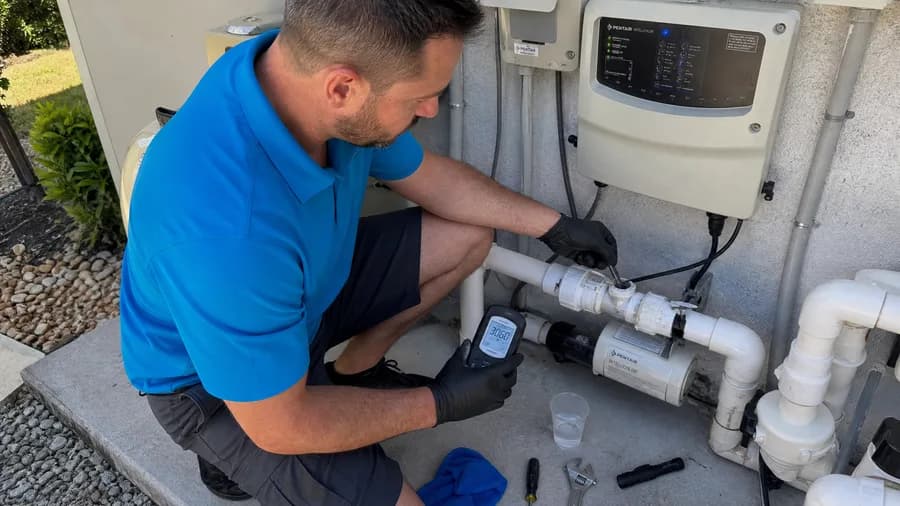
Water flow also protects the equipment. Too little flow can let heat build up inside the heater. A flow or pressure switch helps prevent operation under those conditions. A dirty filter, restricted basket, or unsuitable pump speed can interrupt heating even when the heater itself has no failed heating component.
Use the heater manufacturer's required flow range. There is no single pump speed that works for every heater and plumbing arrangement.
Know where your heater gets its heat
The energy source determines how your heater responds to weather and your swimming schedule. Read the equipment label to identify which process warms your water.
| Heater type | How it warms water | What changes your decision |
|---|---|---|
| Natural gas or propane | A burner heats the exchanger while pool water flows through it. | It can produce heat without warm outdoor air or sunlight. Heating speed still depends on output, pool volume, and heat loss. |
| Electric heat pump | A fan draws air across a coil. Refrigerant absorbs heat, a compressor raises its temperature, and the exchanger transfers that heat to water. | Cooler air generally reduces heating capacity and efficiency. Check the model's operating temperature limits before extending a cold overnight schedule. |
| Solar pool heating | Pool water circulates through collectors warmed by sunlight. | Controls should send water through the collectors when useful heat is available. Clouds and short days limit output. |
| Electric resistance | Electricity heats an element that transfers heat to the water. | It does not collect heat from outdoor air. Check the label because an electric heater is not necessarily a heat pump. |
Along coastal Southern California, cool marine-layer mornings can slow heat-pump heating and reduce solar output. Heat pumps do not need direct sunshine, but warmer daytime air may help them perform better. A gas heater does not depend on collecting warmth from the air, although the pool still loses heat to its surroundings.
A heat pump's main drawbacks are slower recovery in cool air and reduced output as outdoor temperatures fall. That matters when heating a cold pool for one evening, especially during Sacramento's cool winters. Frequent swimming in mild weather is a better fit for maintaining warmth with a heat pump. Compare its rated performance at the outdoor temperatures when you expect to use it.
For solar heating, longer circulation only helps while collectors can add warmth. Sending water through cool collectors after sunset can remove heat, so the controls should bypass them when useful heat is unavailable.
Understand why the heater starts, stops, or waits
The temperature setting is a target, not a power setting. Setting it much higher than your desired swimming temperature generally does not make the heater warm water faster. It tells the controls to continue heating toward a higher endpoint.
- A sensor measures water temperature and the controls compare it with your target.
- When heat is needed, the equipment checks its operating conditions, including adequate water flow.
- The burner or compressor starts according to the model's startup sequence.
- Heating stops when the target is satisfied or a protective control interrupts operation.
Some equipment includes a startup delay to protect components. Follow the displayed message and the model's instructions instead of repeatedly turning power off and on.
Automation can also control the heater. A pool or spa mode, heating schedule, or temperature setting in the controller may determine whether heat is requested. If the heater display and your app disagree, check which control has authority before changing several settings.
On shared pool and spa equipment, the selected mode determines which body of water receives heat. A spa reaching its target does not mean the pool has been heated.
Judge heating time by temperature gain and heat loss
A larger pool needs more heat for the same temperature increase. A bigger gap between the starting temperature and your target also means a longer heating period. Heater output determines how quickly energy enters the water, while evaporation and cool surroundings remove it.
For example, raising 15,000 gallons by 1°F requires approximately 125,000 BTU, a unit of heat energy. A heater delivering 125,000 BTU per hour to the water would need about one hour for that increase before heat losses. Real heating takes longer as heat escapes. On a gas heater label, input means fuel energy consumed; output means heat delivered to water. Use output when estimating heating time.
Record the starting temperature, target, heater operating status, and outdoor conditions. Compare readings from the same thermometer and location, away from return outlets, after a sustained heating period. A small rise shows progress, but it does not by itself confirm that the equipment is delivering its full rated output.
If the temperature stops rising below your target while heating continues, heat loss may be matching the heater's output. Reduced equipment output is another possibility. Extending the schedule without checking those factors can increase energy use without reaching your goal.
The pump must run while the heater needs circulation. Coordinate both schedules rather than assuming a longer heater schedule overrides a stopped pump. Our guide to how long a swimming pool pump should run explains the separate circulation considerations.
What drives running costs and whether to leave heating on
Running cost depends on fuel type, heater efficiency, the temperature increase you want, and how much heat escapes. Eight scheduled hours do not necessarily mean eight hours of active heating. Once the target is reached, the burner or compressor stops until the controls request more heat.
Gas and propane heaters consume fuel, while heat pumps and resistance heaters use electricity differently. A heat pump moves existing warmth, so it generally uses less electricity than resistance heating for the same heat delivered under suitable conditions. Solar collects sunlight, but circulation still uses pump energy.
SDG&E, Southern California Edison, and PG&E electricity rates are among the highest in the United States. That makes heater choice and pump run time especially important in California. Compare both energy use and your utility plan: warmer afternoon air may help a heat pump, but higher electricity rates during those hours can offset some savings.
Most California pools run year-round, with heater use clustering in spring, fall, and winter evenings. Plan around those cooler swimming periods rather than summer performance alone. A heat pump that maintains warmth easily in mild weather may need much longer to recover during winter.
Evaporation carries heat away, increasing the energy needed to hold your target. Dry Santa Ana winds can increase that loss even when the air feels warm. Use a suitable pool cover according to its instructions when the pool is unoccupied. Cover use reduces evaporation and the amount of heat the equipment must replace.
For frequent swims, leaving heating enabled within a planned schedule can maintain your chosen temperature. It does not mean the heater runs continuously. For several days without swimming, lowering the target or disabling the heating request reduces heat loss from keeping the water warmer. Allow recovery time before your next swim, particularly with a heat pump. Keep required circulation and freeze protection active.
For equipment decisions, see our guide to what affects pool heater costs for California pools. For an existing heater that needs attention, our pool heater repair service and pricing page explains service pricing.
Choose your next step from what the equipment does
First check whether heat is being produced. A running pump proves that water is circulating, and a lit display proves the controls have power. Neither means the heater is actively warming the pool. Keep equipment panels closed while checking the operating message.
- Adjust settings yourself: Confirm pool mode, set the target to your desired swimming temperature, and check that the pump runs during the heating schedule. If the water has already reached the target, standby is normal. Verify the response before making another change.
- Allow more heating time: Choose this when operation is normal and temperature is rising. Use the starting temperature, pool volume, weather, and cover use to judge progress.
- Arrange service: Choose this for recurring faults, repeated shutdowns, leaks, or no temperature gain despite a confirmed heating request under suitable conditions. More run time will not resolve a failed component or restricted flow.
Do not bypass safety switches or open gas, refrigerant, or electrical components. If you smell gas, leave the equipment area without operating switches and contact the gas utility's emergency service from a safe location.
Water balance matters when our technicians inspect reduced heat transfer or exchanger damage. Southern California's hard source water makes calcium buildup an important check. In Sacramento and the East Bay, softer source water makes low calcium hardness and corrosive balance important checks. Low calcium alone does not diagnose metal corrosion; pH, alkalinity, and equipment materials also matter. We test the pool water against the heater manufacturer's requirements rather than choosing treatment from location alone.
At Cabana Pools, we confirm the cause after checking the equipment, flow, controls, and water balance. Before contacting us, note the model, any fault code, current and target temperatures, and whether the heater stays on. Those details help us determine whether the next step is a control adjustment, repair, or equipment replacement assessment.