Most salt cells last 3 to 7 years
A pool salt cell typically lasts 3 to 7 years, depending on its model, generating hours, water balance, and cleaning history. Replace it when testing confirms lost chlorine production under correct operating conditions, rather than at a particular age.
The salt cell turns dissolved salt into chlorine using electrically powered plates. Their active coating wears down with use. Cleaning can remove deposits covering those plates, but it cannot restore a worn coating.
Calendar age alone misses how much work the cell does. Many California pools operate year-round, allowing cells to accumulate generating hours through twelve months. A five-year-old cell that still maintains chlorine reliably can remain in service.
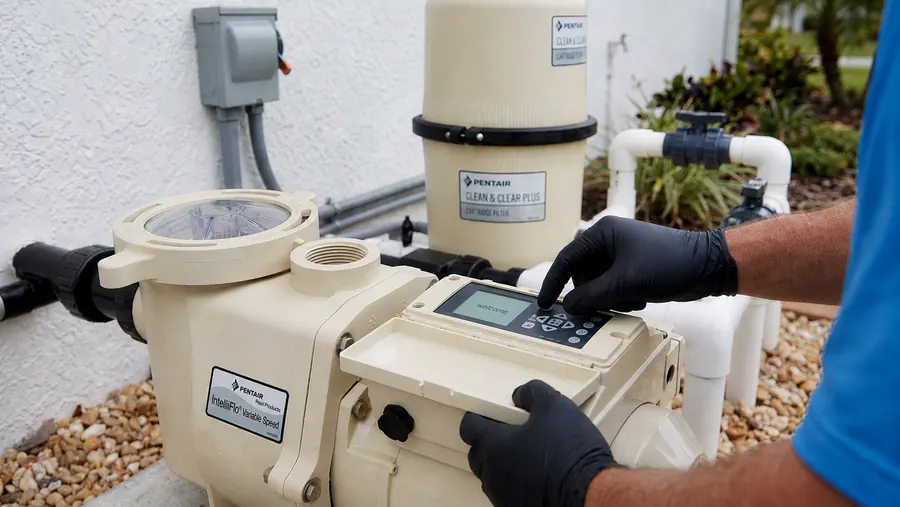
Keep the installation date and model number with your equipment records. If the controller displays operating hours or remaining life, check what that model counts. Powered hours, generating hours, and an estimated life percentage are different measures.
What wears a salt cell out faster, and how to prevent it
The main controllable factors are salt concentration, generating workload, mineral buildup, and cleaning habits. Address these together to help the plate coating last:
- Keep salt within the manufacturer's range. Running below that range can wear the plate coating faster. Confirm salt with an independent water test before adding more. A controller warning alone is not enough to choose a dose.
- Match cell capacity and output to the pool. A cell constantly running at high output accumulates wear faster than an appropriately sized cell meeting demand at a lower percentage. When choosing a replacement, check pool volume and peak summer demand, along with controller compatibility.
- Control mineral buildup. White crust on the plates is scale, a hard mineral deposit that can interfere with production. Keep pH within the equipment's recommended range, commonly 7.2 to 7.8. Check calcium hardness and alkalinity too, since pH alone cannot predict scale.
- Clean only when needed. Follow the manufacturer's inspection schedule and cleaning method. Routine acid soaking without deposits can shorten coating life. If deposits return quickly, correct water balance instead of repeatedly acid-cleaning the cell.
On many systems, 50% output means the cell generates for roughly half its available operating time. Eight pump hours at 50% may provide about four generating hours. Sixteen hours at 25% can provide the same generating time, so lowering the percentage alone does not save coating.
An appropriately sized cell can meet demand at a lower percentage over longer pump hours. Set that schedule around chlorine tests and adequate flow, not a percentage chosen just to preserve the cell. Our guide to setting pool pump run time explains the circulation side of that decision.
Inland valleys and Sacramento's hot summers raise chlorine demand compared with mild coastal conditions. Combined with year-round operation, that workload can shorten calendar life. Reduce output when cooler weather lowers demand, but never let chlorine fall below target to save generating hours.
Southern California's hard source water and evaporation make mineral buildup especially relevant. Sacramento and East Bay source water is generally softer, so measure calcium hardness before making adjustments. Use our salt cell cleaning guide when inspection confirms deposits. Before opening the housing, shut off equipment, isolate power, and follow the manufacturer's pressure-release instructions.
Signs your salt cell may be near the end
A gradual decline under comparable conditions is more concerning than one low chlorine reading. If the same pool now needs much higher output despite similar weather, swimming, and water balance, arrange a production check. A sudden stop points first toward flow, power, sensors, or a shutdown message.
| What you notice | What it means for replacement |
|---|---|
| Chlorine stays low despite increased output | Wear is possible, but algae, heavy use, insufficient stabilizer, or inadequate generating time can also explain it. |
| Low-salt warnings keep returning | Compare an independent salt test with the display. Cold water, deposits, wear, or a sensor fault can affect the reading. |
| White deposits cover or bridge the plates | Inspect and clean as directed before judging lifespan. Production may recover after removing scale. |
| The display reports no flow | Check baskets, filter condition, pump speed, and the flow sensor. Never bypass the flow switch. |
| Production stops during cooler weather | Check the model's temperature cutoff. Many systems reduce or stop generation around 50 to 60 degrees Fahrenheit. |
| A clean cell repeatedly reports a cell fault | Model-specific testing is needed to distinguish worn plates from power or control problems. |
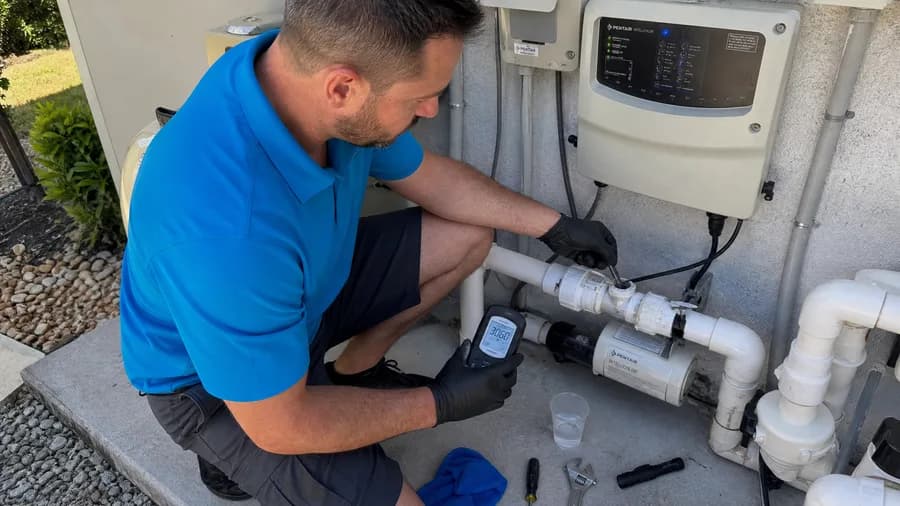
A clean-looking cell can still have a worn coating. Our technicians compare salt, temperature, flow, settings, and electrical diagnostics with the manufacturer's requirements. There is no universal current reading that proves every cell is healthy.
Normal startup delays and pauses between generating cycles also matter. A momentary idle display does not establish failure, and a whole pool's chlorine level will not necessarily rise measurably within a few minutes.
Keep chlorine safe while the cell is struggling
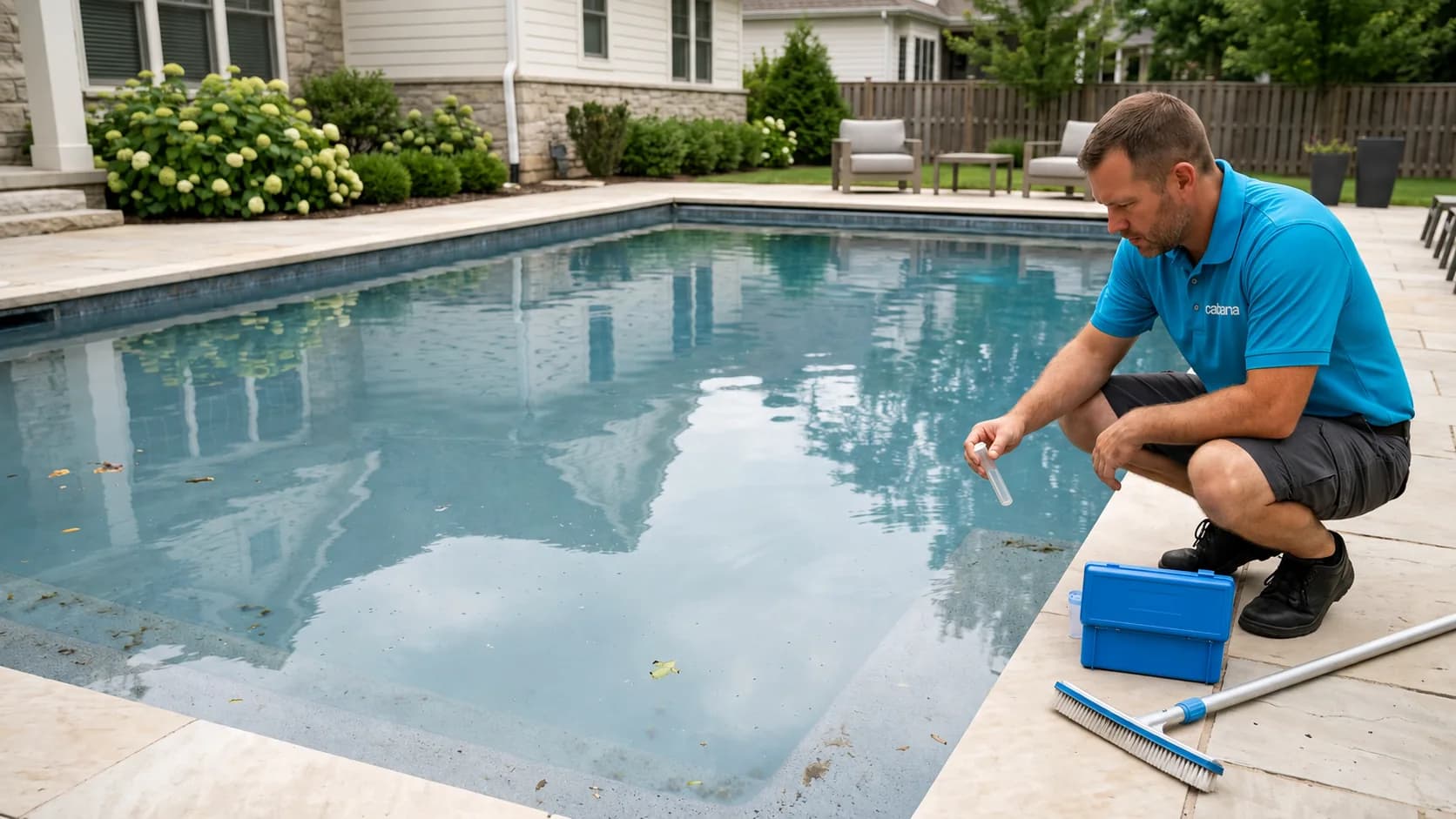
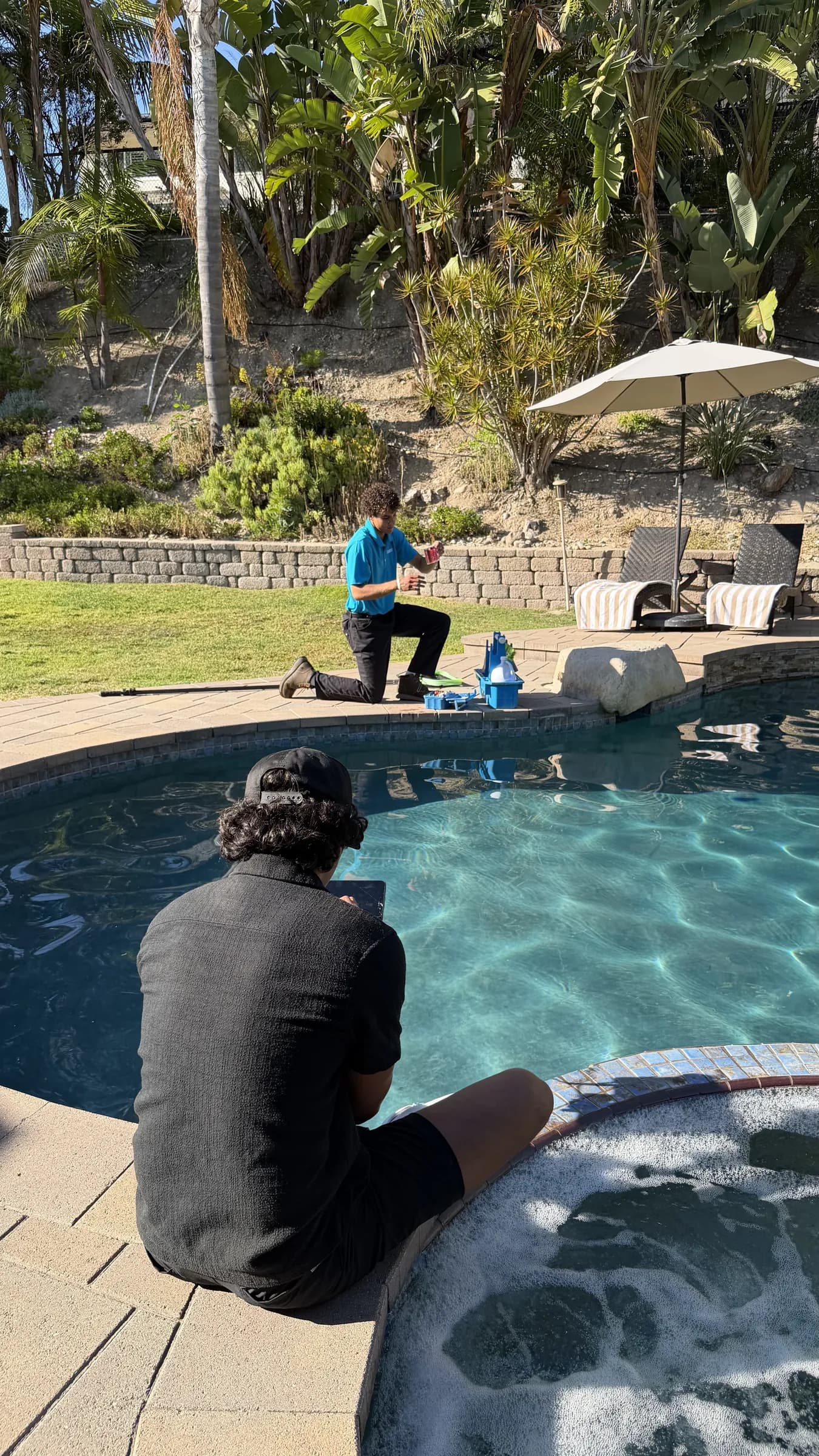
Test free chlorine, the chlorine available to sanitize the water, and pH at least twice weekly. Test more often during extreme heat, heavy swimming, or a suspected equipment failure.
Stabilizer, also called cyanuric acid, protects chlorine from sunlight. Higher stabilizer means you need a higher free chlorine level. We can give you the target range for your stabilizer reading.
If the cell cannot maintain that range, add liquid chlorine by hand according to the product label until the cell is fixed. Use your pool volume, current test result, and product strength to determine the dose. Follow label directions for circulation and retesting. Never mix chemicals or pour chlorine into the cell.
Do not swim if free chlorine reads zero or near zero, or if you cannot see the main drain clearly. Resume swimming only after chlorine is back within the pool's target range and the water is clear enough to see the drain.
When to call for testing or replacement
Arrange service when chlorine repeatedly falls below target despite adequate generating time, warnings persist despite verified water readings, or the housing or plates appear damaged. Have the cell and controller model numbers, installation date, output setting, pump schedule, and exact warning message ready. Include recent salt, free chlorine, pH, and stabilizer results.
Our technicians use these replacement rules:
- Keep the cell: It generates normally after correcting water balance, settings, deposits, or flow.
- Repair another fault: The cell lacks required power or receives an incorrect sensor signal.
- Replace the cell: Correct operating conditions and power are confirmed, but testing still indicates inadequate production or cell failure.
A replacement must match the controller, supported cell settings, connections, and required production capacity. If the old cell struggled from its first summer, we check whether a higher-capacity compatible cell would better meet demand.
Replacement cost depends on those requirements and whether controls or sensors also need repair. See our salt water pool repair service and pricing. We confirm the appropriate repair after inspecting the equipment.