How much does a swimming pool heater cost?
A pool heater's purchase and replacement cost depends on heater type, size, existing utility connections, and connection labor. Running cost depends on energy rates, outdoor temperature, heat loss, and your swimming schedule.
Start with our pool heater service pricing, then compare equipment suited to your pool and heating goal. Separate the equipment and connection scope from the expected energy expense. A lower purchase cost does not necessarily mean a lower seasonal heating bill.
For a useful comparison, give each provider the same pool volume, target temperature, and swimming schedule. Ask whether the proposed heater can meet that target during the months you actually swim.
Gas, heat pump, and solar cost factors
Compare three heating options against your intended use. Occasional spa heating and maintaining a pool through swimming season require different performance.
| Heater type | Upfront cost drivers | Operating cost drivers | Decision rule |
|---|---|---|---|
| Gas | Heater capacity, existing gas supply, connections, and venting requirements. | Fuel rate, efficiency, runtime, and heat lost between swims. | Consider it for rapid temperature increases or occasional pool and spa use. |
| Heat pump | Unit capacity, available electrical capacity, airflow space, and control compatibility. | Electricity tariff, outdoor temperature, efficiency, and supporting pump runtime. | Consider it for regular heating when sufficient warm daytime operating hours are available. |
| Solar | Collector capacity and condition, circulation requirements, and compatible controls. | Circulation electricity and maintenance; sunlight supplies the heat. | Evaluate an existing system for flexible daytime swimming goals rather than dependable rapid evening heating. |
Solar performance follows available sunlight. Coastal Southern California's gray May and June mornings can delay heat collection. Compare expected performance during those months with your swimming plans before relying on solar alone.
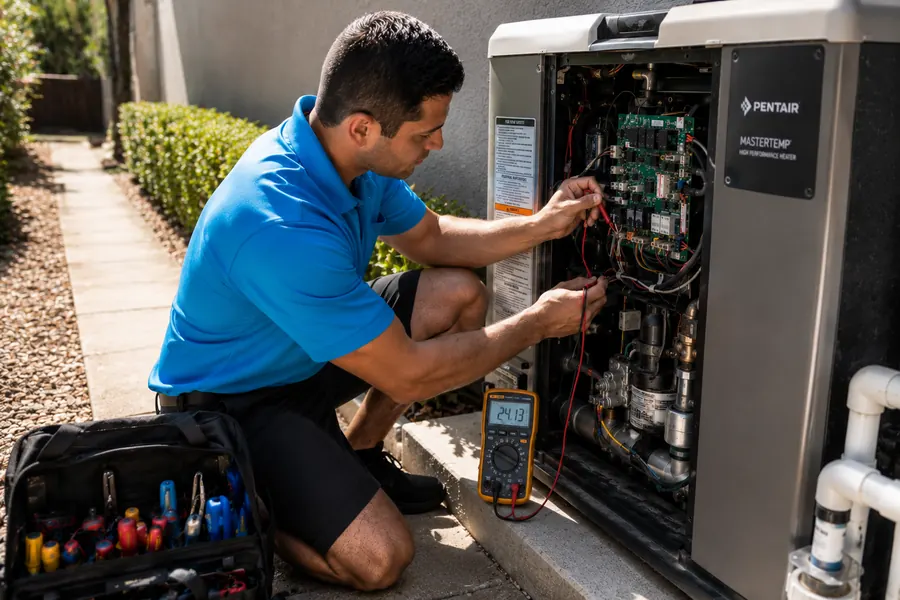
Pool volume and warm-up time determine size
Choose capacity using pool volume, desired temperature rise, and acceptable warm-up time. Surface area, wind exposure, and cover use determine how much heat escapes during heating.
As a sizing reference, raising 10,000 gallons by 1 degree Fahrenheit requires about 83,400 BTU of heat before losses. A 10-degree increase needs ten times that heat. This explains why a request for quick evening heating changes equipment selection.
Compare delivered heating output, not just a gas heater's fuel input rating. For heat pumps, compare output at the air and water temperatures you expect during use.
A larger unit may shorten warm-up time, but it cannot eliminate ongoing heat loss. Tell our technicians whether you need the entire pool heated or only the spa. We confirm equipment compatibility after seeing the setup.
Existing connections shape the replacement quote
A compatible replacement at an existing equipment pad has a different scope from a pool without heating connections. An existing gas pipe does not automatically have enough capacity for a larger gas heater. Likewise, nearby electrical power does not establish that a circuit can support a heat pump.
Our equipment assessment considers these quote drivers:
- Supply compatibility: Gas requirements or electrical voltage and capacity for the proposed model.
- Connections and controls: Water connections, automation compatibility, and labor to connect replacement equipment.
- Placement: Manufacturer clearances, service access, and unobstructed heat-pump airflow.
- Gas exhaust: Venting requirements for the equipment and its location.
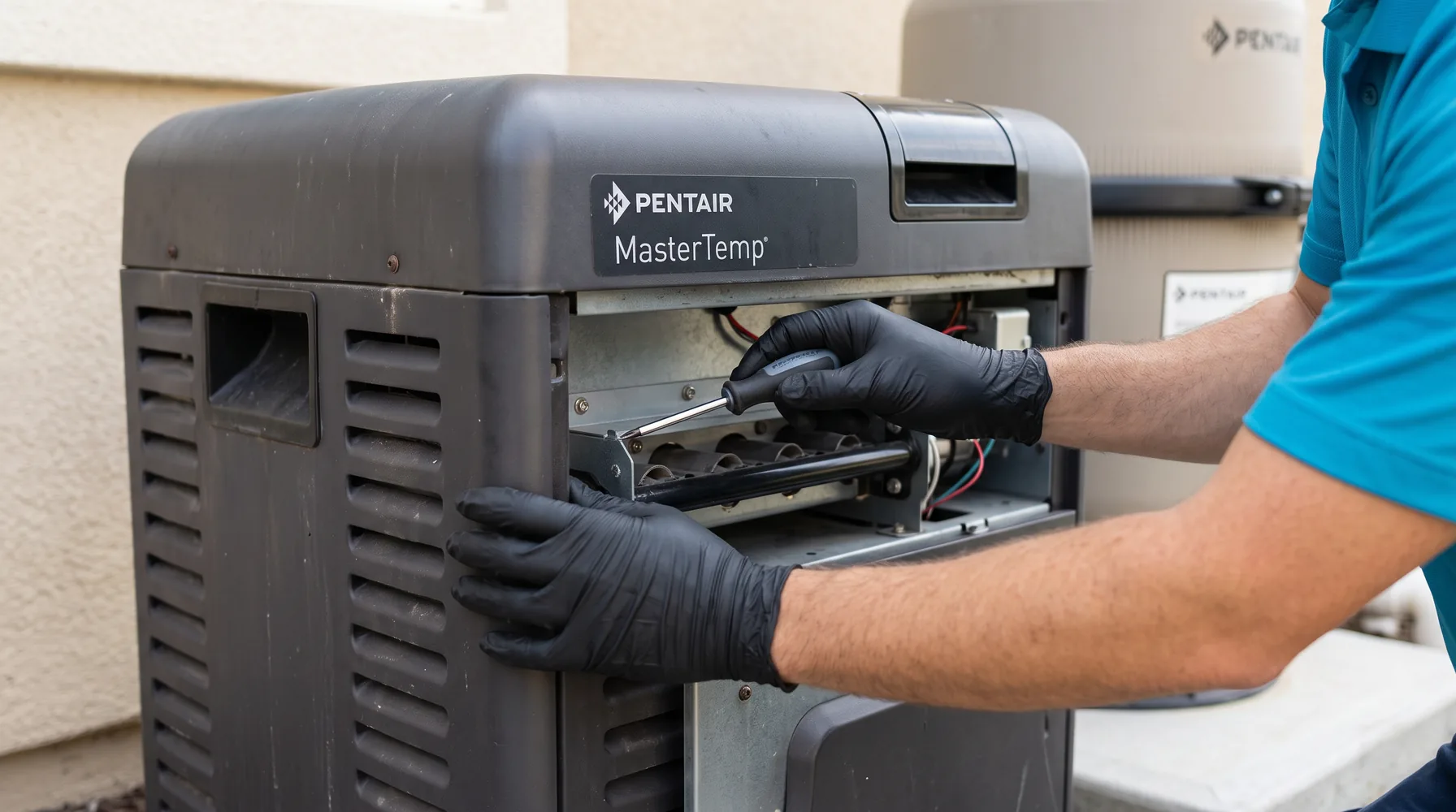
Cabana handles replacing and connecting heater equipment at an existing setup. Our pool heater equipment replacement and connection service explains the next step for compatible equipment.
How can I heat my pool cheaply?
Reduce heat loss first with a suitable pool cover whenever the pool is unused. Then choose a deliberate temperature and heating schedule. Maintaining warm water continuously creates a different energy demand from preparing for occasional swims.
California electricity rates make heat-pump demand and circulation runtime important budget factors. For homes served by SDG&E, Southern California Edison, or PG&E, use the actual household tariff, including time-of-use periods. A generic national energy estimate can misrepresent your operating expense.
Heat-pump output and efficiency generally fall as outdoor air cools. Cold Sacramento and East Bay nights can extend warm-up time, and some units stop heating below their operating limit. Request performance figures for expected nighttime conditions, not only warm-air ratings.
Warmer daytime operation may improve heat-pump performance, but compare those hours with your electricity rate schedule. Estimate consumption as heater electrical input multiplied by runtime, then add any extra circulation energy. For gas, compare fuel consumption over the same heating goal and weather conditions.
Maintenance and timing belong in the budget
Our San Diego routes account for 55 percent of our regional heater service and diagnosis visits, with May busiest locally. Los Angeles peaks in August and Sacramento in June. Across those routes, we have over 1,400 visits on record, with June accounting for 17 percent overall. Arrange an operating check ahead of your region's busy month and first planned heated swim.
Southern California's hard source water becomes more concentrated through evaporation. Balanced water helps limit scale that can impair heat transfer. Sacramento and East Bay water is generally softer, making low calcium hardness and corrosive balance more relevant maintenance concerns.
Coastal salt air also makes metal condition worth checking before investing in replacement equipment. Include ongoing water care and equipment inspection in your ownership plan.
For an existing heater that misfires, leaks, or shuts down, use our guide to common pool heater faults and repairs before assuming replacement is necessary.
A checklist for comparing heater proposals
Compare proposals only when they describe the same heating goal and connection scope. Before approving equipment replacement, request:
- The proposed model and delivered output under expected operating conditions.
- The pool volume, temperature rise, and estimated warm-up time used for selection.
- Confirmation that existing utility connections, clearances, and controls suit the equipment.
- A clear description of connection labor and the operating check after replacement.
- A seasonal energy estimate stating weather, cover use, runtime, and utility-rate assumptions.
If repair remains practical, compare it using our pool equipment repair versus replacement guide. Send us the current model label and equipment-pad photos, together with your desired swimming schedule.