Start with eight hours, then check what the pool needs
Start with about eight hours a day for a single-speed swimming pool pump, then adjust for water flow, cleanliness, and chlorine levels. A variable-speed pump can run longer at lower speed, but its schedule must provide enough flow for skimming, filtration, and any connected equipment.
Eight hours is a starting point, not a daily requirement for every pool. A small pool with strong circulation may need less time. A larger pool, heavy leaf load, or salt chlorine generator may need more.
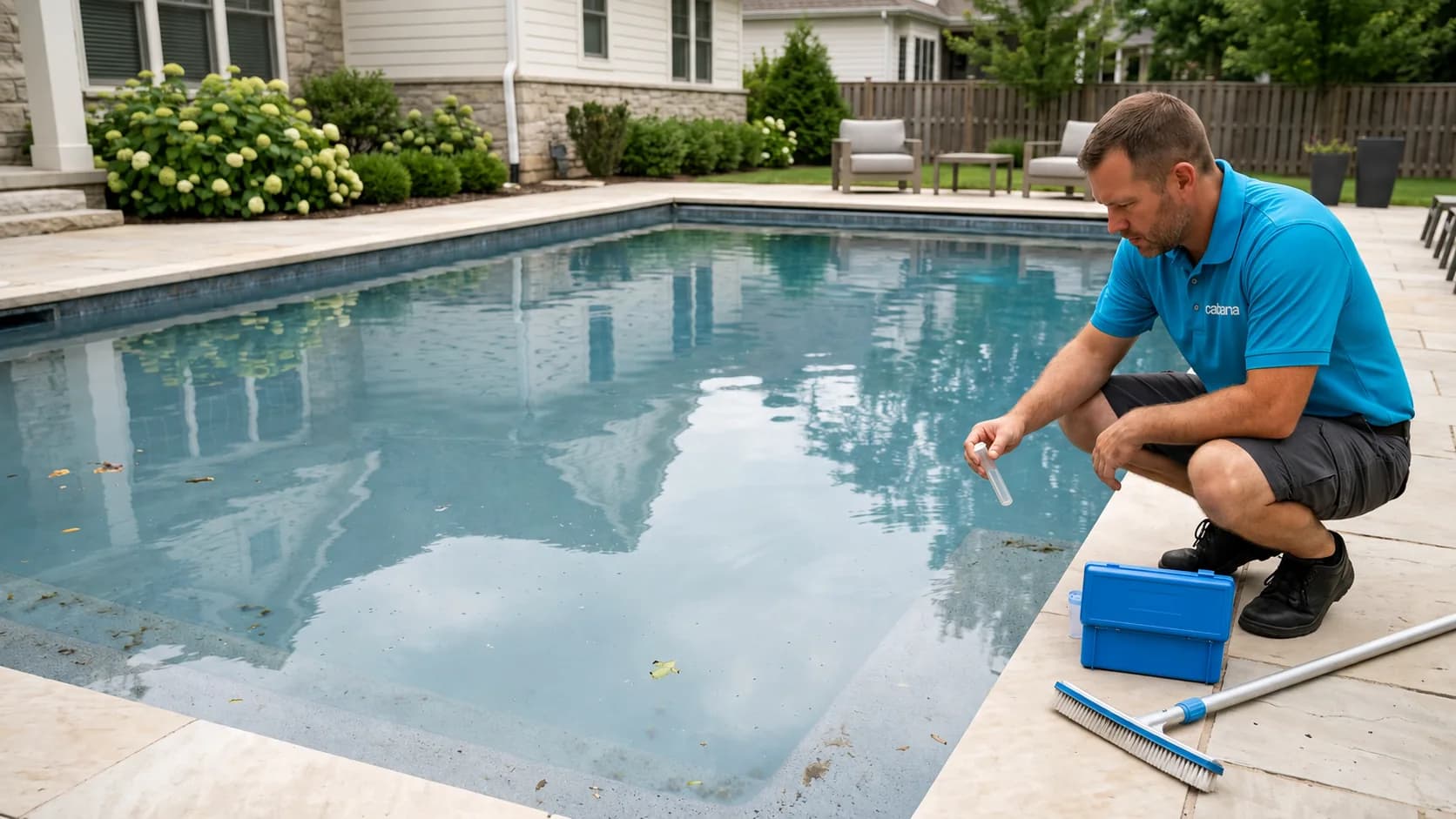
At Cabana Pools, our technicians check whether water is moving properly before adding hours. We then check filter pressure, water chemistry, equipment settings, and the timer. That order helps separate a short schedule from a problem that extra running time cannot fix.
Check water movement before changing the timer
First, watch the pool while the pump runs at its scheduled speed. Water should move into the skimmer, and the return jets should push water back into the pool. Compare that movement with what you normally see at the same speed.
Check that the water level is around the middle of the skimmer opening. A low level can let the pump pull air. A packed skimmer basket can restrict water before it reaches the pump. Turn the pump off before removing a basket, and prevent an automatic restart.
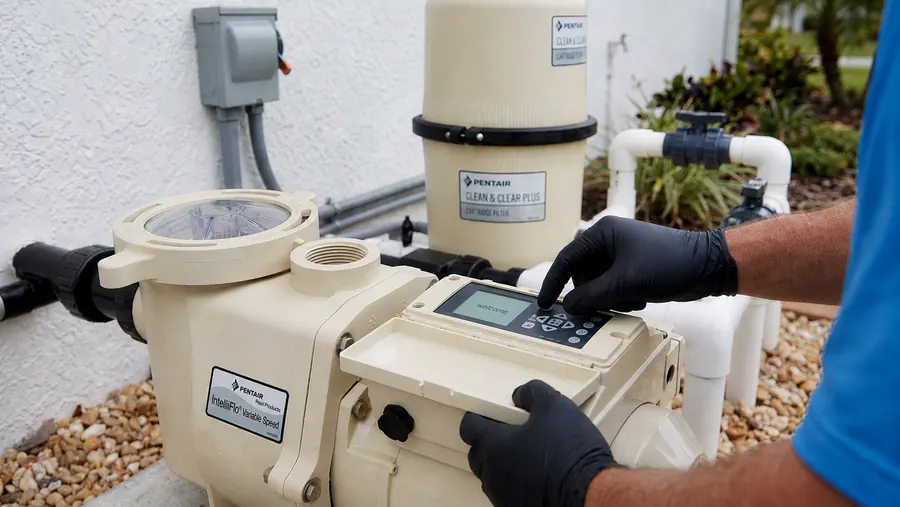
For a variable-speed pump, record both the hours and RPM, the motor's revolutions per minute. Ten hours at a low RPM does not move the same amount of water as ten hours at a higher setting. Horsepower alone cannot tell you the actual flow through your pool.
If the pump basket stays mostly empty, the pump repeatedly loses water, or the motor runs without circulation, shut it off. Adding hours can damage equipment running without water. Our guide to restoring water flow and priming a pool pump explains that separate problem.
Match the symptom to the next check
Next, our technicians compare the symptom with filter pressure and pump speed. Record the filter's clean pressure after proper cleaning, at a known RPM and valve setting. Pressure readings taken at different speeds are not directly comparable.
| What you notice | What it can mean | What to check before adding hours |
|---|---|---|
| Weak return jets and pressure above the clean reading | The filter may be restricting flow. | Compare the pressure increase with the filter manufacturer's cleaning threshold. |
| Weak return jets, unusually low pressure, and air under the pump lid | Water may be restricted before the pump, or air may be entering. | Check water level and baskets. Have persistent air or weak flow inspected. |
| Leaves stay on the surface while the pump runs slowly | The low-speed setting may not provide enough skimming. | Try a dedicated higher-speed skimming period and watch whether debris reaches the skimmer. |
| Water looks cloudy despite normal return flow | Water balance, algae, or poor filtration may be involved. | Test chlorine and pH, then inspect filter performance before extending the schedule. |
| The salt system displays a flow warning | The cell may not receive its required water flow. | Check the specified minimum flow, pump speed, and filter condition. |
| The pump stops before the timer says it should | A schedule conflict, control problem, or equipment fault may be interrupting operation. | Record the actual stop time and any display message. |
A dirty filter needs attention before a longer schedule can be useful. Follow its cleaning instructions rather than using one pressure threshold for every filter. Keep the system off and release pressure according to the equipment instructions before opening it.
Use actual flow to put the hours in context
Once circulation is working, pool volume and measured flow help explain the schedule. Turnover means circulating a volume equal to the pool's capacity through the filtration system.
Hours for one calculated turnover = pool gallons ÷ gallons per minute ÷ 60.
For example, a 20,000-gallon pool flowing at 40 gallons per minute takes about 8.3 hours per calculated turnover. At 25 gallons per minute, the same calculation gives about 13.3 hours. These are examples, not recommended settings for every pool.
Use a reliable flow reading at the speed you actually run. The pump's maximum advertised flow does not account for your pipes, filter, and other equipment.
One calculated turnover does not mean every gallon has passed through the filter. Pool water mixes continuously. Use the calculation to understand circulation, then judge the schedule by debris removal, water clarity, and maintained sanitizer levels. A turnover calculation alone cannot confirm that water is ready for swimming.
Check chlorine production and heating needs
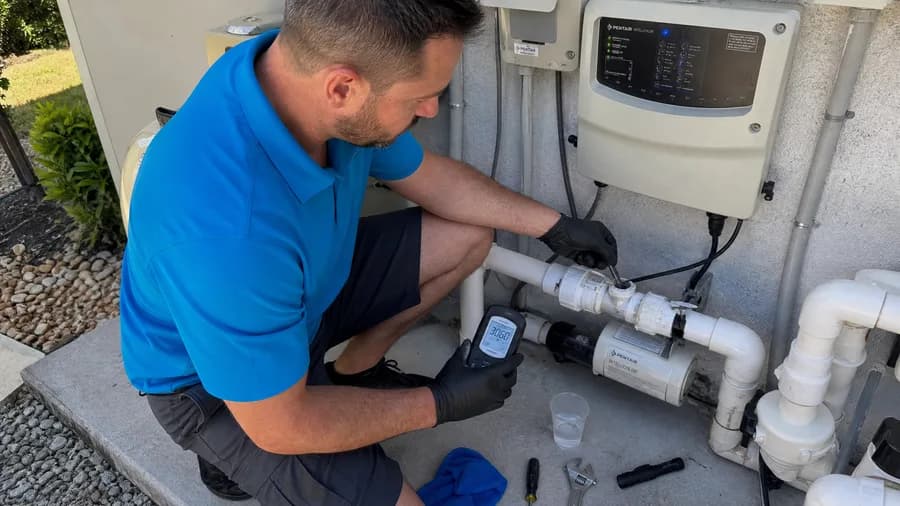
Before reducing hours, our technicians check what else depends on the circulation pump. A salt chlorine generator produces chlorine only while its operating conditions are met, including adequate flow. Cutting pump hours can reduce daily chlorine production even when the water still looks clear.
Check free chlorine against the target appropriate for your stabilizer level and sanitation system. Stabilizer, also called cyanuric acid, protects chlorine from sunlight. If chlorine falls below its target, correct the sanitation problem before shortening the schedule further. A pump without a chlorine generator does not add chlorine by running longer.
Heaters and some cleaners also require specific flow. Give those devices a suitable speed and operating window, then use a lower speed for remaining circulation where practical. Confirm minimum flow in each equipment manual; there is no single RPM that works for every pool.
Compare electricity use using watts and hours together. Running at 500 watts for 12 hours uses 6 kilowatt-hours. Running at 1,500 watts for eight hours uses 12 kilowatt-hours. These illustrative settings explain why fewer hours do not always mean lower energy use.
Adjust the schedule when local conditions change
Inland Southern California and Sacramento Valley summer heat can raise chlorine demand. Check chlorine more frequently during hot spells, especially before reducing a salt pool's operating hours. Coastal marine-layer mornings may bring different demand, so a coastal schedule should not automatically become an inland summer schedule.
After Santa Ana winds, remove leaves and empty baskets before deciding that the pump needs more time. A temporary skimming period may help collect floating debris. Longer operation through blocked baskets will not solve the restriction.
Most California pools keep operating through winter. Reduce hours gradually only while circulation, debris removal, and chlorine remain adequate. In Sacramento's occasional freezing weather, confirm that freeze protection can override the normal timer. A shortened winter schedule must not prevent that protection from operating.
Test a shorter schedule one change at a time
- Record your current hours, RPM settings, clean filter pressure, and chlorine readings.
- Keep required heater, cleaner, and salt-system operating periods intact.
- Reduce ordinary filtration time by 30 to 60 minutes, leaving speed unchanged.
- Check chlorine daily at a consistent time and watch skimming and clarity over several days.
- Restore the previous schedule if debris accumulates or chlorine slips below its target, then investigate the cause.
Make this test during stable weather and normal pool use. A party, heat wave, or wind event makes comparisons less useful.
If circulation stays weak, the timer behaves unpredictably, or the pump stops unexpectedly, arrange pool pump troubleshooting and repair. Share the schedule, RPM, pressure readings, and display messages. We confirm the right adjustment or repair after checking the equipment.