How to clean a pool filter: the short version
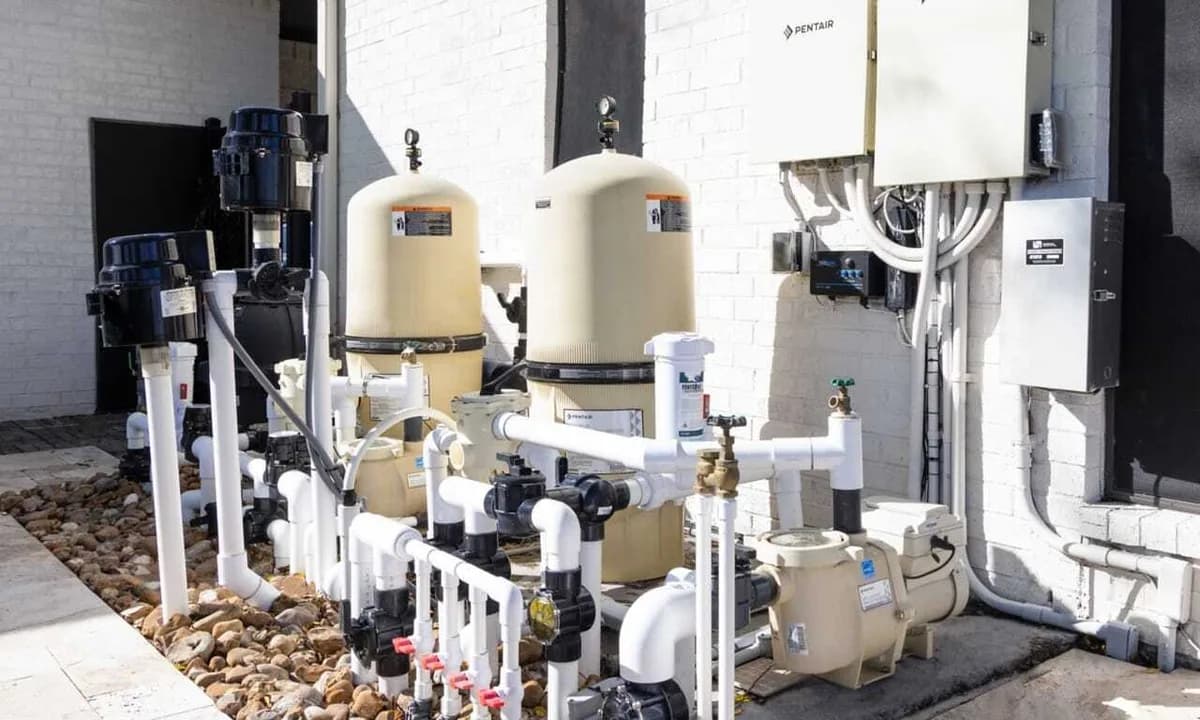
To clean a pool filter, hose removable cartridges, backwash and rinse sand filters, or clean and recharge DE filters. Before opening a housing, disconnect pump power, disable automatic starts, release pressure through the air relief, and confirm the gauge reads zero.
Find the model number and cleaning instructions before starting. Have the required cleaner, seals, or DE powder ready so you can complete reassembly and restart.
How to clean each filter type
Use the sequence for your filter type. The model's manual determines valve settings, closure instructions, and any chemical treatment.
| Filter type | Cleaning method | Restart requirement |
|---|---|---|
| Cartridge | Remove and hose the pleated elements. | Seat elements and secure the closure. |
| Sand | Backwash, then rinse. | Return the valve to filter. |
| DE | Backwash where supported; periodically dismantle and rinse. | Recharge with the specified DE amount. |
Cartridge cleaning sequence
- Disconnect power, disable automatic starts, and release pressure. Follow the manual's valve and draining instructions. Never loosen a pressurized tank.
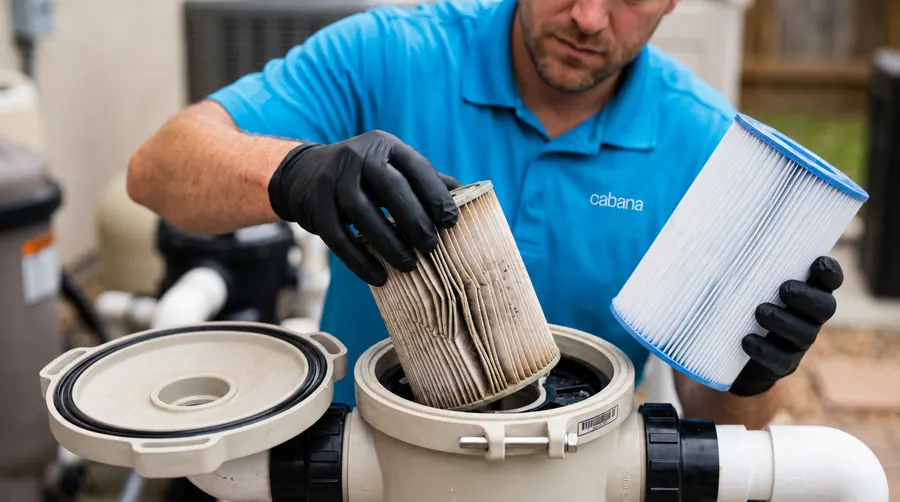
- Remove the closure and lift out the cartridges. Photograph their arrangement if several elements fit inside.
- Use a garden hose to rinse between pleats from top to bottom. Avoid pressure washers, which can damage fabric.
- If greasy residue remains, use an approved cartridge cleaner. Follow its dilution, soaking, and rinsing instructions.
- Inspect pleats, end caps, the tank seal, and seating surfaces. Reassemble and secure the closure exactly as instructed.
- Restore valve positions and follow the manual's air bleeding procedure. Stand clear of the closure during startup. Check for leaks and record clean pressure.
Sand cleaning sequence
- Prepare the backwash discharge route. Turn the pump off and prevent automatic starts before moving the valve to backwash.
- Start the pump and backwash until the sight glass clears, following the manual's duration guidance.
- Turn the pump off. Move the valve to rinse, then run briefly for the specified rinse time.
- Turn the pump off again. Move the valve to filter, then restart. Never change valve positions while the pump runs.
- Check for leaks and normal flow. Once operation stabilizes, record clean pressure at your usual pump speed.
DE cleaning sequence
- Check whether the design supports backwashing. If it does, prepare the discharge route and perform the manual's backwash sequence. Stop the pump before every valve change.
- For periodic full cleaning, disconnect power, disable automatic starts, release pressure, and drain the tank as instructed. Open it only after pressure reaches zero.
- Remove the grid assembly as directed. Gently hose debris from the grids and inspect fabric, frames, and the manifold. Reassemble and secure the closure.
- Restore filtration settings and restart using the manual's air bleeding procedure. Promptly add the specified DE charge through the skimmer, preparing it as directed. Avoid breathing the powder.
- Use the manual's recharge amount for backwashing or full cleaning, whichever you performed. These amounts can differ. Do not guess or continue normal filtration without the required coating.
- Check for leaks and DE returning through pool outlets. After the charge distributes and operation stabilizes, record clean pressure.
How many times should a pool filter be cleaned?
Use the manufacturer's pressure threshold and maintenance interval rather than a fixed annual count. Filter size, pump speed, swimming, and debris change how quickly cleaning becomes necessary.
Across over 270 readings on our San Diego, Los Angeles, and Sacramento routes, median filter pressure is 20 PSI. The middle 80 percent falls between 10 and 30 PSI. That spread means a raw 20 PSI reading cannot tell you whether cleaning is due.
Compare pressure with your clean baseline at the same pump speed and valve positions. Many manuals call for cleaning around 8 to 10 PSI above that baseline; your model's instructions take priority. Clear skimmer and pump baskets before interpreting weak circulation.
When to clean in California
Across over 10,000 filter cleaning visits on our San Diego, Los Angeles, and Sacramento routes, March accounts for 16 percent. August and September each account for 12 percent; January accounts for 3 percent. Use spring and late summer as reminders to check equipment, with pressure and condition deciding whether cleaning is due.
Our San Diego and Los Angeles visits peak in March. Sacramento accounts for 38 percent of these visits and peaks in August, alongside the valley's hottest stretch. Inland heat increases evaporation and chlorine demand. Check filter pressure weekly during heavy use, and test sanitizer separately. Our filter care tips for heavy pool use help plan those checks.
Santa Ana winds can load Southern California pools with leaves, dirt, and pollen in one day. After wind, skim and empty baskets, then compare pressure with your baseline. Check again after the next normal filtration cycle because fine dust can reach the filter later.
Most California pools operate year-round. After winter rain, check baskets, pressure, and equipment behavior. In the Sacramento Valley, finish cleaning and restore appropriate freeze protection before freezing nights. Avoid leaving dismantled, water-filled equipment exposed.
Hard water, oils, and coastal equipment checks
Southern California's hard source water leaves mineral deposits as evaporation concentrates calcium. If a rinsed cartridge remains stiff or crusted, check water balance and identify the deposit before choosing a chemical cleaner.
Sacramento and East Bay source water is generally softer. Check calcium hardness instead of assuming every pale deposit needs acid treatment. Filter cleaning cannot correct low calcium hardness or corrosive water.
Sunscreen and body oils may require an approved cartridge cleaner when hosing leaves greasy residue. At coastal pools, salt air is hard on metal equipment. During each cleaning, inspect clamp bands, closures, and the pressure gauge for corrosion or damage. A damaged closure needs attention before restart.
Can pool filters be cleaned and reused?
Cartridges and DE grids can be reused while their fabric, supports, and end caps remain intact. Sand normally stays inside the tank during backwashing. Condition and performance after cleaning matter more than age alone.
During every cleaning, inspect cartridges for torn fabric, separated end caps, and collapsed pleats. Check DE grids for tears and damaged frames. These defects require replacement parts; another rinse will not restore filtration.
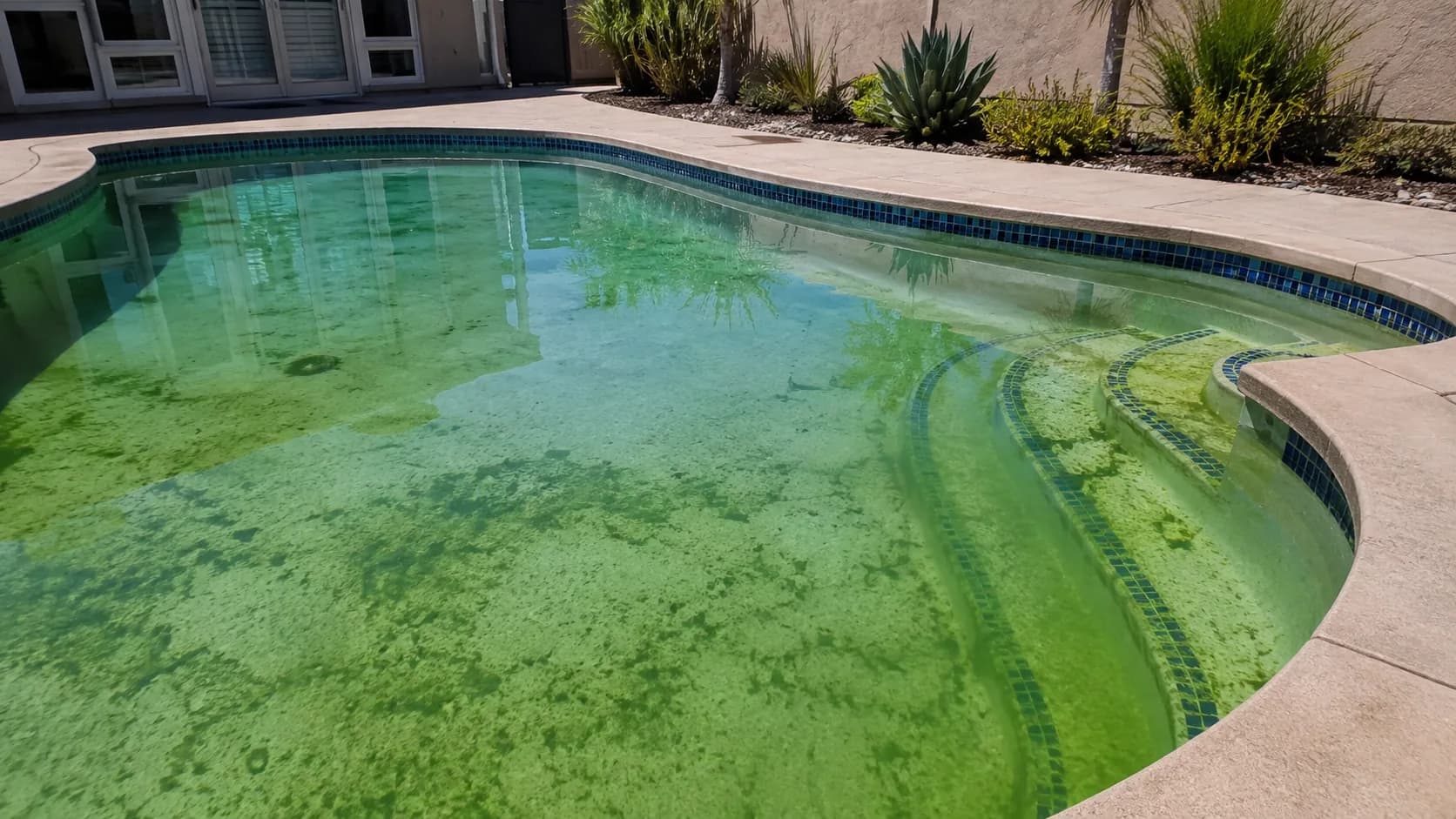
Rapid pressure increases can mean renewed dirt loading or incomplete cleaning. Algae recovery can fill a clean filter quickly. Debris returning through pool outlets calls for an internal assembly and valve check. Our technicians confirm the fix after seeing the equipment through our pool filter repair service.
Three checks before arranging service
- Pressure: Note the clean baseline, current reading, pump speed, and whether cleaning restored normal flow.
- Condition: Report leaks, damaged closures, worn elements, or debris returning through outlets.
- Access: Arrange help if you cannot identify the model, release pressure, handle elements, or secure the closure safely.
Share those details and recent debris conditions with our team. Filter type, element count, buildup, equipment access, and replacement needs affect the work involved. See our pool filter cleaning service and pricing details to plan the visit.