Algae grows when chlorine cannot keep up
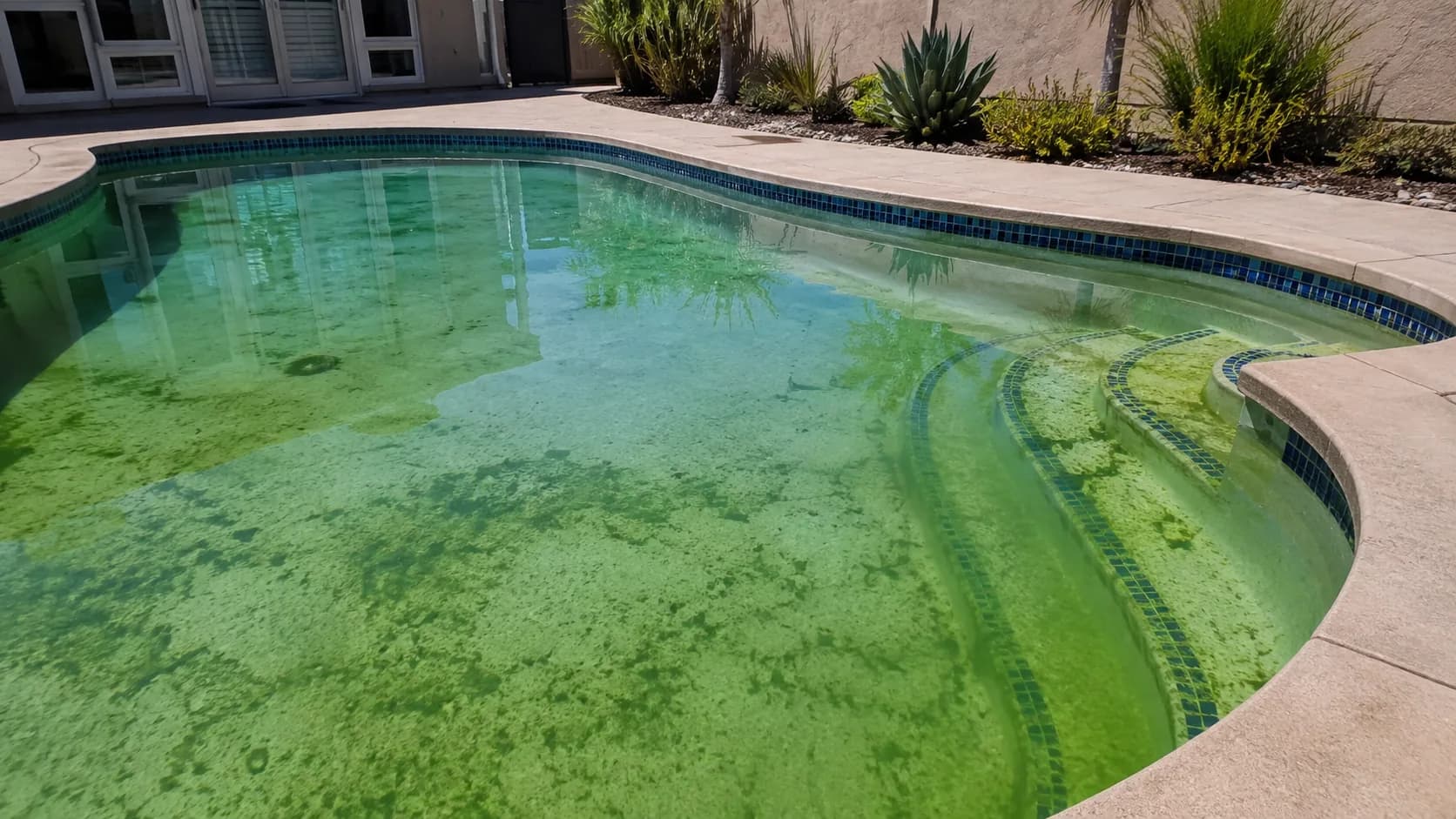
Algae grows in a pool when there isn't enough effective chlorine to control it. Low chlorine, too much stabilizer, or poor water movement can let algae multiply and cling to walls.
Wind, rain, and swimming gear can introduce algae. Sunlight and warmth help it grow, while leaves and other debris increase chlorine demand. A working filter removes particles, but chlorine provides the protection that stops growth.
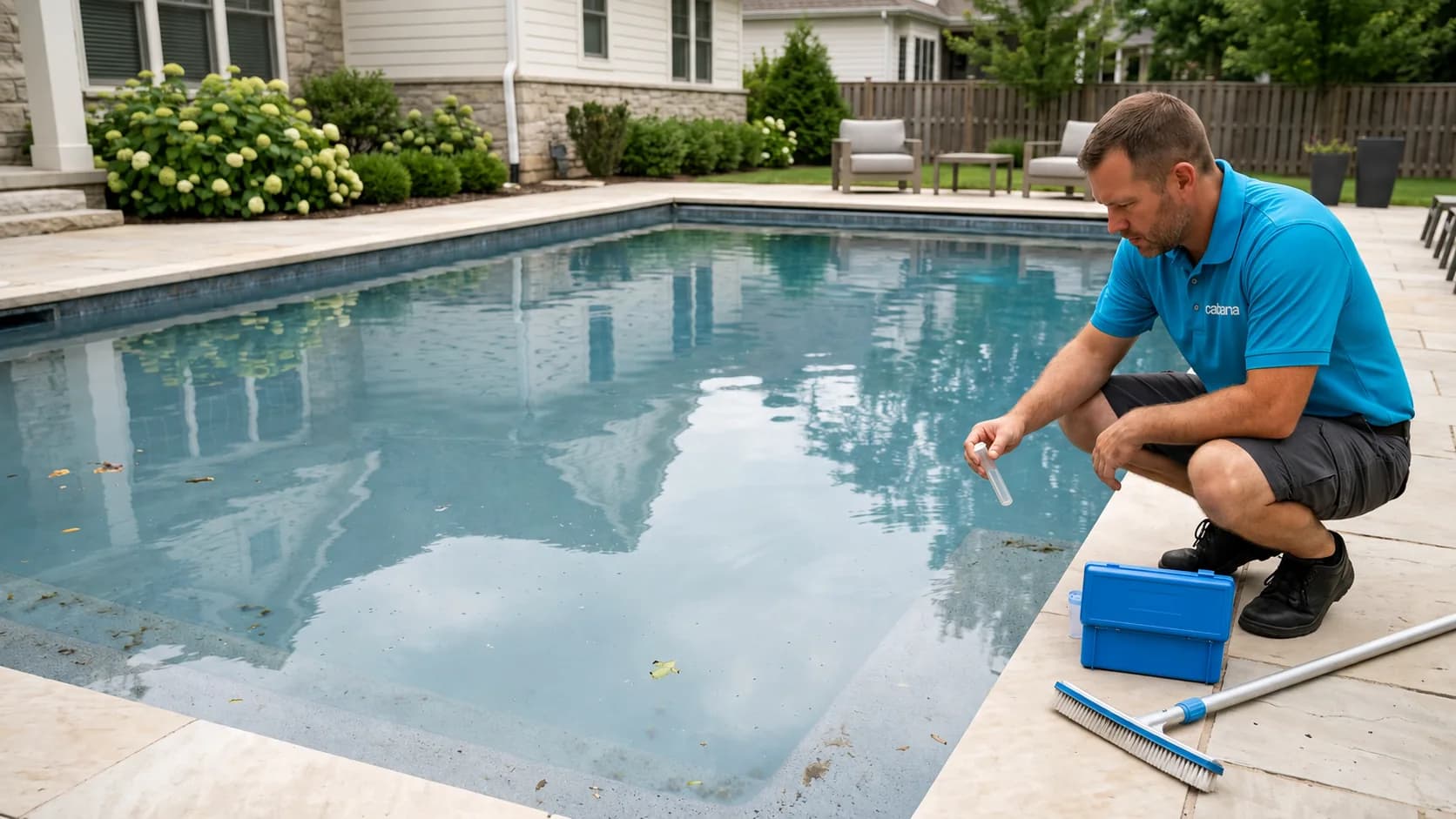
You can narrow down the cause in ten minutes without opening equipment or adding chemicals. Gather your water test kit, a pool brush, and your most recent maintenance readings. Keep everyone out of water with visible algae. If you cannot clearly see the bottom, stay out and keep others away.
Run these five checks before calling
| Time | What to check | What the result tells you |
|---|---|---|
| 2 minutes | Look for patches and brush one small area from the deck. | A slippery patch that brushes into a cloud suggests algae. A fixed stain or loose dust needs a different diagnosis. |
| 3 minutes | Test free chlorine and pH. Find your latest stabilizer reading. | Zero free chlorine means protection has run out. A chlorine result needs the stabilizer reading for proper interpretation. |
| 2 minutes | Check the pump display and look for flow from the return outlets. | An error, lost flow, or air filling the pump basket points toward an equipment problem. |
| 2 minutes | Read filter pressure and compare it with the clean-filter reading at the same pump speed. | Higher pressure with weaker flow suggests restriction. Low pressure with weak flow can indicate a supply or pump problem. |
| 1 minute | Note recent wind, heat, heavy swimming, or schedule changes. | A change just before algae appeared helps explain why the previous routine fell short. |
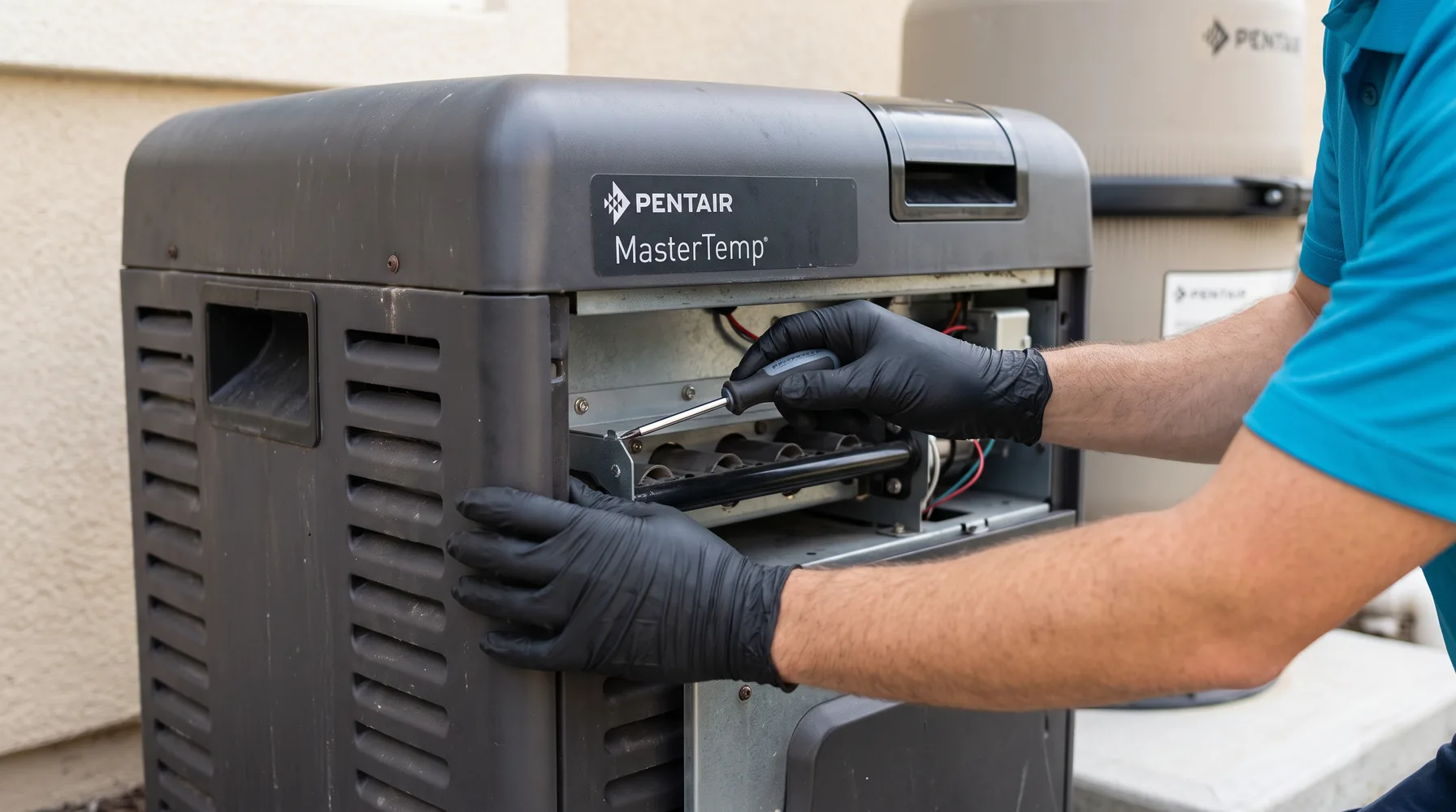
Call a technician if the pump will not maintain flow, displays repeated faults, or runs without filling with water. Switch off a pump that is running dry. Leave pressurized filter lids, clamps, and valves alone during this check.
If equipment appears normal but algae is spreading, bring the test results to the call. Our technicians can use those readings and the patch location to decide what to inspect first.
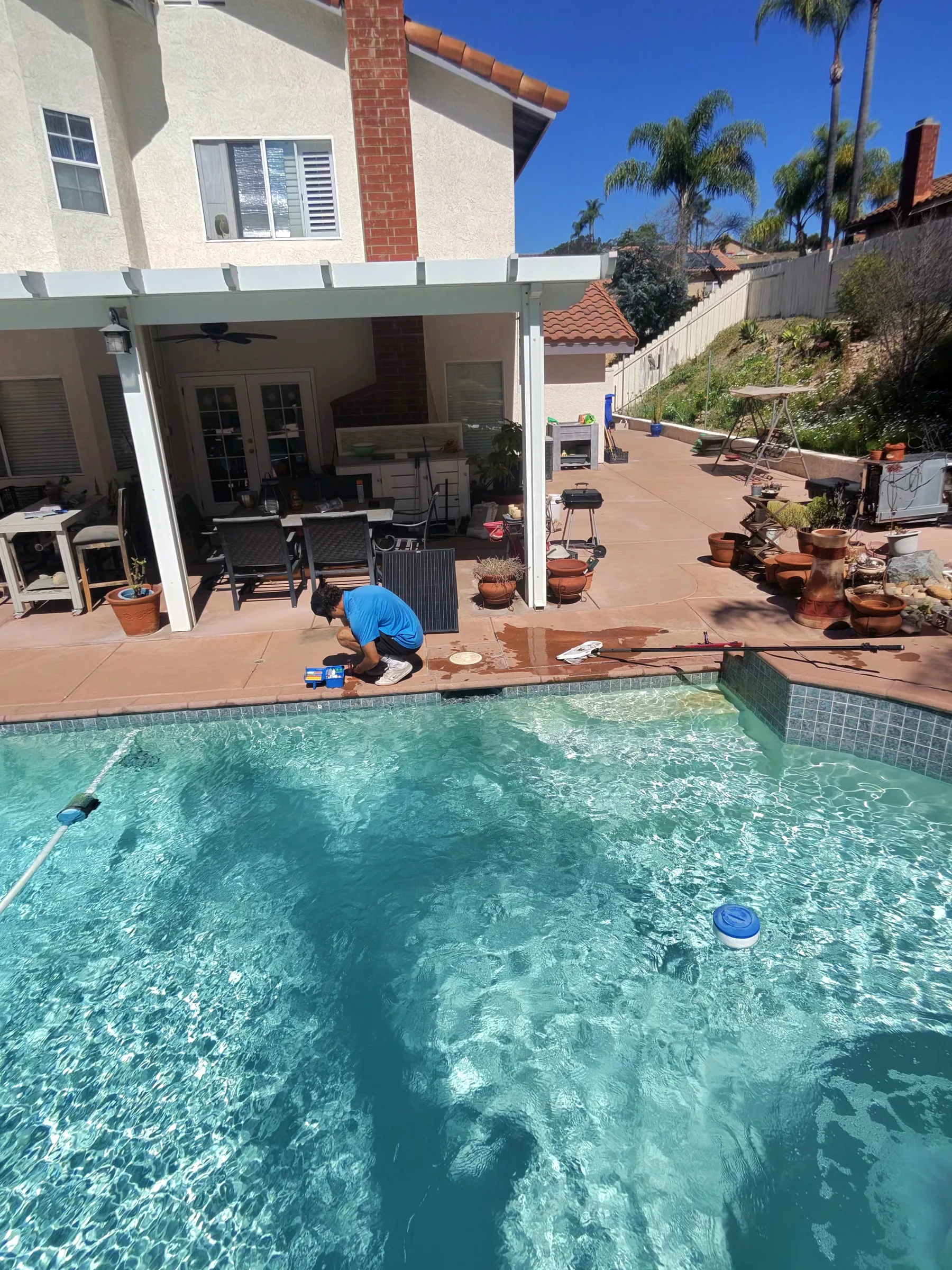
Read chlorine together with stabilizer and pH
Free chlorine is the chlorine available to sanitize the water. Total chlorine also includes chlorine that has reacted with contaminants, so it cannot replace a free-chlorine reading.
Stabilizer, also called cyanuric acid or CYA, protects chlorine from sunlight. Too much reduces chlorine's sanitizing strength at a given free-chlorine reading. A result inside a test strip's printed chlorine range may still be inadequate when stabilizer is high.
Check the label on your chlorine product. Trichlor tablets and dichlor granules add stabilizer along with chlorine. Repeated use can raise CYA over time. If your kit does not measure stabilizer, arrange that test before choosing a treatment dose.
Keep pH between 7.2 and 7.8 for routine pool care. High pH can reduce chlorine effectiveness, particularly in water without stabilizer. Correcting pH alone will not clear established algae, but it helps put treatment on a sound footing.
A reading taken just after adding chlorine does not tell you how well the pool stays protected between doses. Record when you last added chemicals. If chlorine repeatedly falls to zero, the current supply is not keeping up with demand.
Saltwater pools need the same checks. A salt system makes chlorine, and its output depends on operating conditions and run time. A salt reading within range does not prove the pool has enough free chlorine. Photograph any low-flow or cell warning for the technician.
Use the patch location to guide the equipment check
Algae on the walls behind a ladder or along steps can point toward weak local water movement. The rest of the pool may look clear while those sheltered areas collect debris and receive less fresh, chlorinated water.
If growth covers several walls and the floor, check overall chlorine protection before assuming one return outlet is responsible. Location provides a clue, but it cannot confirm the cause by itself.
A pump that sounds normal may still move too little water. A blocked basket, dirty filter, low water level, or suction leak can reduce flow. From the deck, check whether the water has dropped below the skimmer's normal operating level. Look through the pump's clear lid without removing it.
Filter pressure only helps when you have a useful comparison. Variable-speed pumps produce different pressure readings at different speeds. Compare today's reading with the clean-filter baseline at the same speed, then follow the filter manufacturer's cleaning threshold.
Without that baseline, one pressure number cannot tell you whether the filter needs cleaning. Weak returns, persistent air, or an unexplained pressure change justify an equipment check. Our technicians confirm the cause after seeing the pump and filter.
Check what changed during heat or wind
Inland Southern California and the Sacramento Valley have hot summers that increase chlorine demand. If algae appeared after a hot spell, compare the current pump and chlorine settings with those used during cooler weather.
Do not choose a universal number of pump hours. Required run time depends on flow, pool conditions, and whether the pump must operate for a salt system to make chlorine. Shortening the schedule can reduce both circulation and chlorine production.
Southern California's Santa Ana winds can load a pool with leaves, dirt, and pollen in a day. Remove windblown debris promptly and test chlorine after the event. Waiting for the usual cleaning day leaves that added material consuming sanitizer.
Coastal gray mornings are not a reason to stop testing. Mild weather can reduce demand, but algae still grows when chlorine protection falls short. Keep testing tied to water conditions and recent changes, rather than sunshine alone.
Send these details when you need help
If your checks reveal spreading growth, uncertain chemistry, or an equipment fault, send us these details:
- Free chlorine, pH, and stabilizer readings, with the test date.
- A photo showing where growth started and how far it has spread.
- The pump schedule, displayed speed, and any error message.
- Filter pressure and the clean-filter baseline, if available.
- The chlorine product used and when it was last added.
Our pool algae removal service can address established growth and assess the conditions supporting it. If the checks show normal equipment operation and you plan to handle treatment yourself, follow our guide to removing pool algae.
Avoid stacking several chemical products while waiting for a diagnosis. Follow each label, never mix pool chemicals together, and base dosing on measured pool volume and current test results.