How often should you vacuum your pool?
Vacuum your pool about once a week, and sooner whenever dirt, leaves, or other debris collects on the bottom. Treat weekly vacuuming as a starting schedule, then adjust it to what you can see on the floor and steps.
We recommend checking the bottom between cleanings instead of waiting for your usual cleaning day. A working automatic cleaner may handle the floor, but you still need to check corners, steps, and other places it misses.
| What you see | What to do |
|---|---|
| A light layer of settled dirt during normal use | Keep a weekly vacuuming schedule. |
| Leaves or dust after wind or rain | Remove large debris with a net, then vacuum settled dirt once conditions are safe. |
| Dirt left behind by an automatic cleaner | Spot-vacuum missed areas and check the cleaner's collection basket and movement. |
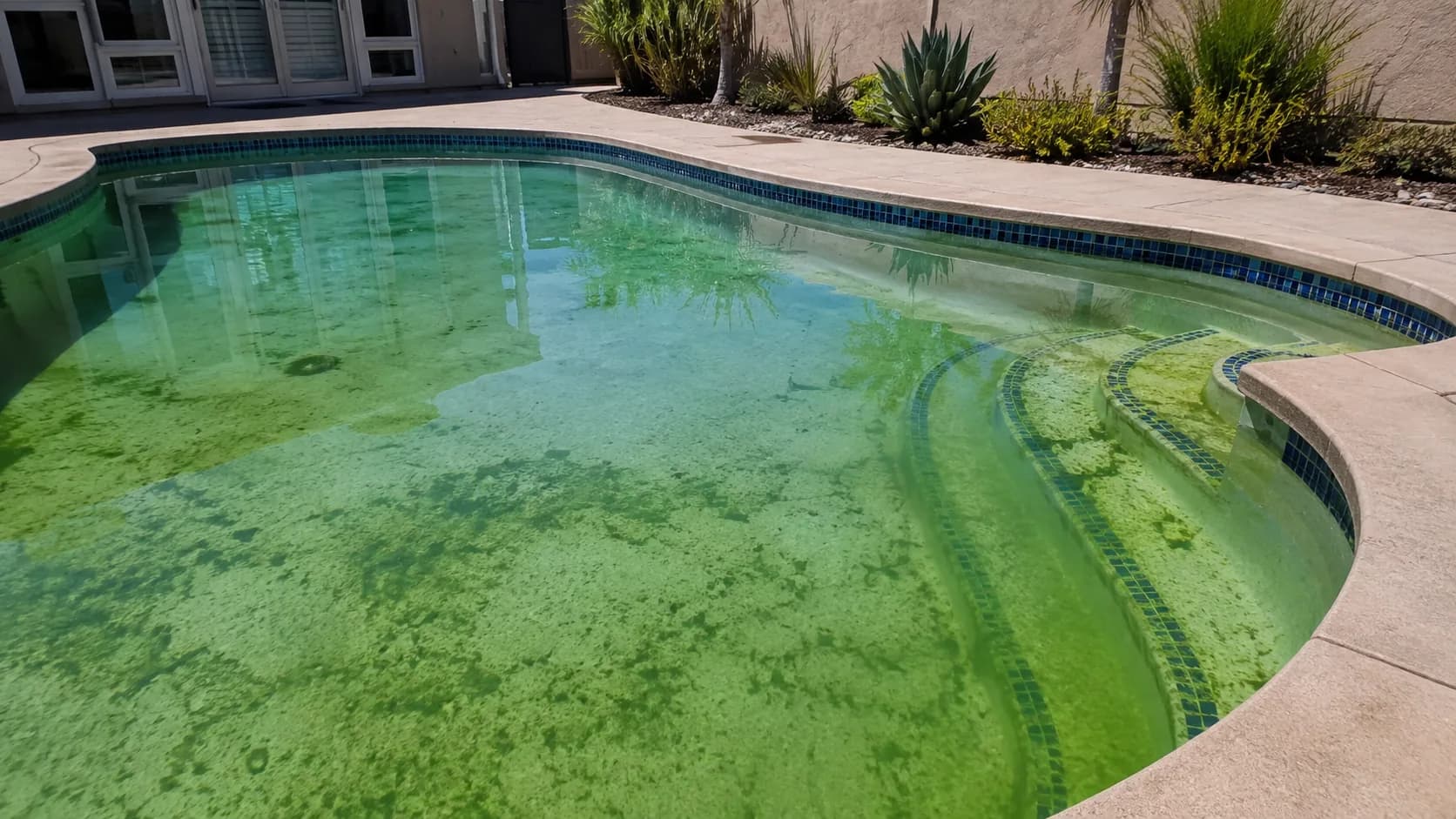
| Green patches or slippery walls | Check sanitizer and address algae alongside brushing and cleaning. |
| Cloudiness that hides the bottom | Keep swimmers out and investigate water balance and filtration before treating this as routine dirt. |
A larger pool takes more coverage, but size alone does not set cleaning frequency. Nearby trees, wind exposure, swimmer activity, and cleaner performance matter more when deciding whether to add another pass.
When should you vacuum more than once a week?
Add a cleaning when new debris settles, even if you vacuumed recently. Leaving leaves on the bottom gives them time to break down and can lead to stains.
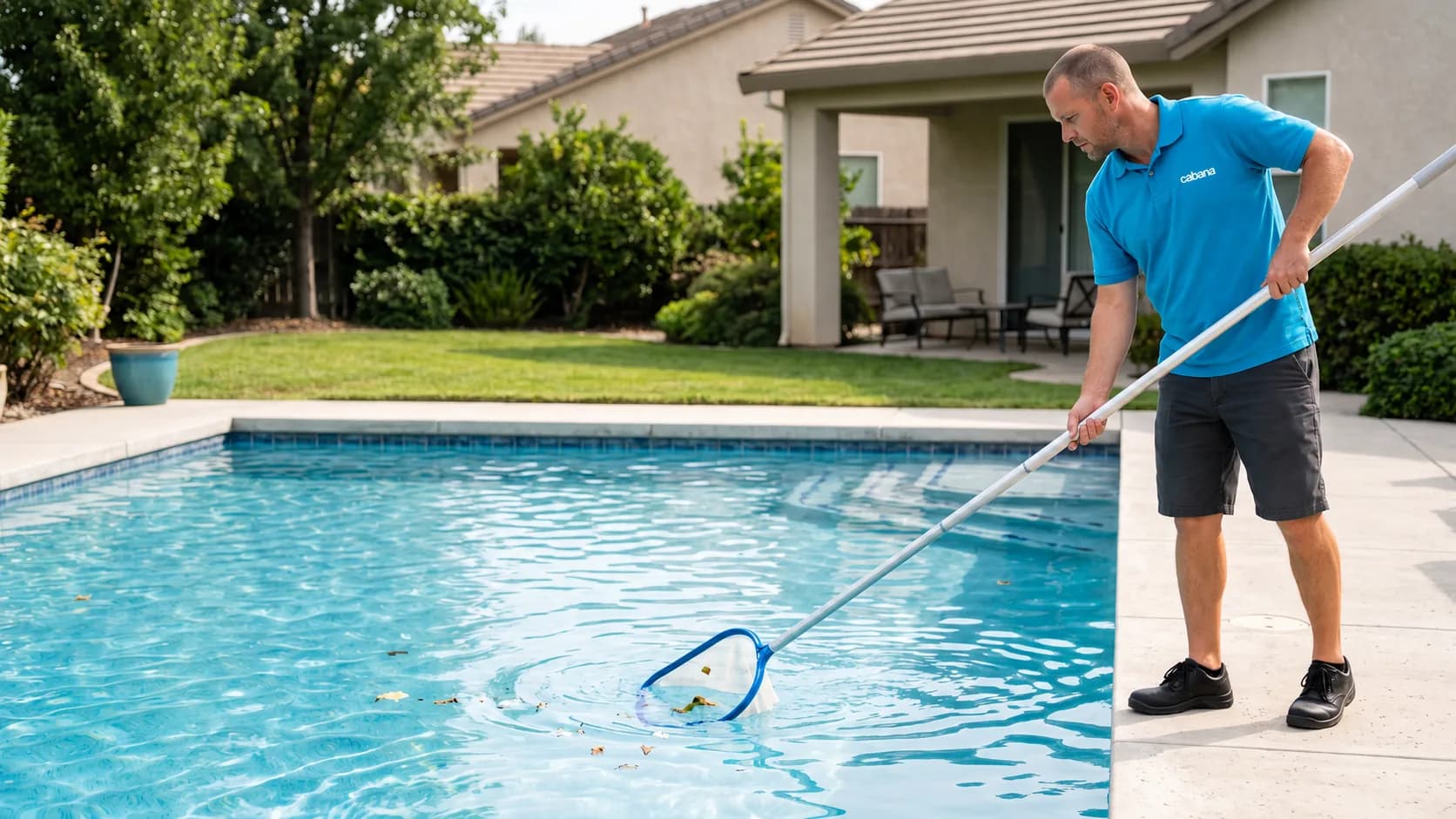
In Southern California, Santa Ana winds can load a pool with leaves, dirt, and pollen in a day, especially in fall and winter. During those months, plan an extra debris check after windy weather rather than reducing cleaning because swimming slows down. Once conditions are safe, skim floating material before it sinks. Then inspect the bottom and empty loaded baskets before running another cleaning cycle.
After a pool party, check for visible debris and test the water. Extra swimmers increase sanitizer demand, but they do not automatically mean the entire floor needs another vacuuming. Clean what accumulated and adjust treatment from test results.
Cooler weather does not eliminate cleaning needs. Most California pools remain open with equipment running throughout the year. Keep inspecting the floor during winter, particularly after rain or falling leaves. A covered pool may collect less debris, but check beneath the cover before extending the cleaning interval.
Does a robotic cleaner replace weekly vacuuming?
A robotic cleaner can perform your routine vacuuming if it reaches the dirty areas and captures the debris. It does not replace checking the pool, brushing missed surfaces, or testing the water.
| Cleaner type | Where the dirt goes | What to check |
|---|---|---|
| Manual vacuum connected to pool suction | Usually through the pool's filtration system | Move slowly, watch suction, and check filter pressure afterward. |
| Suction-side automatic cleaner | Through the suction plumbing, sometimes through an added leaf canister, and into the filter | Check baskets, hose connections, and areas the cleaner misses. |
| Pressure-side cleaner | Usually into an attached debris bag | Empty the bag and check whether fine dirt remains behind. |
| Robotic cleaner | Into its own basket or filter | Empty and rinse its basket or filter, and inspect steps and corners after the cycle. |
Follow the cleaner's manual for cycle settings and handling. Judge the schedule by the result: if dirt remains after a completed cycle, check whether it reached every area and whether its basket or filter is full before simply running it longer. Fine dust may require a compatible finer filter insert. Remove the cleaner before swimming as directed by its manufacturer.
How to brush and vacuum without stirring dirt back up
Brush surfaces your vacuum cannot scrub, using a brush suitable for the pool's finish. Include steps, corners, and areas around ladders. Brushing loosens material; vacuuming removes settled debris.
You do not need a fixed overnight wait between those jobs. If brushing creates a cloud of dirt, let filtration run and wait until you can see the floor and the remaining debris has settled. If the floor already has heavy debris, net or vacuum that material first.
- Remove large leaves and sticks. Use a leaf net so they do not clog the vacuum head or hose.
- Check water level and baskets. Keep the water at the equipment's normal operating level. Shut the pump off before opening its basket lid, following the equipment instructions.
- Fill a manual vacuum hose with water. Push the hose under water until no bubbles come out, then connect it to the skimmer's vacuum plate or the pool's dedicated vacuum port, following the equipment instructions.
- Vacuum in slow, overlapping passes. Rushing lifts fine dirt back into the water and makes coverage harder to judge.
- Stop if suction disappears. Check for a blockage, air entering the hose, or a loaded basket before continuing.
- Empty the cleaner's bag, basket, or filter afterward. Inspect the pool filter pressure if the vacuum used the filtration system.
Persistent weak suction needs attention beyond another cleaning pass. Our guide to restoring pool pump water flow explains what to check when air interrupts circulation.
Do you need to backwash every time you vacuum?
No. Backwash only when your filter's instructions and operating condition call for it. Backwashing reverses water flow through a compatible filter to flush out trapped dirt.
Record the pressure after the filter is clean, then compare later readings at the same pump speed and valve settings. Use the manufacturer's specified pressure increase as the cleaning trigger. A pressure reading without that clean baseline can be misleading, especially with a variable-speed pump.
Cartridge filters require cartridge cleaning, not backwashing. Sand and diatomaceous earth filters, often labeled DE, have different backwash procedures. Diatomaceous earth is the fine powder that traps dirt inside a DE filter. These filters require the correct replacement amount of filter powder after backwashing.
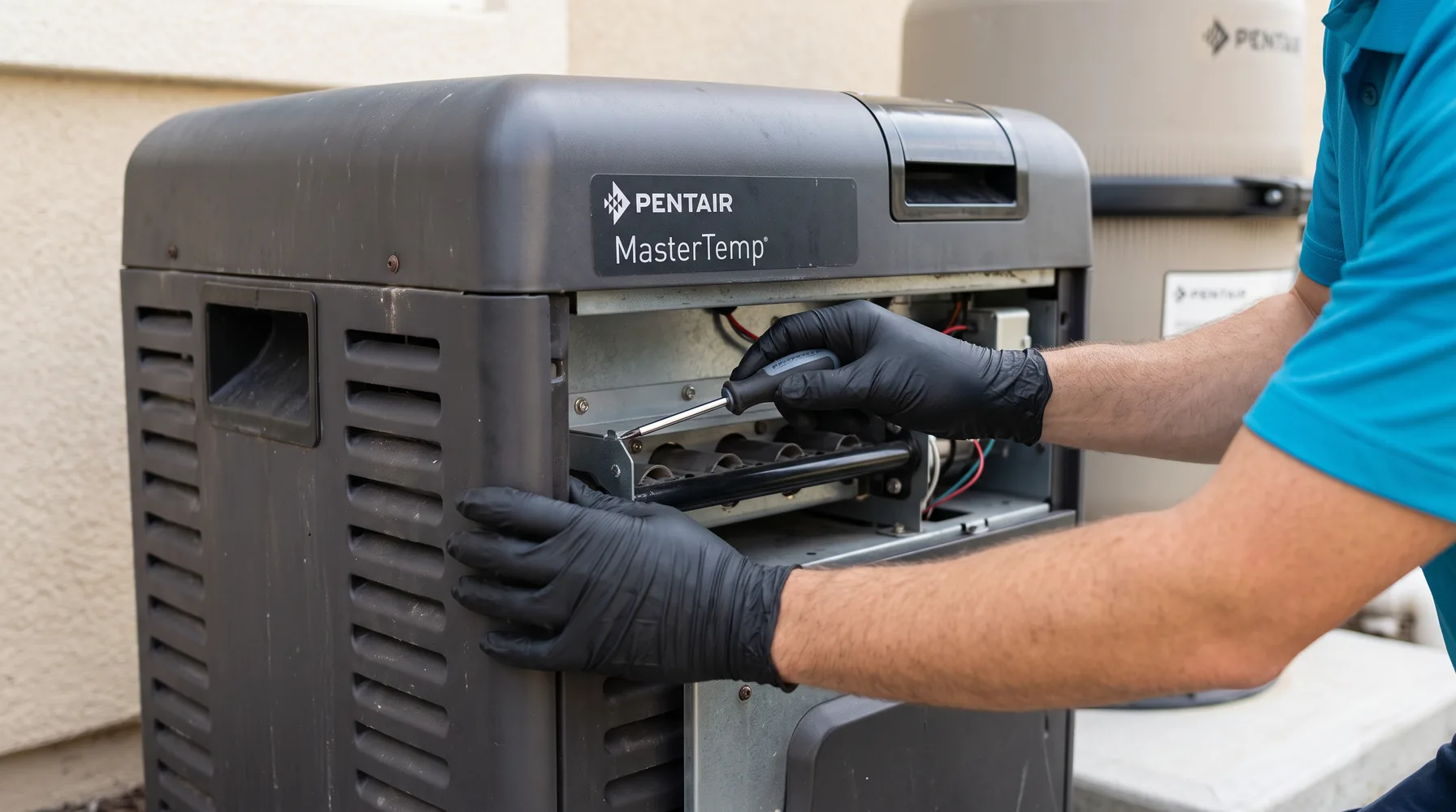
Turn the pump off before moving a multiport valve, the valve with settings such as filter, backwash, and waste. If pressure stays unusually high or dirt returns through the outlets after cleaning, arrange pool filter cleaning and an equipment check.
What does vacuum to waste mean?
Vacuuming to waste sends water and collected debris out of the pool without passing through the filter. It can help remove fine material that would otherwise return to the pool, including settled debris after algae treatment.
Use normal filtration for routine vacuuming when the filter captures the dirt successfully. Vacuuming to waste lowers the water level and requires replacement water. It is not an automatic step after every cleaning.
Before using waste mode, confirm that your equipment supports it and decide where the water will go. Monitor the level throughout the job and stop before the skimmer draws air. Never let the pump run dry. Follow the equipment instructions when changing valve settings.
If you are unsure which valve controls that flow, our technicians confirm the correct method after seeing the equipment. After replacing lost water, retest the pool before adding chemicals. Include calcium hardness, the amount of dissolved calcium in the water, when replacement water makes up a substantial part of the pool.
Replacement water needs different attention across our service area. San Diego and Los Angeles generally have hard, mineral-heavy tap water, and evaporation concentrates those minerals further. Do not assume topping up after vacuuming will lower calcium hardness. Sacramento and the East Bay generally have much softer source water, so check for low calcium hardness after substantial refilling. Use the measured result and your pool's recommended range to decide whether an adjustment is needed.
What to check between vacuuming days
Vacuuming removes dirt, but it does not sanitize water. Saltwater pools also use chlorine: the salt system generates it from dissolved salt. Whether chlorine comes from a feeder, a salt system, or manual additions, use test results to decide what needs adjusting.
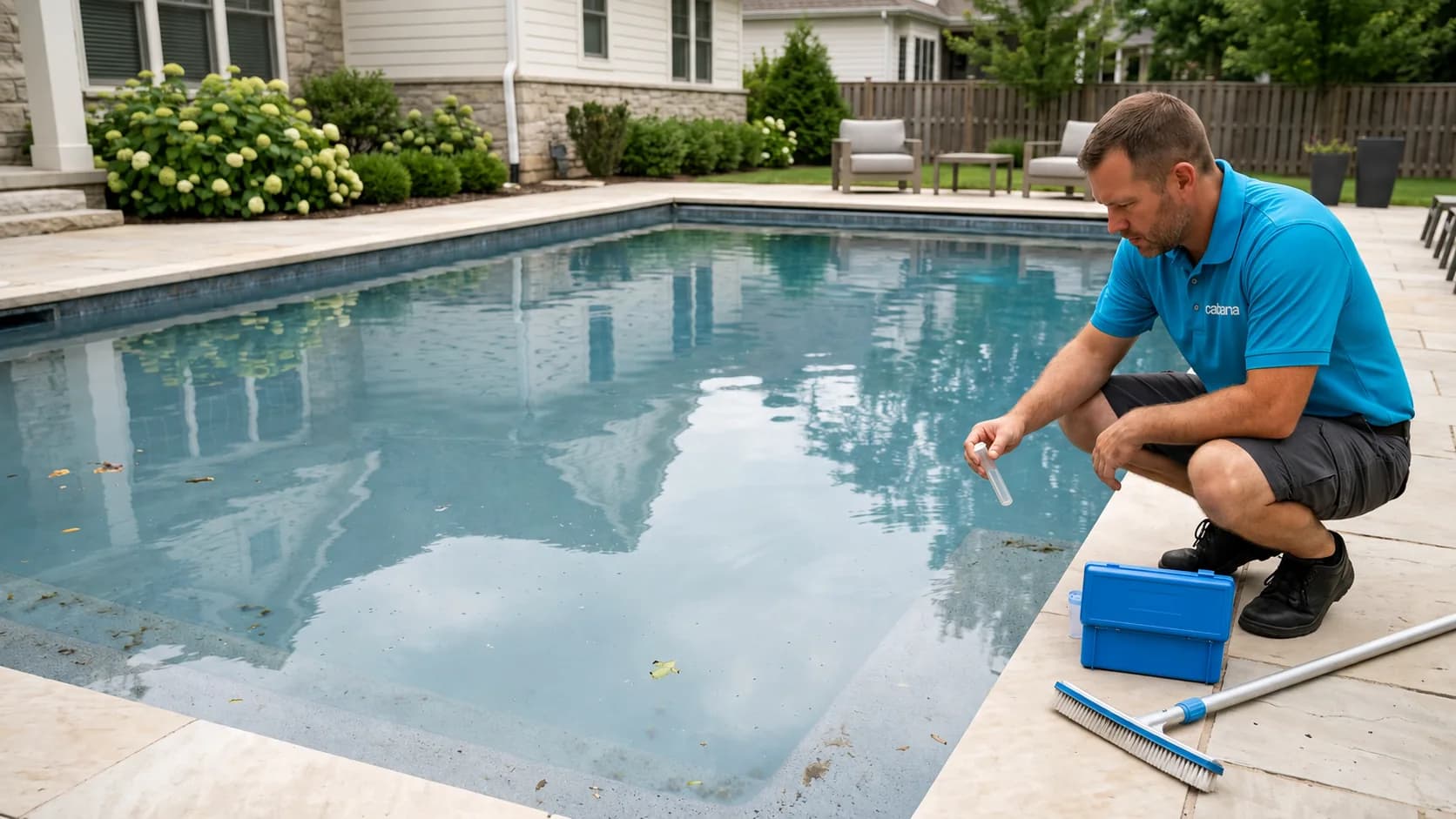
- Check the surface and baskets daily. Skim visible debris and empty baskets when material collects. Sweep nearby leaves away from the pool.
- Brush weekly. Pay attention to surfaces your cleaner misses, and address slippery or green patches promptly.
- Test sanitizer and pH between service visits. Check more closely during heavy use and hot weather. Inland Southern California valleys and Sacramento's hot, dry summers raise chlorine demand and evaporation compared with the milder Southern California coast. During hot spells, check sanitizer and water level more often, even if the floor stays clean. Let settled dirt determine whether you also need another vacuuming.
- Investigate dirt that quickly returns. Check whether wind is adding fresh dust, the cleaner is missing areas, or debris is coming through the pool's return outlets.
Do not add chlorine automatically just because another day has passed. Follow your test results, product directions, and the needs of your pool. If the reading is low, use our guide to raising free chlorine to work through the next steps.
If debris repeatedly builds up between visits, tell us where it collects and when it returns. We can assess cleaner coverage, circulation, and cleaning frequency. Our weekly pool cleaning service and pricing page explains the service options for keeping that routine consistent.