Choose the right response to a pump that has lost prime
To prime a pool pump, turn off power, release filter pressure, fill the pump basket housing with water, secure the lid, and restart according to its manual. First, check that pool water reaches about halfway up the skimmer opening so the pump can draw water without pulling air.
Priming replaces air inside the pump and suction plumbing with water. A running motor alone does not mean water is circulating. Choose your next step based on when the problem started and whether the pump holds water.
| What you observe | Right next step | Decision rule |
|---|---|---|
| The basket housing emptied during basket cleaning. | Manually prime the pump. | Proceed after checking water level, baskets, and valve positions. |
| The skimmer draws air or contains packed debris. | Correct the water supply before priming. | Restart only after the skimmer has an unobstructed supply of water. |
| Prime disappears repeatedly or the housing will not stay filled during operation. | Arrange pump diagnosis. | Stop repeated attempts when basic checks do not restore stable circulation. |
Most California pools operate throughout the year. Losing prime during ordinary operation deserves attention, especially when nobody has opened the basket lid or changed equipment settings.
Manually prime after opening the pump basket
A manual prime is appropriate when opening the basket housing introduced air into an otherwise working system. Have a hose ready, and find your pump's startup instructions before beginning. A self-priming pump still needs water in its housing.
- Shut down the equipment. Turn off the heater and allow any required cooldown before stopping circulation. Disconnect pump power at its disconnect or breaker. Disable scheduled or remote starts so automation cannot restart it while your hands are near the basket.
- Release trapped pressure. Following the filter instructions, open the manual air relief while standing clear of the filter lid and discharge. Wait until the gauge reads zero and air discharge stops. Never loosen the filter clamp to release pressure.
- Check the water path. Confirm that the normal suction and return paths are open. Photograph labeled valve positions before changing anything. Do not guess at unfamiliar valves or run the pump against closed plumbing.
- Empty the pump basket. Remove leaves and debris, then reseat the basket correctly. Inspect the lid seal and its groove for grit, twisting, or visible damage. Use only manufacturer-approved lubricant if specified for that seal.
- Fill the housing. Add clean water to the basket housing to the level specified by the manufacturer, usually near the suction inlet. Some water may drain toward the pool on equipment above water level. Do not assume that alone proves a leak.
- Secure the lid. Seat the seal evenly and fasten the lid as instructed. Extra force cannot correct a damaged seal and may damage the lid.
- Restart and watch. Restore power and use the manufacturer's priming procedure. For a variable-speed pump, use its designated priming setting. With the filter air relief positioned according to its instructions, stand clear and close it once a steady stream of water replaces escaping air.
Stay beside the equipment during startup. The basket housing should fill with moving water, and flow should return at the pool jets. Stop immediately if the housing empties, the pump runs dry, or you notice leakage, grinding, or a burning smell.
Follow the model's priming time limit. There is no single safe waiting period for every pump and plumbing arrangement. Do not keep restarting a failed priming cycle or leave it running unattended.
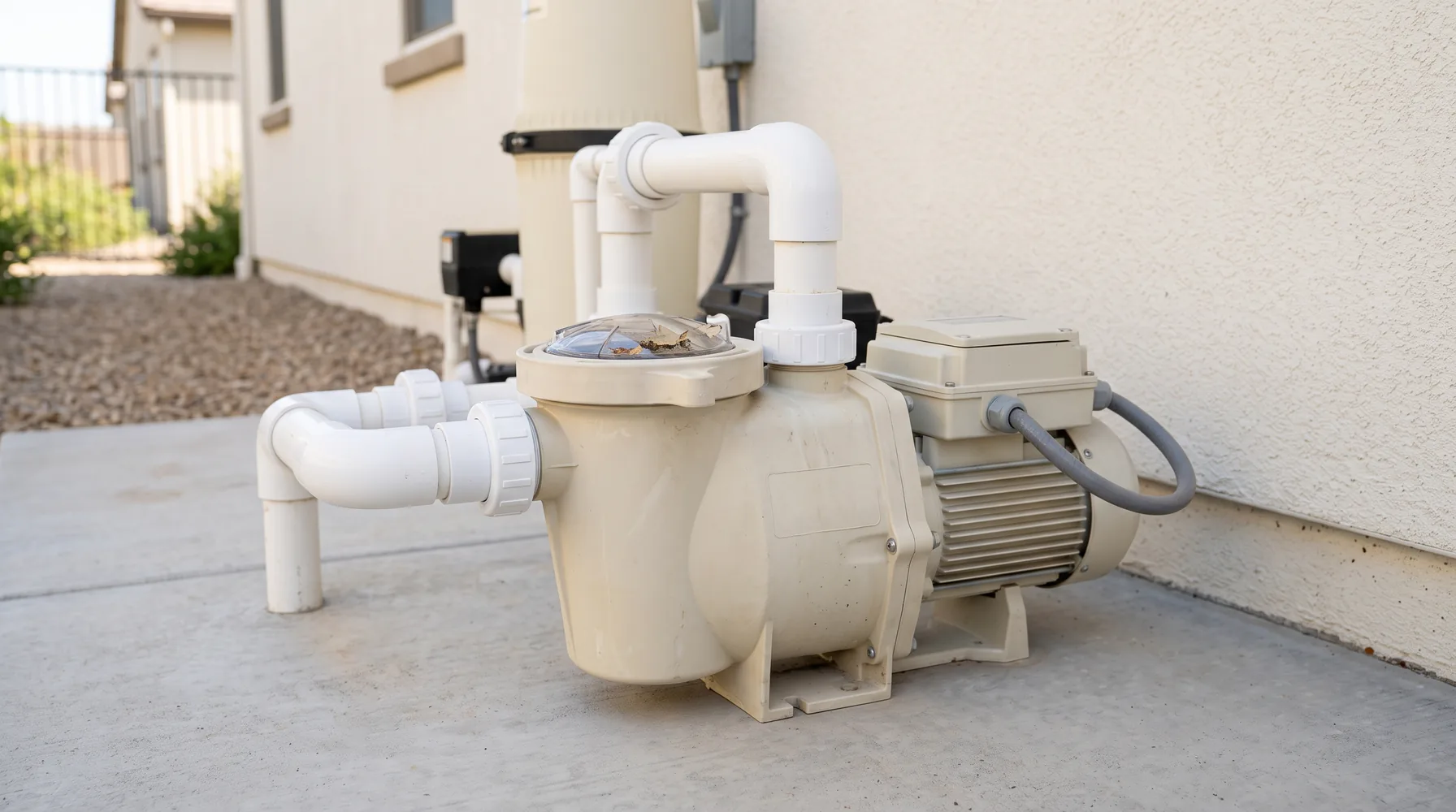
Correct low water or blocked baskets before restarting
Adding water to the pump housing will not solve a skimmer that continuously draws air. With power off, inspect the pool water level, skimmer basket, and skimmer weir, the hinged flap at its entrance. The flap should move freely rather than remain stuck upright.
Restore water to approximately halfway up the skimmer opening, or the equipment's specified level. Remove debris from both baskets. If a suction cleaner was connected just before the problem started, inspect its hose for loose connections or sections admitting air. Follow its instructions for disconnecting it and restoring normal circulation.
In Southern California, Santa Ana winds can load baskets with leaves, dirt, and pollen in a day. Check baskets after a wind event before assuming the pump needs repair. A basket cleared earlier in the week may already be obstructed.
Hot inland valleys and Sacramento summers also increase evaporation. When the water approaches the bottom of the skimmer opening, correct the level before the next scheduled pump cycle. A swirling funnel of air at the skimmer means the intake needs attention even if some water still enters.
After correcting the visible problem, follow the manual priming procedure. If the same symptom returns with adequate water and clear baskets, move to diagnosis instead of repeatedly adding water to the housing.
Arrange diagnosis when prime will not hold
A pump that repeatedly loses prime may have a suction-side air leak, a lid seal problem, a loose drain plug, a restriction, or a valve fault. Air can enter suction plumbing without leaving a visible puddle because that side operates under suction.
Persistent bubbles beneath the lid or returning through pool jets help identify the problem, but neither pinpoints one failed part. Note whether bubbles begin immediately, appear only with a cleaner attached, or follow a speed change. Those differences help our technicians reproduce the fault.
If the motor hums without turning, trips its breaker, or smells hot, leave power off. Filling the housing cannot correct an electrical or motor fault. Likewise, a pump housing full of water with weak return flow may indicate restricted circulation rather than lost prime.
Our technicians check the water supply, seals, valve operation, and pump behavior before recommending a repair. We confirm the right fix after seeing the equipment. Arrange pool pump diagnosis and repair when the basic corrections above fail or prime disappears again at the next startup.
Verify circulation before restoring the normal schedule
Use three observations together: water movement through the pump housing, steady return flow, and stable filter pressure. A small stationary bubble beneath some clear lids can be normal. A growing air pocket or repeated surges needs attention.
Across over 270 filter pressure readings on our San Diego, Los Angeles, and Sacramento routes, the median was 20 PSI, with the middle 80 percent between 10 and 30 PSI. Compare your gauge with your own system's normal reading at the same pump speed. Do not increase speed simply to reach 20 PSI.
Before walking away, complete these checks:
- Confirm that the lid and drain plugs remain dry during operation.
- Return a variable-speed pump to its normal operating setting and confirm circulation continues.
- Check that the filter air relief is closed after air has cleared.
- Restore the operating schedule only after flow stabilizes.
- Observe the next scheduled startup. If prime disappears again, arrange diagnosis.
Keep the heater off until circulation is established. Record the running speed and pressure once operation is stable, giving you a useful comparison for the next equipment check.