Ten minutes of checks can narrow down the cause
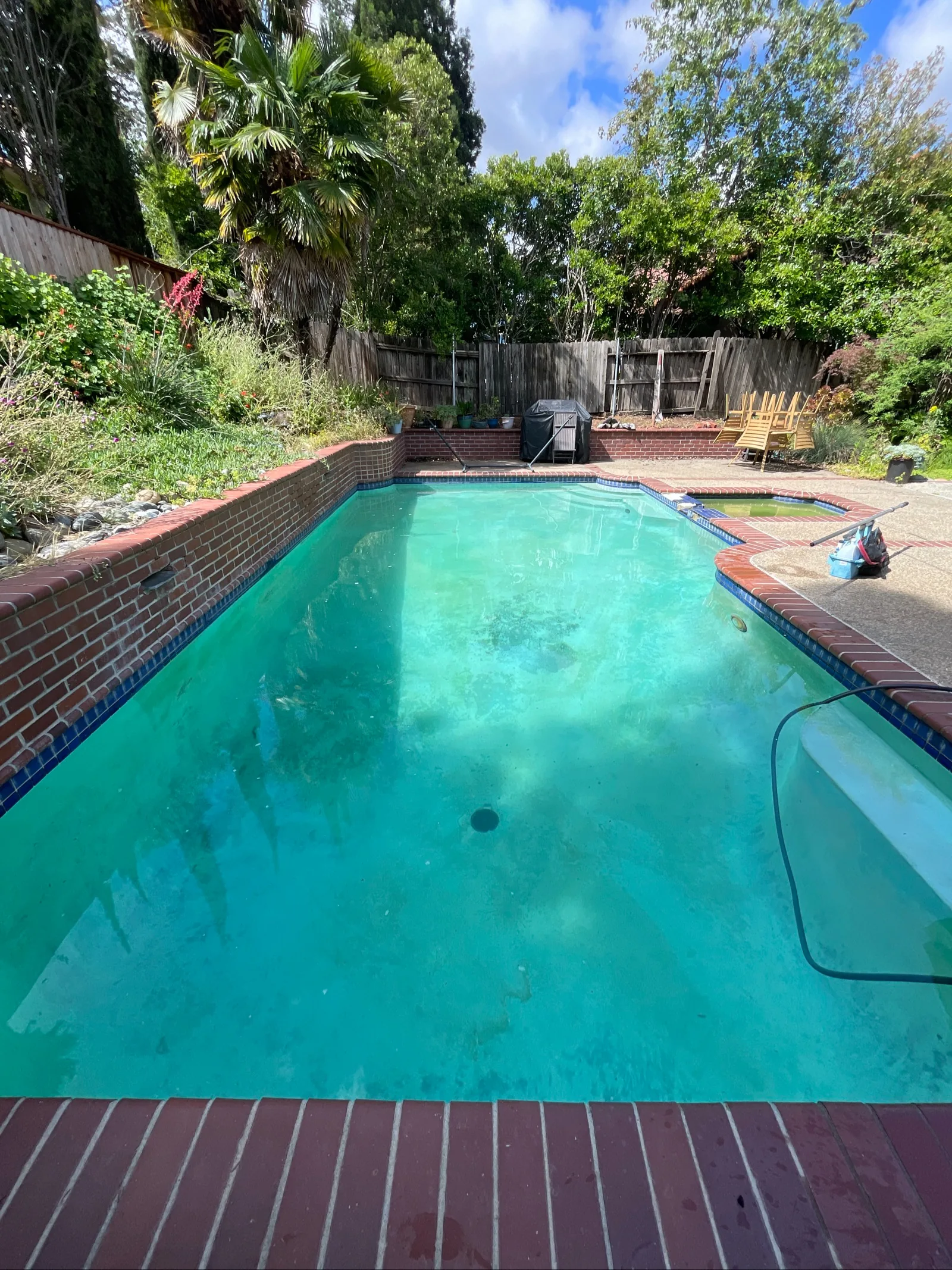
Your swimming pool is usually cloudy because of inadequate sanitation, suspended dirt, poor filtration, or calcium coming out of solution. Before adding chemicals, spend ten minutes checking visibility, chlorine, pH, filter pressure, and return flow.
At Cabana Pools, we use those clues together to distinguish a chemistry problem from an equipment problem. Run this checklist from the deck, with your test kit and phone handy:
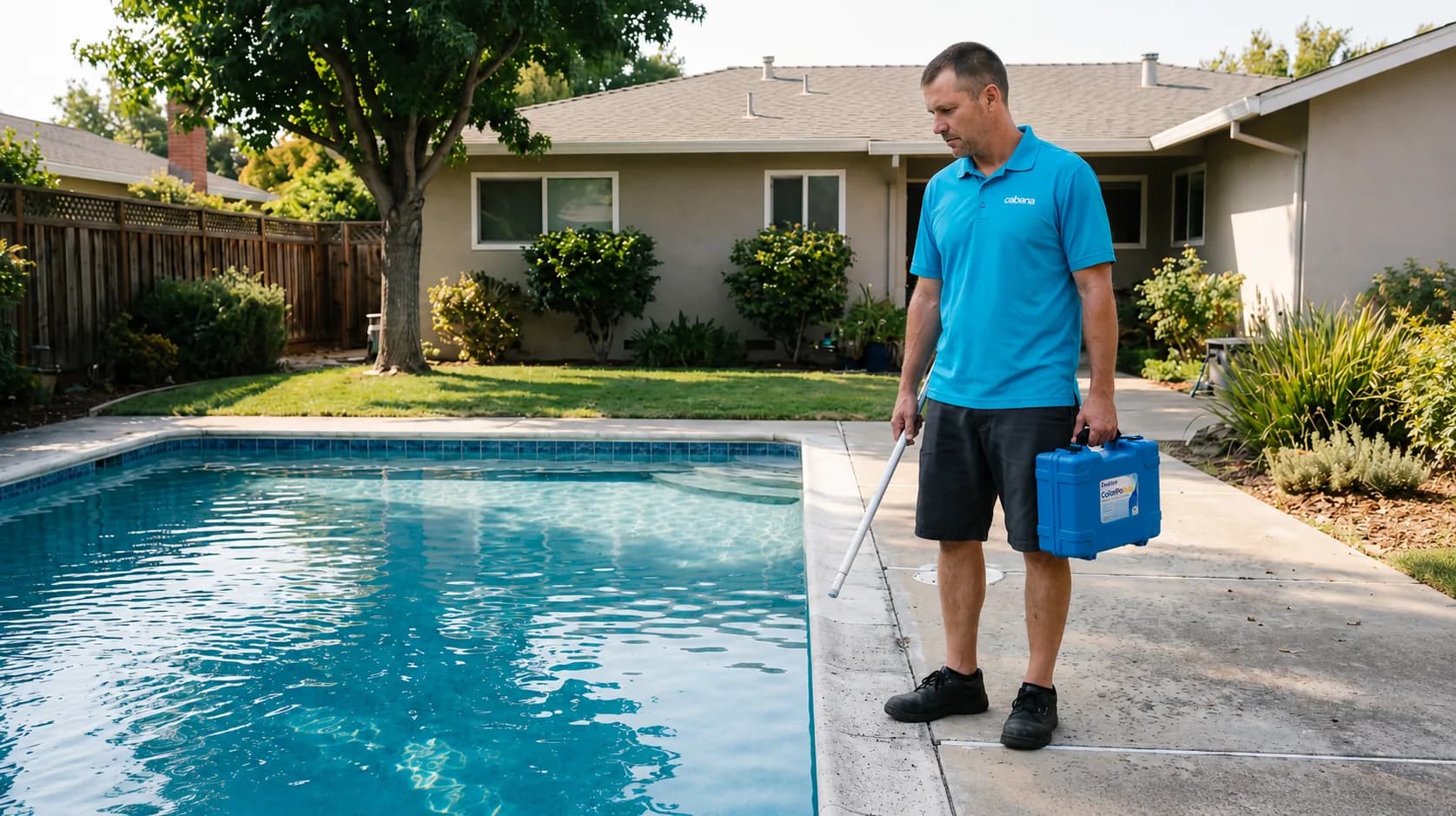
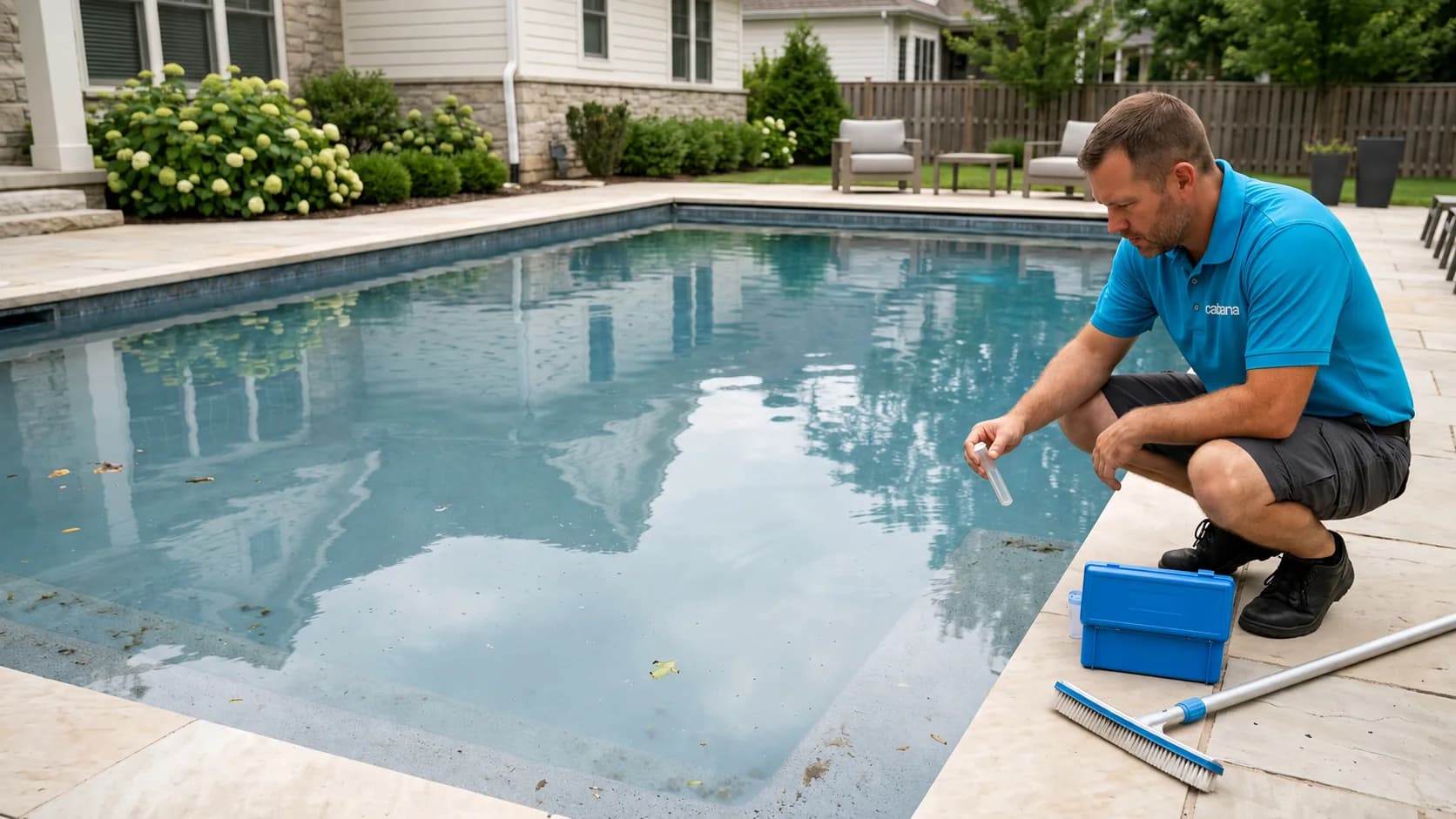
- Minute 1, check visibility: Look for the deepest pool floor or drain cover. If you cannot clearly see it, keep swimmers out while you investigate. Water color alone cannot identify the cause.
- Minutes 2 through 5, test the water: Measure free chlorine and pH using your kit's instructions. Take the sample away from return jets and chemical feeders. Record actual numbers instead of describing the results as normal. Have a recent cyanuric acid reading available to interpret free chlorine.
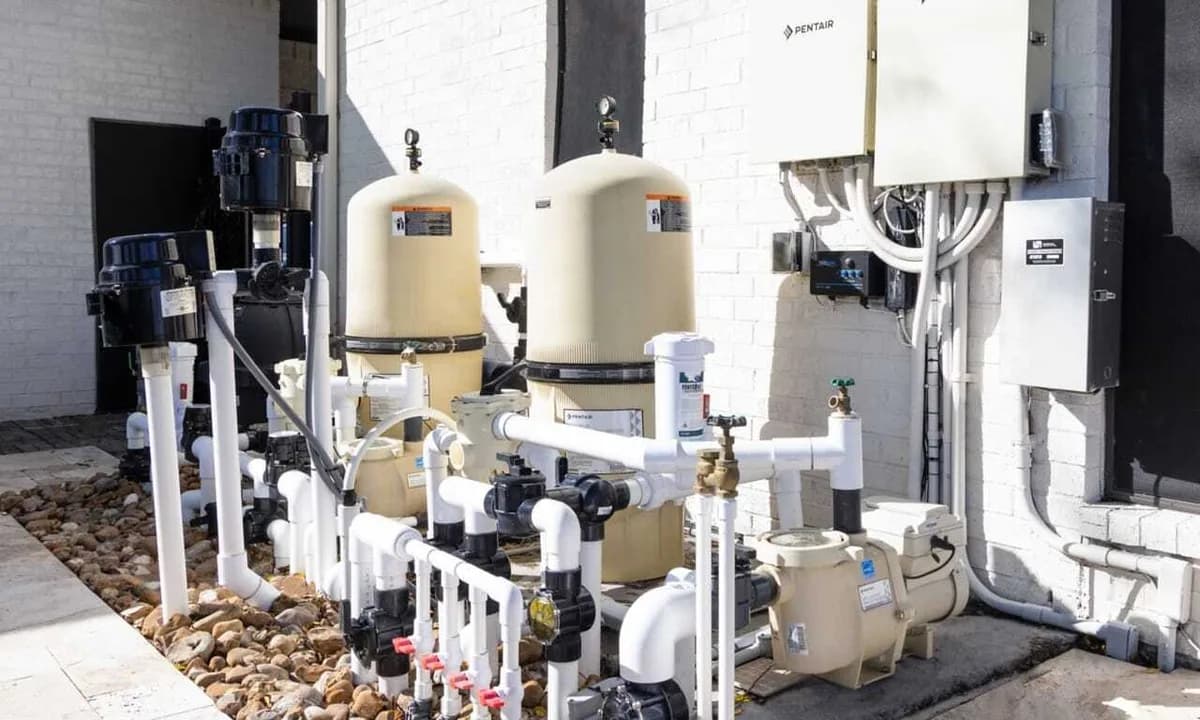
- Minutes 6 and 7, read the filter gauge: Photograph the pressure while the pump runs. Compare it with the clean-filter reading at the same pump speed. Without that baseline, one pressure reading tells you little.
- Minutes 8 and 9, check circulation: Observe the return jets, water level, and pump basket through its lid. Weak returns, persistent bubbles, or a basket that will not stay full point toward a flow problem.
- Minute 10, record what changed: Note recent wind, heavy swimming, chemical additions, a refill, or filter maintenance. The timing helps explain which check deserves attention first.
Call a technician if the pump cannot maintain flow, debris returns through the jets, or readings remain unreliable after retesting. Stop a pump that is running dry. Leave pressurized filter housings closed during this inspection.
Compare free chlorine with your stabilizer level
A chlorine reading only helps if you know which chlorine measurement you took. Free chlorine is the portion available for sanitation. Total chlorine includes combined chlorine, so a total-chlorine result alone can hide a shortage.
Low free chlorine relative to cyanuric acid, also called stabilizer or CYA, is a common cause of cloudy water. For an outdoor, manually chlorinated pool using stabilizer, a practical maintenance guideline is to keep free chlorine at least 7.5% of CYA. Aim around 10% of CYA to leave a buffer for daily chlorine loss. Both readings use parts per million, or ppm.
At 40 ppm CYA, keep free chlorine above a 3 ppm minimum and aim around 4 ppm. At 60 ppm CYA, the minimum becomes 4.5 ppm and the target about 6 ppm. These are routine prevention levels, not treatment doses for established algae. Saltwater systems can use different operating targets because they generate chlorine throughout their operating cycle. Follow the generator's guidance alongside the measured CYA level.
| Check result | What it suggests | What to check next |
|---|---|---|
| Free chlorine is below the CYA-based target, especially below the minimum | Sanitation may not be keeping up with demand | Confirm CYA and chlorine delivery, then restore the appropriate operating level |
| pH is above 7.8 | Calcium precipitation becomes more likely, especially in hard water | Measure calcium hardness and total alkalinity |
| Chlorine and pH appear suitable, but water remains hazy | Fine particles, filtration trouble, or an incomplete chemistry check remain possible | Compare filter pressure and return flow with their normal condition |
| The test color behaves unexpectedly after a large chlorine addition | The sanitizer concentration may exceed the test's reliable range | Check the kit's limits or have the sample tested |
A practical pH range is 7.2 to 7.8. Stabilizer protects chlorine from sunlight, but adding more increases the chlorine concentration needed for effective sanitation. Test before adding it. Our guide to raising cyanuric acid in your pool explains when a stabilizer addition is appropriate.
Cloudiness with a high chlorine reading does not automatically call for more shock. Calcium particles, dead algae, and windblown dust still require removal through filtration. Some chlorine treatments also add calcium, which matters when hardness is already elevated.
If you cannot measure stabilizer, calcium hardness, or alkalinity at home, save your initial results for our technicians. We can complete the chemistry check before choosing a treatment.
Compare filter pressure at the same pump speed
Filter pressure reflects resistance to flow, so the comparison matters more than the number itself. A reading of 20 psi can be normal for one pool and abnormal for another.
Use the filter manufacturer's cleaning threshold. Many filters call for cleaning when pressure rises roughly 20% to 25% above the clean baseline. For example, a clean reading of 12 psi reaches a 25% increase at 15 psi. Compare both readings at the same pump speed and valve settings.
- Higher pressure with weaker returns: A loaded filter is a likely explanation, although a restriction elsewhere can produce similar symptoms.
- Lower pressure with weaker returns: Check whether low water or visible basket debris is restricting the water supply. An air leak or pump problem may also reduce flow.
- Normal pressure with particles returning: The filter may be allowing debris through damaged components or an internal bypass.
A running pump does not prove that enough water reaches the filter. Variable-speed settings, operating schedules, and valve positions all affect circulation. Check whether the schedule changed before extending runtime.
California electricity rates make unnecessary pump hours consequential. We confirm suitable speed and runtime after seeing the equipment. When pressure indicates accumulated debris, pool filter cleaning may be appropriate. Particles returning immediately after cleaning call for an equipment inspection instead of another cleaning cycle.
Match the onset to wind, heat, or mineral buildup
The day cloudiness started can be more useful than whether the water looks white or gray. Match that timing with your checklist results before choosing a chemical.
Cloudiness after Santa Ana winds
Southern California's Santa Ana winds can load a pool with dust, leaves, and pollen within a day. If haze follows a wind event, inspect visible debris and filter pressure first. Organic material can also increase chlorine demand, so a filtration explanation does not eliminate the need for a chlorine test.
Cloudiness during inland heat
Hot inland conditions increase evaporation and chlorine demand. Sacramento Valley summer heat can also make a previously adequate sanitation schedule fall behind. If cloudiness appears during a hot spell, compare today's free chlorine with recent readings. A schedule that worked during mild weather may need adjustment.
Milky water after chemical additions or repeated top-ups
Southern California's hard source water makes calcium buildup a meaningful suspect. Evaporation leaves minerals behind, and topping up adds more. High pH can then encourage calcium carbonate to form suspended particles.
Sacramento and East Bay source water is generally softer, making the same assumption less useful there. Measure calcium hardness before adding a hardness increaser or blaming excess calcium. The pool's treatment history and accumulated minerals matter alongside its source water.
Cloudiness immediately after a chemical addition deserves a review of the product and dose. Record the product name, amount, and time added. Avoid stacking another treatment on top of an unexplained reaction.
Use your results to choose the next step
Your ten-minute check should produce a short record: free chlorine, CYA, pH, filter pressure, pump speed, visible flow, and the event preceding the haze. Include the date of your CYA test. Photograph equipment alerts and keep chemical containers available for identification.
- A clear chemistry issue with normal circulation: Use the measured results to choose the correction. Our guide to clearing cloudy pool water explains the treatment stage.
- Abnormal pressure, weak flow, or returning debris: Arrange an equipment inspection before relying on additional chemicals.
- Cloudiness repeatedly returns: Review the maintenance schedule, chlorine delivery, filter condition, and full water balance together. Repeated chemical additions without identifying the cause can prolong the problem.
For a saltwater pool, add the controller's output setting and any warning message to your notes. Salt systems produce chlorine, and a powered controller does not confirm adequate production.
Our technicians can use this record to focus the visit on chemistry, filtration, or circulation. If recurring haze is the issue, our weekly pool cleaning service provides a way to address ongoing maintenance needs. Send the readings when you contact Cabana Pools about cloudy water, so we can start with the checks you have already completed.