Start with the power shutoff and drainage route
To empty a hot tub, switch off its circuit breaker, drain through its outlet or a submersible pump, then remove leftover water. Keep the spa's power off until you have refilled it to the manufacturer's operating level.
The control panel's off button may leave automatic heating or filtration active. Use the breaker or disconnect identified for the spa, and prevent anyone from switching it back on. Never use the hot tub's circulation pump or jet pump to empty the vessel. Those pumps need water and can suffer damage when they run dry.
Before opening anything, choose where the discharged water will go. Ask your local wastewater or stormwater agency which disposal route and water conditions it accepts. Do not assume a street drain, sewer access point, or yard is an acceptable destination. Confirm the route before adding any plumbing cleaner, since cleaning products can affect disposal requirements.
These steps suit a self-contained hot tub. If your spa shares equipment with a pool, have us confirm the valve arrangement first. Opening the wrong route can move pool water into the spa while you try to drain it.
Choose between a drain hose and a submersible pump
Use the built-in gravity drain when the discharge point is low enough to receive water without pumping. Choose a separate submersible utility pump when water must travel uphill, provided the pump supports that lift.
| Method | Best fit | Main limitation |
|---|---|---|
| Built-in drain with a garden hose | A suitable discharge point sits below the tub's water level | Flow slows as the water level falls |
| Submersible utility pump | You need faster removal or must lift water along the discharge route | Actual flow depends on hose size, lift, and pump limits |
For reliable gravity drainage, keep the hose route descending. An uphill section can interrupt drainage before the tub empties. Check the owner's manual for the drain location and opening sequence. Some outlets pull outward or turn before releasing water; forcing an unfamiliar fitting can break it.
For pump drainage, use a pump intended for water removal and suitable for the water temperature. Follow its electrical instructions, including ground-fault protection. Keep plugs and connections dry, and never enter the tub while the utility pump is energized.
A wider discharge hose may improve pump flow when the pump supports it. Keep bends gentle and remove kinks. The receiving location's permitted capacity still determines how quickly you can discharge. If water begins pooling there, stop the discharge rather than letting the pump outrun the drainage route.
Drain the main body of water in four steps
Connect and secure the discharge hose before releasing water. Follow these four steps to catch leaks or drainage problems while you can still stop the flow.
- Connect before opening. With spa power off, attach the hose securely to the drain fitting. For a utility pump, connect its discharge hose before placing it on a stable, manufacturer-approved surface inside the tub.
- Secure the discharge end. Position it at the accepted disposal point. Keep the hose from whipping loose, creating a trip hazard, or sending water toward electrical equipment.
- Start and inspect. Open the drain according to the manual, or start the separate pump. Check both ends immediately for leaks, pooling, and unexpected backflow.
- Stay nearby. Monitor the outlet and tub as the level falls. Stop a utility pump at its specified minimum water depth unless its automatic shutoff has already stopped it.
Do not plan a fixed drain time from a pump's advertised flow alone. Hose length, vertical lift, and restrictions reduce output. Divide the tub's water volume by the expected flow under your actual setup for a rough estimate. Gravity drainage becomes progressively slower near the bottom.
Watch how the flow changes. A gradual slowdown near the bottom is expected with gravity drainage. An abrupt stop while substantial water remains calls for a hose and outlet check. For a utility pump, disconnect its power before checking the hose for kinks or the intake for debris. Avoid reaching into water around an energized pump.
Remove water left in seats and footwells
Collect accessible puddles after the main drain stops. Water below the drain opening cannot leave through that outlet, so a shallow puddle does not mean the drain has failed.
Use a soft sponge or a wet/dry vacuum configured for liquid pickup. Follow the vacuum's instructions and keep its electrical connections away from water. Never use a household dry vacuum. Seats and footwells may need separate passes because their low spots do not all drain together.
An empty-looking shell can still hold water inside plumbing. Do not loosen pump fittings or open unfamiliar equipment connections to chase the last water out. For a routine refill, complete plumbing evacuation usually is not necessary.
If the tub will remain empty through freezing weather, it needs the manufacturer's winterization procedure. This matters during occasional freezing nights around Sacramento, because draining the shell alone leaves vulnerable water inside equipment. Decide whether you are refilling or leaving the spa empty before treating the draining job as finished.
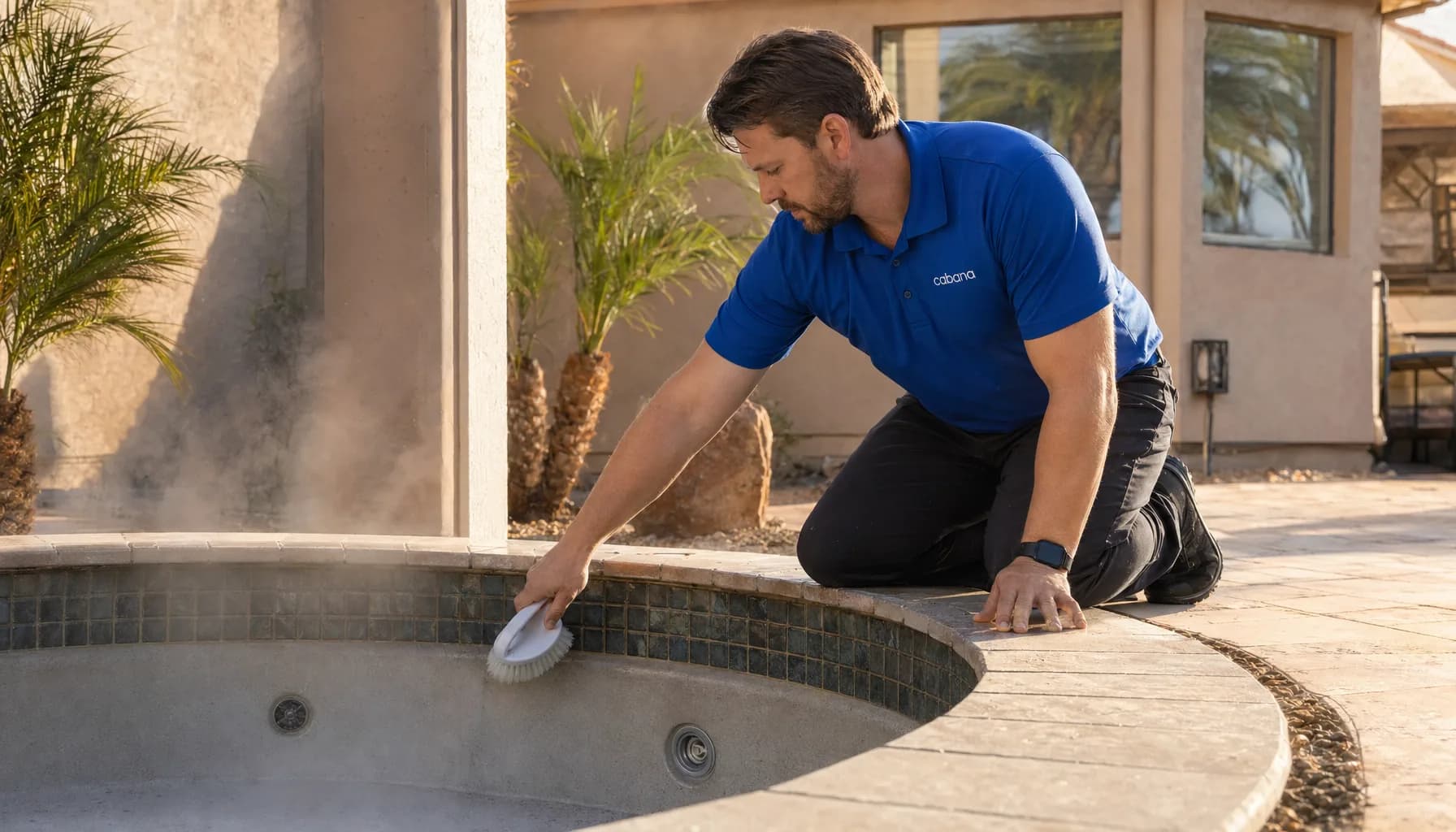
If cleaning is part of the water change, use our hot tub cleaning and drain-timing guide for that separate task. Finish rinsing and removing cleaning residue before refilling.
Test the refill water before choosing chemicals
Test fresh source water for calcium hardness, total alkalinity, and pH before repeating doses from the previous fill. A water change resets your starting chemistry, so the old dosing routine may no longer fit.
Southern California supplies are generally harder and more mineral-heavy than water around Sacramento and the East Bay. In San Diego, Los Angeles, and Orange County, check calcium hardness before adding a calcium increaser. A fresh fill may already contain substantial calcium, and adding more automatically can encourage scale.
Evaporation removes water while leaving dissolved minerals behind. If the old fill had high calcium hardness, compare its reading with the hose water before expecting a drain and refill to solve the problem. Replacement water can lower accumulated hardness only when its calcium level is lower. Refilling with already-hard water still requires a balance plan suited to that starting level.
Sacramento and East Bay source water is generally softer. There, confirm whether calcium needs adjustment to meet your spa manufacturer's target. Neither region should rely on geography alone: your test result determines the dose. Record the fresh-fill readings alongside the amount of water added so future adjustments have a useful starting point.
Use the manufacturer's recommended fill point. Many tubs specify filling through the filter compartment to reduce trapped air, but designs differ. Close the drain, restore its cap, and reinstall components according to the manual before starting the hose. Watch for leakage as the level rises.
In hot inland weather, schedule the work so you can refill promptly. Keep an empty shell protected from direct sun according to its care instructions.
Check water level, circulation, and sanitizer before use
Restore spa power only after the water reaches the marked operating level. Establish steady circulation through the manufacturer's startup sequence before normal heating begins.
- Water level: Confirm the fill reaches the operating mark, the drain is closed, and the equipment area remains dry.
- Circulation: Follow the manufacturer's startup or priming sequence. If the pump hums without moving water, or a flow warning remains, shut it down. Repeated restarts can damage a pump that lacks water.
- Water condition: Adjust balance and sanitizer using your test results, product directions, and the spa manufacturer's targets. Fresh tap water still needs appropriate sanitizer before bathing. Retest after the required circulation period rather than assuming the first dose made it ready.
If water does not circulate, the drain fitting leaks, or the controls keep reporting a flow problem, leave the spa off and arrange service. Our technicians confirm the right fix after seeing the equipment.
For help with draining, cleaning, and restarting, see our hot tub cleaning service. Have the spa model, approximate capacity, and available drainage route ready so we can plan the visit.