Start with the drain type and safety
To clean a pool deck drain, sweep away surface debris and remove reachable sediment through its intended maintenance opening. For an underwater pool drain, leave the cover in place and have circulation problems assessed before attempting any clearing.
Never reach into a suction opening or remove an underwater cover. If a cover is loose, broken or missing, keep everyone out and turn the circulation system off until the problem is corrected. Follow the Consumer Product Safety Commission's guidance on avoiding pool drains and suction outlets.
Identify which system needs attention before choosing tools. Water standing on the deck and weak flow from pool returns require different checks.
Main drains, skimmers and deck drains are different
| Location | What it does | What you can check |
|---|---|---|
| Channel or grate in the deck | Carries surface water away from the walking area | Leaves over the grate, accessible sediment and a visible outlet |
| Skimmer opening at the waterline | Draws surface water into the circulation system and catches debris in a basket | Water level and the removable basket, with the pump off |
| Covered outlet underwater | Draws water into the circulation system | Cover condition from the deck, without entering or touching it |
| Pump strainer at the equipment pad | Catches debris before it enters the pump | Visible debris or air through a clear lid, without opening it while running |
A deck drain normally operates separately from the pool pump. Cleaning a skimmer basket will not remove sediment from a deck channel. Likewise, clearing the deck channel will not restore circulation through a dirty pool filter.
How to clean accessible debris from a pool deck drain
Gather gloves, a broom, a dustpan, a debris container and the tool specified for your removable grate. Find the drain's product name or maintenance instructions before opening it. Some narrow channels have fixed tops; do not assume every grate lifts out.
- Sweep before opening. Collect leaves, dirt and other loose material around the drain. Sweep away from the channel so debris does not fall inside during cleaning.
- Locate the intended access. Use only a removable grate, cap or maintenance opening identified for that drain. Stop if the top resists removal or its attachment method is unclear.
- Remove reachable debris. Lift out leaves and scoop accessible sediment into a container. Work gently around the channel and its connections. Do not push a rod or snake into an unidentified buried line.
- Check the visible outlet. If it is accessible, remove loose leaves covering the opening. Note standing water, sediment or an obstructed discharge point without reaching into concealed piping.
- Inspect and replace the grate. Check for damaged sections and loose fasteners. Seat the cover securely according to its instructions. Keep people away if the opening cannot be covered safely.
- Check drainage cautiously. If the outlet and discharge route are known, introduce a small amount of water at the surface. Watch whether it leaves the channel. Stop if water backs up or spreads toward the house or pool.
A surface rinse checks drainage; it should not force a blockage deeper. Do not seal a hose into the pipe, use a drain bladder or connect compressed air to an unknown line.
If water still stands after reachable debris is removed, stop flushing. The next step is an assessment of the channel, outlet and connected drainage path. Photograph the affected section and note whether the whole channel backs up or only one area holds water.
Reduced pool flow needs a diagnosis
Weak return flow does not prove the underwater drain is blocked. A full skimmer basket, low water level, dirty filter or pump problem can produce similar symptoms.
- Check the waterline. Water must reach the skimmer's operating level. If the opening draws air, correct the water level before continuing normal operation.
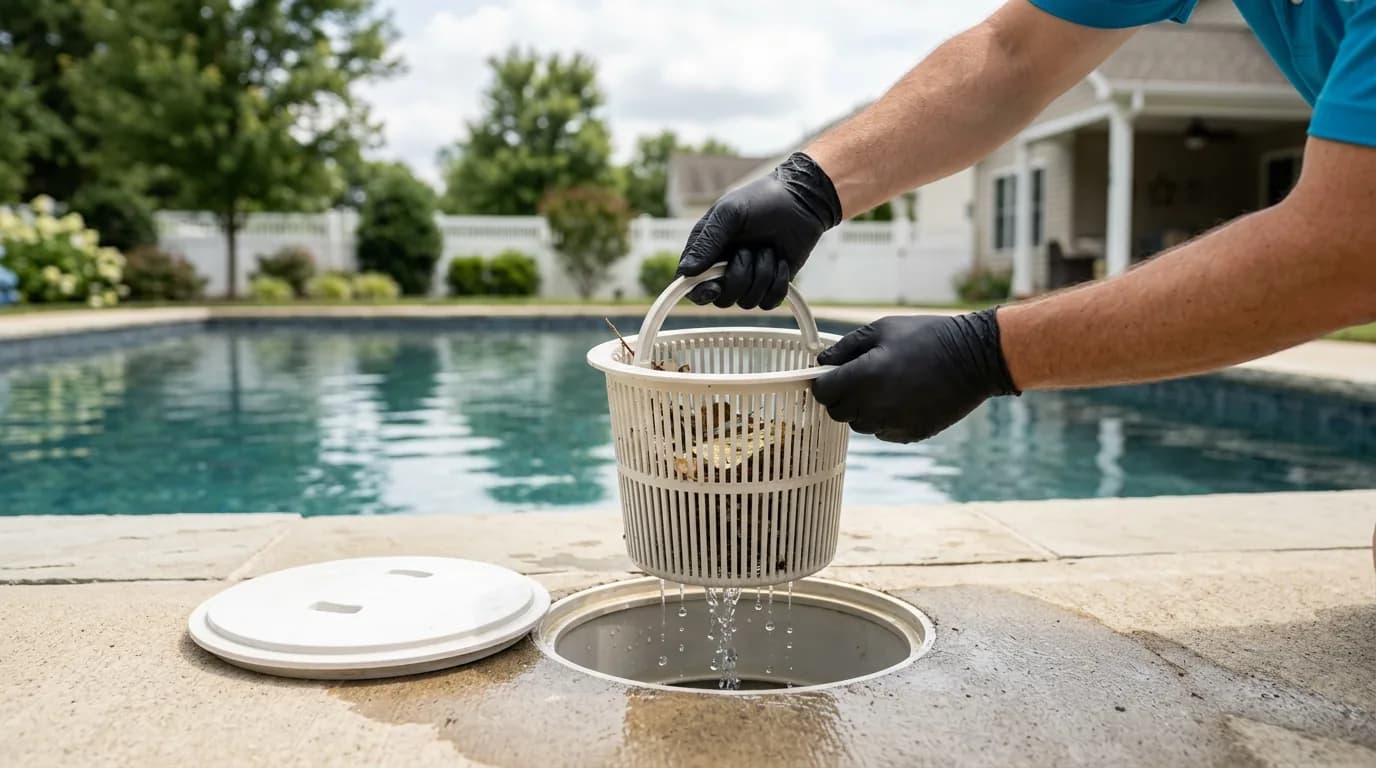
- Empty the skimmer basket safely. Turn the pump off and prevent an automatic restart. Lift out the removable basket, dispose of its contents and replace it correctly. Keep hands out of the suction port beneath it.
- Observe the pump. Note persistent air under a clear lid, unusual noise or failure to maintain water flow. Turn the pump off if it loses prime or runs without water.
- Compare filter pressure. Compare the gauge reading with the clean-filter baseline at the same pump speed. Follow the filter manufacturer's cleaning threshold rather than using an arbitrary pressure reading.
- Record recent changes. Note when the problem began and whether it followed heavy debris, basket cleaning or equipment service.
Opening the pump strainer or filter requires the equipment's shutdown and pressure-release procedure. Use our filter cleaning guide by equipment type if filter maintenance is indicated.
Leave suction-line clearing and diagnostic valve changes to a pool service professional. Our technicians check the equipment and circulation before identifying the appropriate repair. If the pump itself is faulty, pool pump repair addresses that cause.
Check drains after wind and before rain
Santa Ana winds can load Southern California pools and decks with leaves, dirt and pollen in a day. After a wind event, sweep the deck-drain grate and check the skimmer basket before debris accumulates further.
Before forecast rain, inspect the channel's surface openings and any accessible outlet. Remove dry debris while it is easy to collect. Washing a dirty deck toward the channel sends more sediment into the drainage path.
Use performance to guide deeper cleaning: slower drainage, recurring puddles or visible sediment justify checking the intended access points. A channel that stays blocked after accessible cleaning needs assessment, even if its surface grate looks clear.
Drain cleaning is not a pool drain and refill
Removing a blockage and replacing pool water solve different problems. Emptying the pool does not clear a deck channel or establish why circulation has slowed.
Southern California's hard source water and evaporation can concentrate minerals in pool water. A water-balance concern calls for testing before deciding whether water replacement is appropriate. It does not establish that a drain is clogged.
We assess the water, pool and equipment before recommending a pool drain and restart service. Do not empty the pool to reach an underwater cover or investigate weak returns.
What determines the cost and which service should you request?
The problem's location, maintenance access, diagnostic work and any required equipment parts determine the scope. Removing accessible basket debris, cleaning a filter and repairing a pump are different tasks. Confirm the work included before booking.
For water replacement, see our pool draining and restart pricing information. That service is separate from diagnosing a circulation blockage.
- Deck puddles: provide a photo of the channel, its access design and any visible outlet. Confirm that the provider handles that drainage system.
- Weak pool returns: provide the pump and filter models, gauge reading, basket condition and when the flow changed.
- Water-quality concerns: provide recent test results and describe the issue before requesting a drain and restart.
- Damaged underwater cover: keep the pool closed and circulation off while arranging service.
Contact our team about a pool circulation problem with those observations. We confirm the appropriate equipment service after assessing the system.