Stop adding chlorine before choosing a treatment
To reduce chlorine in a pool, stop chlorine additions and let sunlight and normal chlorine demand lower the level. For a faster correction, use a pool chlorine neutralizer according to its label, based on measured free chlorine and pool volume.
First, pause liquid dosing, switch off the chlorinator, or set saltwater chlorine production to zero. Cancel any boost or superchlorinate setting. Keep normal water circulation running so the pool mixes evenly.
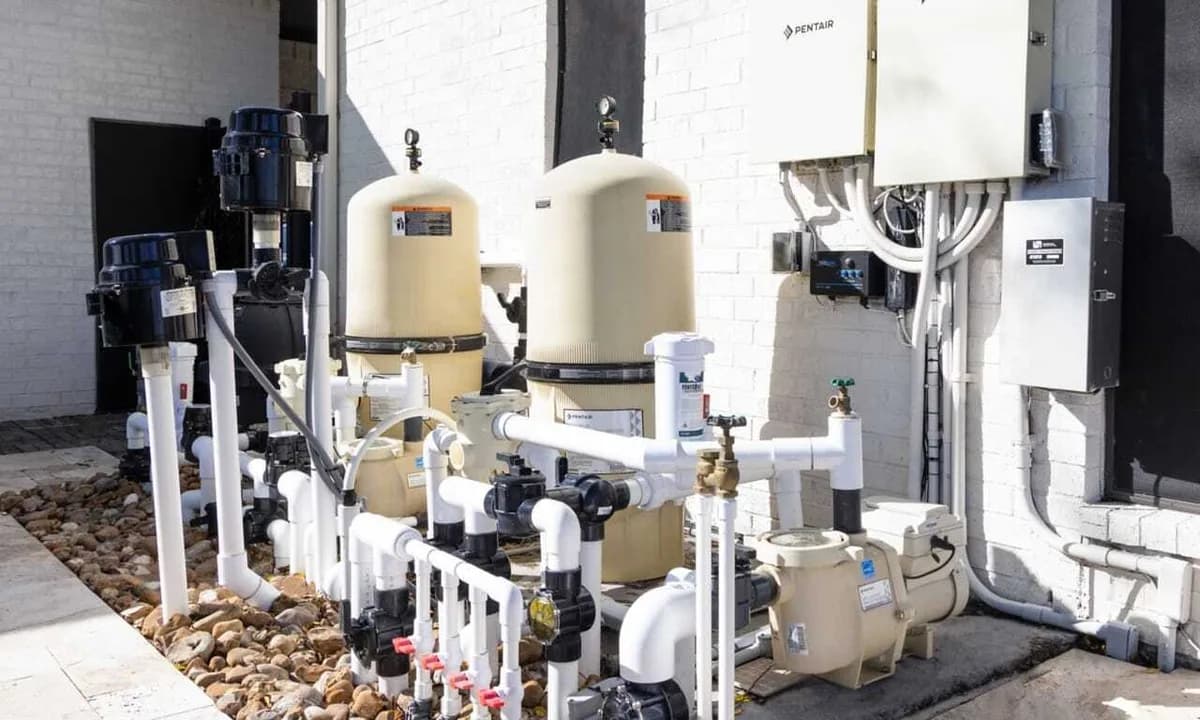
A saltwater pool still produces chlorine whenever its cell operates. Turning down the percentage may leave it producing more than the pool currently needs. For an active correction, pause production through the equipment controls.
With tablet feeders, follow the manufacturer's shutdown instructions. Do not open a pressurized feeder or handle wet tablets casually. Check for floating dispensers and tablets in the skimmer, too.
Keep swimmers out while chlorine exceeds the sanitizer label's swimming range or the result remains uncertain. Do not use swimming as a way to consume excess chlorine.
Confirm free chlorine before treating a high reading
The useful number is free chlorine, the chlorine available for sanitation. Total chlorine includes free chlorine plus combined chlorine. A strong chlorine smell alone does not establish that free chlorine is too high.
Before adding a reducer, record these four measurements:
- Free chlorine: Compare it with the sanitizer label and your pool's operating target.
- Total chlorine: Subtract free chlorine to calculate combined chlorine.
- Cyanuric acid: Stabilizer affects chlorine's sunlight protection and the appropriate operating target.
- pH: The usual pool range is 7.2 to 7.8, but very high chlorine can interfere with some pH tests.
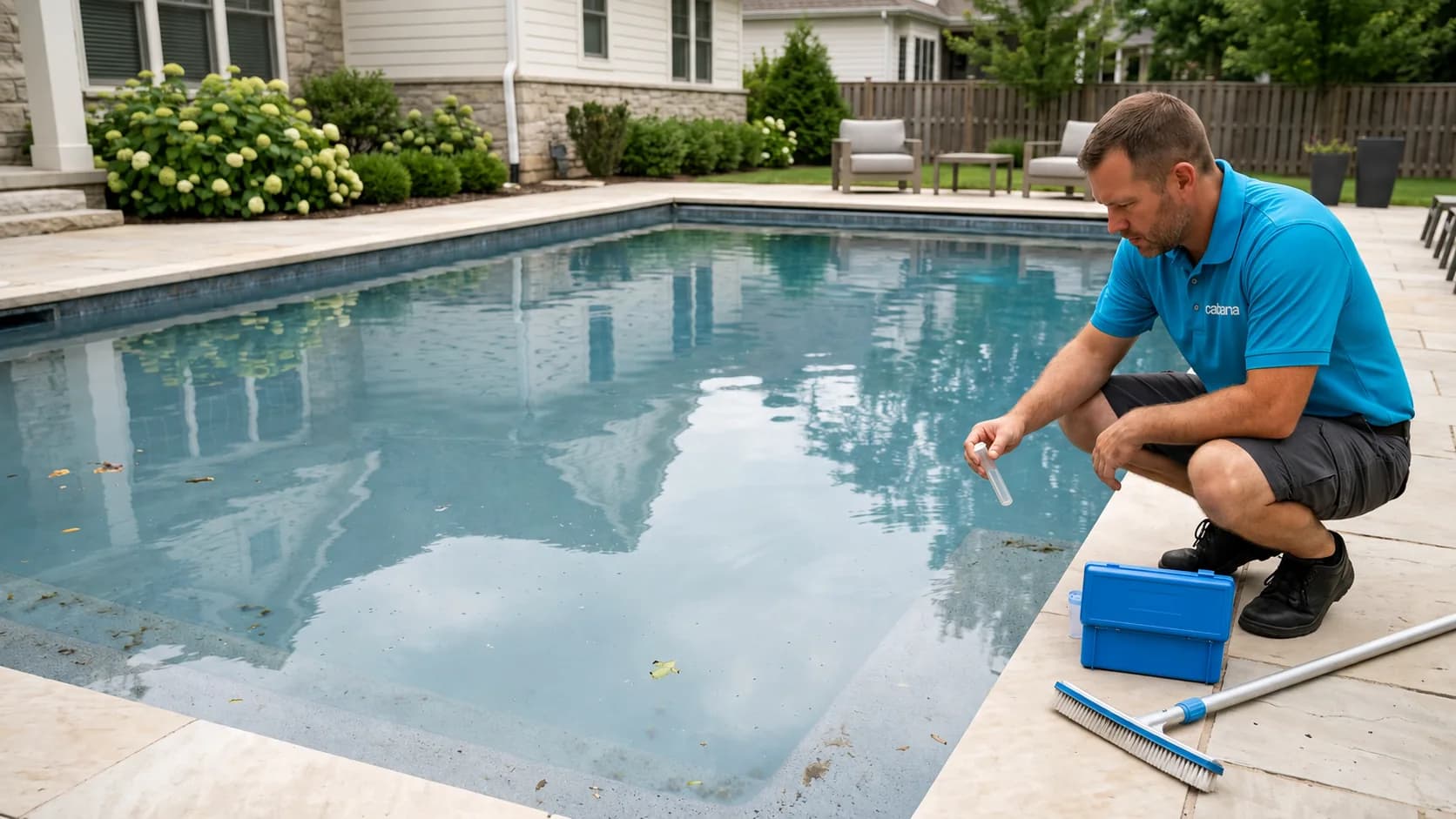
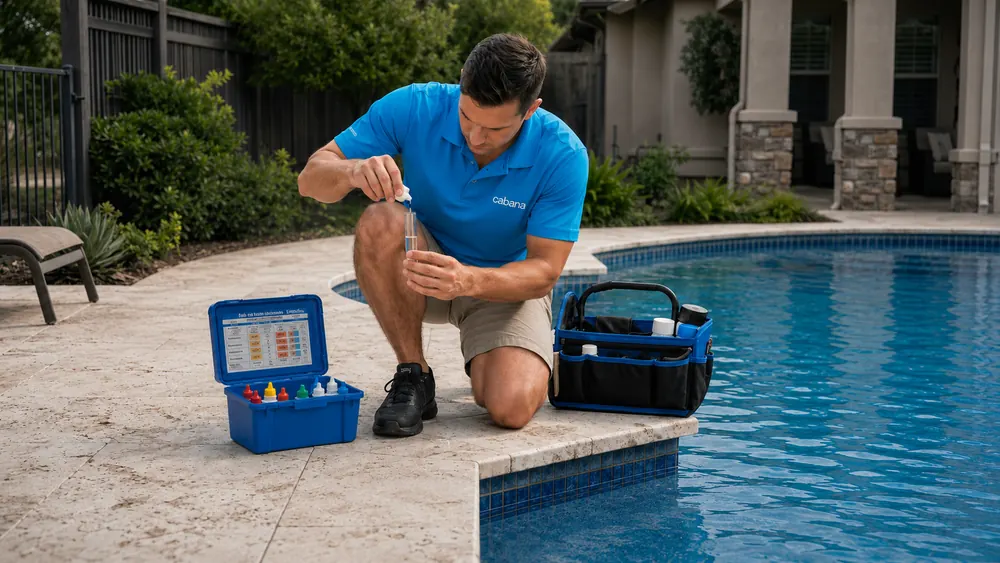
Take the sample away from return jets and chemical feed points, following the kit's sampling instructions. If the reading reaches the test's upper limit, it cannot tell you how far above that limit the pool sits.
Use a chlorine test with sufficient range, such as a chlorine titration kit rated for high readings. Some color tests can bleach out at high chlorine and misleadingly appear low. Follow the kit's instructions instead of improvising a dilution with tap water.
Our technicians check the reading and stabilizer level before choosing a correction. A recent shock treatment, an inaccurate pool-volume estimate, and an active feeder each require a different response.
Sunlight works, but coastal pools may need more time
Waiting is usually the simplest choice when chlorine is modestly above its operating target and swimming can wait. Sunlight breaks down chlorine, while contaminants consume it. Neither process follows a reliable hours-per-ppm schedule.
The common advice to uncover the pool works best when direct sunlight reaches the water. Remove a solar blanket when the pool can remain safely secured. Never compromise required barriers or unattended-pool safety to gain sunlight.
Along the Southern California coast, the marine layer can limit direct sun, especially during gray May and June mornings. A covered coastal pool with stabilizer may lose chlorine much more slowly than a sunny inland pool.
Hot inland valleys and Sacramento summers generally bring higher chlorine demand. That makes yesterday's feeder setting a poor guide when conditions change. A setting suited to a hot, busy weekend can oversupply a cooler, lightly used pool.
Check chlorine again after several hours of daylight, then use the measured trend to decide whether waiting remains practical. High cyanuric acid can slow sunlight loss. Do not add more stabilizer while trying to lower excess chlorine.
Running the pump continuously is not a chlorine-removal method. Circulation distributes chemicals; ordinary filtration does not remove dissolved free chlorine. Keep the circulation needed for mixing and the equipment, rather than extending runtime solely to lower the reading.
Use neutralizer when waiting is impractical
A pool-labeled chlorine neutralizer can lower chlorine faster than waiting for sunlight. Sodium thiosulfate is a common active ingredient. Its dose depends on product concentration, pool volume, and the intended chlorine reduction.
The main failure point is overdosing. Too much reducer can remove the sanitizer residual and consume chlorine added afterward. That leaves another correction to make before swimming.
| Situation | Practical choice | What can go wrong |
|---|---|---|
| Small excess with no immediate swimming plans | Pause dosing and monitor natural loss | An overlooked feeder keeps adding chlorine |
| Confirmed excess requiring faster correction | Use a pool-labeled neutralizer | An incorrect volume or dose removes too much chlorine |
| High chlorine alongside excessive stabilizer or minerals | Assess partial water replacement | Replacement water creates additional balance changes |
Calculate the dose from the product label, never from a generic scoop recommendation. Where the label allows staged treatment, make a conservative first correction. Circulate for the specified mixing interval and retest before adding more.
Never mix neutralizer directly with chlorine products or combine chemicals in a bucket. Do not use household peroxide, vinegar, or acid as an improvised chlorine reducer. If the pool volume or reading is uncertain, resolve that uncertainty before dosing.
Water replacement depends on what comes from the tap
Partial water replacement dilutes chlorine, but it also changes stabilizer, salt, calcium hardness, and alkalinity. It makes more sense when several water-balance problems need correction than when chlorine alone is slightly high.
For example, replacing half the water with chlorine-free water would roughly halve the chlorine concentration, assuming complete mixing and no additional production or loss. Actual source water may contain a disinfectant residual, so test rather than treating that calculation as an exact prediction.
In San Diego, Los Angeles, and Orange County, hard, mineral-heavy source water limits how much a refill can improve calcium hardness. Evaporation further concentrates those minerals. Topping off evaporated water does not remove the accumulated minerals or stabilizer.
Sacramento-area and East Bay source water is generally much softer. A substantial exchange there can lower calcium hardness enough to require adjustment. The same replacement percentage can therefore produce different follow-up work across our service area.
Our technicians test pool and source water before recommending an exchange. If chlorine is high alongside excessive stabilizer or mineral buildup, our pool draining and restart service can assess whether water replacement is appropriate. Avoid starting a large drain solely to meet a same-day swimming deadline.
Restart dosing only after the reading reaches its target
Before restoring chlorine production, confirm that free chlorine has reached the appropriate operating range. Check pH with a valid test, and follow the sanitizer label's swimming requirements. Clear-looking water alone does not establish readiness.
- Record the final free chlorine reading and the time.
- Restart dosing at a setting matched to current weather, cover use, and swimming load.
- Retest the next day to see whether chlorine is rising or falling.
- Adjust production from that trend instead of repeatedly adding neutralizer.
If chlorine rises again after production should be off, check boost schedules, automation commands, and feeder operation. Our technicians confirm the correct fix after seeing the equipment.
California pools often operate throughout the year, so summer output should not remain the default through cooler months. Our weekly pool cleaning and chemistry service includes ongoing maintenance that helps keep dosing aligned with changing pool conditions. Repeated high readings call for a dosing correction, not a standing neutralizer routine.