Expect about 8 to 12 years, with repairs sometimes sooner
A residential pool pump typically lasts about 8 to 12 years, although seals, the motor, or electronic controls may need replacement sooner. Use that range to plan ahead, then judge replacement by the failed component and the condition of the remaining equipment.
Operating hours, speed, heat, moisture, and maintenance help determine where a pump falls within that range. California pools commonly operate throughout the year. A pump running long hours at high speed accumulates different wear from one meeting circulation needs at lower speeds.
The installation date also needs context. A ten-year-old housing may contain a recently replaced motor. Keep motor, seal, and drive replacement dates alongside the original installation record so one old label does not decide the fate of newer parts.
Motor, seal, and drive lifespans differ
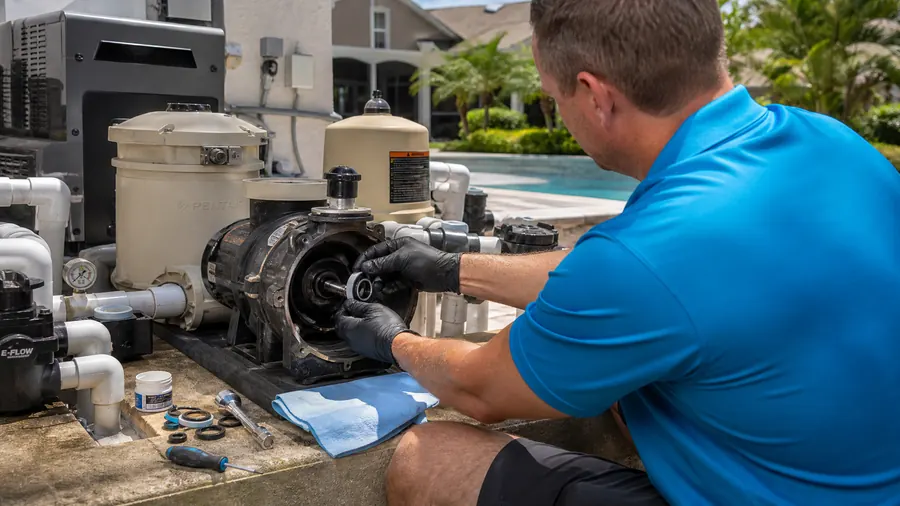
The 8 to 12 year estimate applies to the pump assembly. Its individual parts do not share a replacement deadline. A sound housing can remain useful after a motor fails, while a damaged seal can need attention on a much younger pump.
| Component | What determines its useful life | What failure means |
|---|---|---|
| Motor and bearings | Operating hours, heat, corrosion, and water entering from a leaking seal | Bearing repair or motor replacement may preserve the rest of the pump. |
| Shaft seal | Dry running, abrasive debris, water balance, and wear | A leak needs prompt repair before water damages the motor. |
| Variable-speed drive | Heat, moisture, electrical faults, and electronic component condition | A failed drive can stop an otherwise mechanically sound pump. |
| Housing and impeller | Debris damage, freezing, distortion, and condition of sealing surfaces | Damage here can make a motor-only replacement a poor choice. |
Variable-speed drive electronics add a failure point that a basic single-speed pump lacks. That does not establish a shorter overall lifespan. It means a blank display or recurring drive fault needs a different diagnosis from worn motor bearings. Seals and electronics have no dependable calendar interval that applies to every installation.
What shortens pump life in California
Running without adequate water can damage a seal well before age becomes relevant. Low water, blocked skimmer baskets, and suction-side air leaks can interrupt water supply. After Santa Ana winds, check baskets and water level promptly because debris and evaporation can change both quickly.
During inland heat, including Sacramento Valley summers, keep motor ventilation clear of leaves and stored items. Avoid enclosing equipment in a cover that traps heat. Along the Southern California coast, salt air makes corrosion around metal parts and connections another reason for regular inspection.
Water balance affects pump parts, too. Hard Southern California source water becomes more concentrated through evaporation. Scale-forming conditions can leave deposits on wetted components and seal surfaces. Sacramento and East Bay source water is generally softer. Low calcium hardness deserves attention alongside pH and alkalinity; acidic, corrosive water can attack metal parts and damage seal components. Low hardness alone does not establish corrosivity.
Use measured chemistry to guide adjustments. Adding calcium automatically in Southern California, or ignoring low pH in a softer-water pool, can move conditions in the wrong direction.
During Sacramento's occasional freezing nights, confirm freeze-protection settings before temperatures fall. Frozen water can damage the pump housing. A controller cannot circulate water during a power failure.
Which warning signs suggest the pump is nearing failure?
Persistent mechanical noise, recurring shutdowns, and spreading corrosion deserve more attention than age alone. Several symptoms together make a replacement assessment more useful, particularly near the 8 to 12 year planning range.
- A persistent squeal or grinding sound: Bearings may be worn, especially when noise continues after flow stabilizes.
- Water leaking between the motor and housing: A shaft-seal leak can damage the motor if left unresolved.
- Repeated shutdowns after warming up: Investigate cooling, motor condition, electrical supply, and stored faults.
- Recurring drive faults: Determine whether the problem comes from the drive, motor, or supply before replacing electronics.
- Unreliable circulation despite cleared restrictions: Inspect the impeller and other components before deciding the pump is worn out.
A gravel-like sound may indicate cavitation or inadequate water supply rather than worn bearings. Likewise, weak returns can come from a clogged basket or dirty filter. These symptoms require diagnosis, not an automatic replacement order.
Shut the pump off if it runs dry, produces smoke or a burning odor, or repeatedly trips a breaker. Do not keep resetting it. A motor feeling hot to the touch, by itself, is not a reliable failure test.
Repair the seal, replace the motor, or replace the whole pump?
The practical choice depends on how much usable equipment remains after the fault is corrected. Our technicians compare these options after inspecting the assembly.
| Option | When it makes sense | What could change the decision |
|---|---|---|
| Seal or bearing repair | The fault is isolated, the motor is otherwise sound, and serviceable parts are available. | Water damage, substantial corrosion, or other motor wear may make a limited repair poor value. |
| Motor-only replacement | The housing, impeller, and sealing surfaces remain sound, with a compatible compliant motor available. | Control incompatibility, damaged pump parts, or scarce parts may favor full replacement. |
| Drive replacement | The electronic fault is confirmed and the motor and pump remain healthy. | An aging motor or unavailable compatible drive changes the value of preserving the assembly. |
| Full pump replacement | Several major components are deteriorating, repairs keep recurring, or the existing equipment poorly matches required flow. | A single repairable fault in otherwise healthy equipment can justify keeping the pump. |
A motor replacement should include a new compatible shaft seal. Reusing a worn seal risks exposing the new motor to the same leak. Correct the original cause, such as dry running or water intrusion, before returning equipment to service.
For a broader comparison, read our guide to repairing versus replacing pool equipment. Repair and replacement costs depend on the failed component, access, parts availability, and equipment compatibility. See our pool pump repair service and pricing information for the next step.
California motor rules change the replacement choice
California Title 20 generally prevents a like-for-like single-speed motor swap on covered residential filtration pumps. Variable-speed or multi-speed capability is central to these efficiency requirements, but the replacement rule is more specific: covered motors with total horsepower of at least 0.5, manufactured on or after July 19, 2021, must be variable-speed. See the California Energy Commission's replacement motor requirements.
We confirm the motor category, rating, and equipment compatibility before recommending a replacement. Do not assume any two-speed motor qualifies, or order solely from the horsepower printed on the old motor.
High SDG&E, Southern California Edison, and PG&E electricity rates also make the operating schedule a major budget factor. Compare power draw and hours together: a variable-speed pump running longer at low speed can use less electricity than a shorter high-speed schedule.
The suitable setting still must meet filtration and connected equipment needs, including heater and salt-system minimum flow requirements. Choosing a larger pump simply for more power can add unnecessary operating demand.
When age matters and when it doesn't
Keep a functioning older pump when it maintains circulation, runs without recurring faults, and has sound components. Use age to plan for replacement when major repairs arise, rather than replacing automatically on its tenth birthday.
For an inspection, have the model number, repair dates, daily schedule, and any fault-code photos ready. Tell us whether the problem occurs at startup, after warming up, or at a particular speed. That timing helps distinguish a flow problem from heat-related failure.
Our diagnostic check compares filter pressure at the same pump speed and valve settings. High pressure relative to the clean-filter baseline points toward restriction; low pressure with weak flow calls for checking water supply, air entry, and the impeller. Following the manufacturer's cleaning threshold and arranging pool filter cleaning may resolve the complaint without replacing a working pump.
Arrange service promptly for persistent leaks, changing noise, or recurring faults at any age. Near the expected lifespan, ask us to compare the proposed repair with the condition of every major component. That gives you a useful replacement decision instead of an age-based guess.