Drain when water tests call for it, not every year
You shouldn't drain your pool every year automatically; replace water when testing identifies buildup that needs dilution. A full drain has no fixed schedule, and a partial water replacement may solve the problem.
The familiar advice to drain every few years can serve as a reminder to review water chemistry. It fails when that anniversary becomes the only reason to empty the pool. Water age alone doesn't tell you how much calcium, salt, or stabilizer has accumulated.
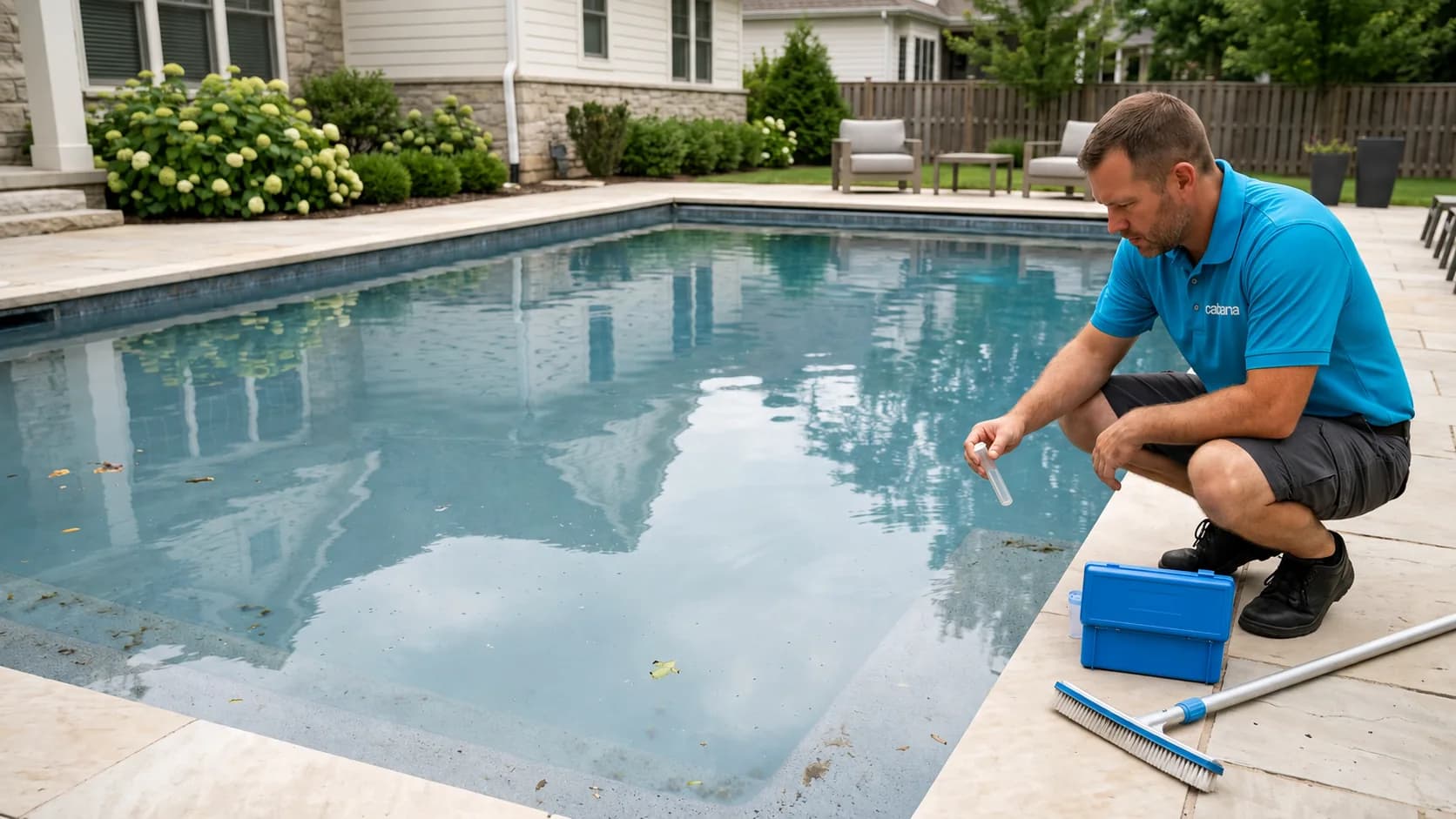
We recommend a full water-balance review at least once a year, alongside routine chemistry checks. Include calcium hardness and stabilizer, not just chlorine and pH. Test sooner when readings keep climbing or the water becomes difficult to manage.
Most California pools operate year-round. The end of swimming season isn't, by itself, a reason to replace the water. The useful question is whether replacing water will correct a measured problem.
Your tap water changes how soon replacement helps
Advice to start fresh with tap water works only when that water improves the reading you're trying to lower. We compare pool water with the actual refill source before choosing a replacement amount.
| Area or condition | What changes in the pool | What to do before draining |
|---|---|---|
| San Diego, Los Angeles, and Orange County | Much of the imported supply arrives hard and mineral-heavy. | Compare pool and tap-water calcium hardness. A refill won't remove all calcium. |
| Hot inland Southern California valleys | Higher evaporation leaves minerals behind, while top-ups add more. | Track hardness through the hot season, especially when adding water frequently. |
| Coastal Southern California | Milder marine-layer conditions generally reduce evaporation compared with hotter inland locations. | Use measured trends instead of copying an inland pool's replacement schedule. |
| Sacramento area and the East Bay | River-sourced supplies are generally much softer. Low calcium can be the balance problem. | Check hardness before replacing water that may already need more calcium. |
Topping up after evaporation isn't the same as replacing water. Evaporation removes water while leaving most dissolved substances behind. Deliberately removing pool water takes some of those substances out with it.
Sacramento's hot summers still increase evaporation and chlorine demand. Soft source water doesn't prevent stabilizer buildup from chlorine products, so hardness alone cannot set the schedule.
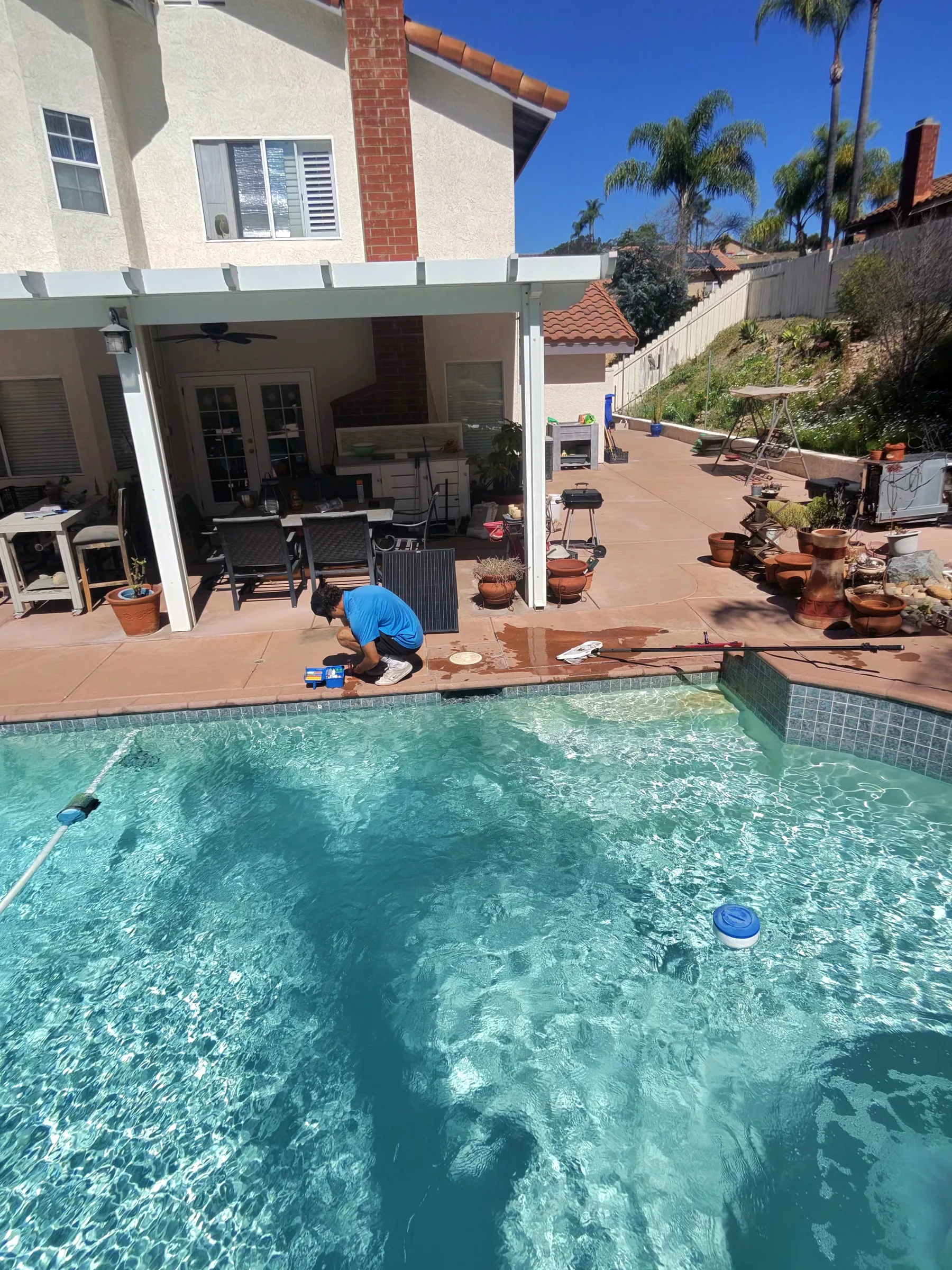
Use these readings to decide whether dilution will help
Clear-looking water can still contain too much stabilizer or calcium. Cloudy water can have a problem that doesn't require draining. These tests help separate those decisions. Concentrations below use ppm, meaning parts per million.
| Reading | How to use it | When replacement helps |
|---|---|---|
| Stabilizer, also called cyanuric acid or CYA | It protects chlorine from sunlight. Around 30 to 50 ppm is a common target for outdoor pools using conventional chlorine; salt systems may specify higher targets. | Consider dilution when a confirmed reading exceeds the target for your sanitizing system. |
| Calcium hardness | Above roughly 400 ppm, assess scale risk with pH, alkalinity, and water temperature. This isn't an automatic drain threshold. | Replacement can lower hardness when the refill water contains less calcium. |
| pH | A typical operating range is 7.2 to 7.8. A high reading alone usually calls for a balance adjustment. | Don't drain solely because pH needs correction. |
| Salt | Compare the reading with the salt-system manufacturer's operating range. | Dilution can correct excess salt. Confirm an unexpected equipment reading with a separate test first. |
Total dissolved solids, or TDS, measures the combined dissolved material in the water. A high number doesn't identify which substance needs attention. Salt pools intentionally contain substantial dissolved salt, so one TDS cutoff shouldn't decide every pool's draining schedule.
If stabilizer rises repeatedly, check your chlorine label. Products containing trichlor or dichlor add stabilizer as they sanitize. Replacing water without addressing that continuing input can recreate the same problem.
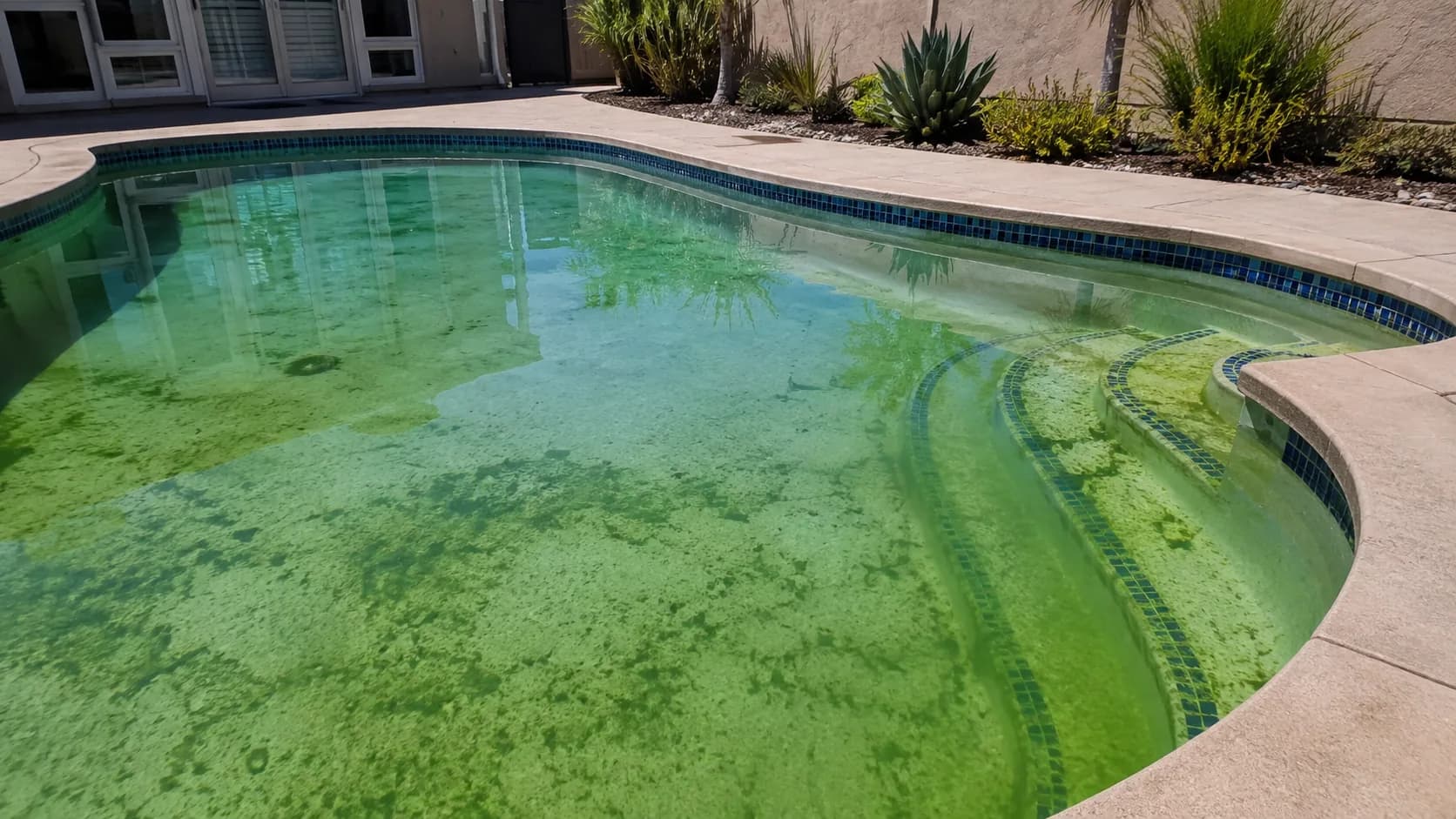
Green water and weak chlorine don't automatically mean drain
The advice to replace water when chlorine won't hold has a useful part: repeated trouble deserves a closer check. It becomes wasteful when water replacement substitutes for finding the cause.
Hot inland weather increases chlorine demand. Santa Ana winds can add leaves, dirt, and pollen quickly. Neither event proves that the pool needs new water.
Before recommending replacement, we check free chlorine, stabilizer, pH, circulation, and filter condition. If chemistry is manageable and the equipment works correctly, cleaning and treatment may resolve the problem while keeping the water.
Replacement becomes more useful when testing also finds excessive stabilizer or minerals that ordinary filtration won't remove. A standard pool filter catches particles; it doesn't remove dissolved calcium or stabilizer.
If recurring green water is the main concern, our guide to why a pool keeps turning green explains the checks that come before choosing treatment.
Calculate a partial refill before considering a full drain
Replacing all the water isn't necessary when a smaller exchange reaches the target. The amount depends on both the pool reading and the refill-water reading.
For example, suppose stabilizer measures 100 ppm and the chosen target is 50 ppm. If the refill water contains no stabilizer, replacing half the water would theoretically reach that target. This assumes a single removal followed by refilling, with no additional stabilizer added.
Calcium needs a different calculation because tap water already contains some. If pool hardness is 600 ppm and tap hardness is 200 ppm, replacing half produces approximately 400 ppm. If the tap water instead measures 400 ppm, that same exchange produces approximately 500 ppm.
These are mixing examples, not instructions to lower your pool by half. Safe removal depth depends on the pool and site conditions. Smaller repeated exchanges also use more total water to achieve the same reduction because each later exchange removes some new water.
Our technicians determine the safe approach before water removal. After refilling and circulating, retest before adding chemicals based on the old readings.
Check these conditions before booking water replacement
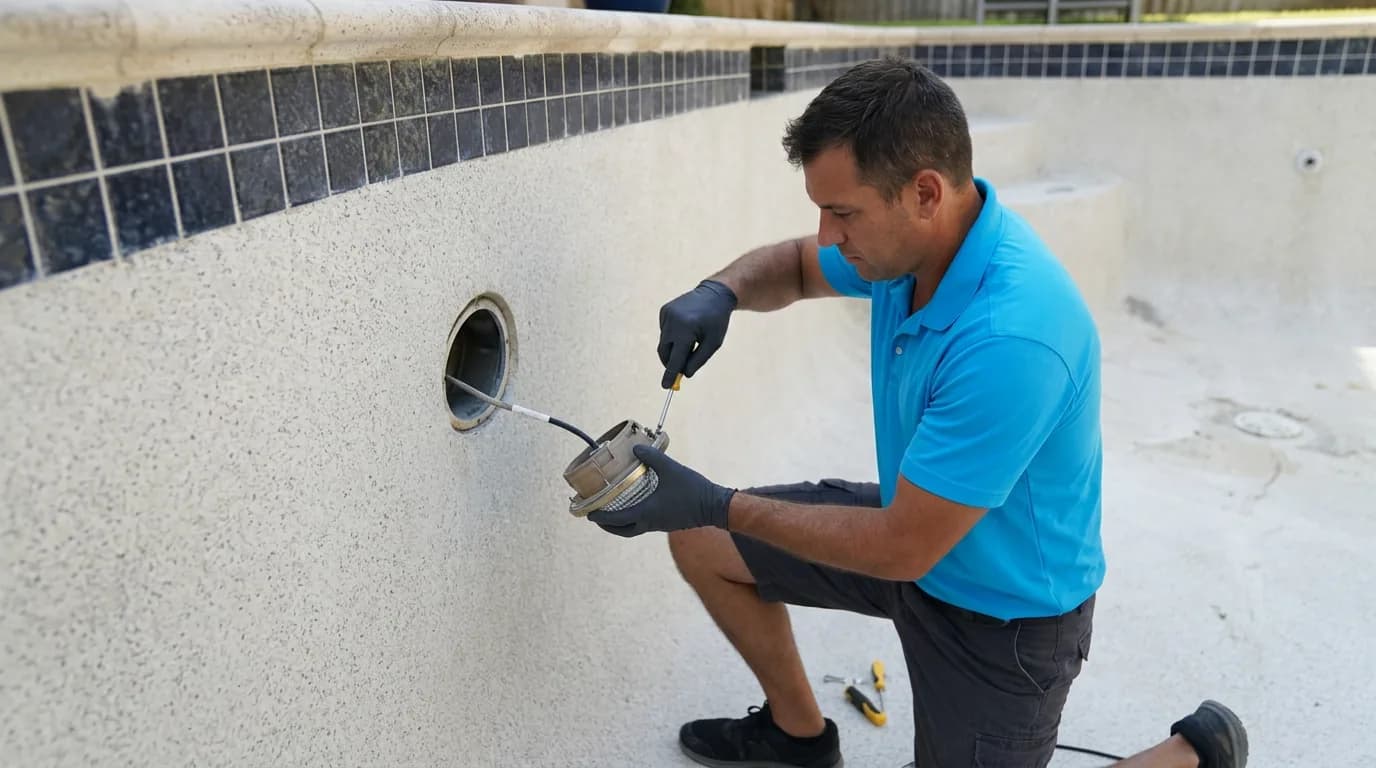
A chemistry reason to replace water doesn't mean today is a safe day to empty the pool. Groundwater can push against an emptied pool, and exposed surfaces can suffer in hot weather. Partial draining also needs an assessment.
- Confirm the problem reading. Have an unexpected result checked before committing to water replacement.
- Test the refill source. Confirm that it will improve the specific chemistry problem.
- Check the pool and weather. Have the pool type, groundwater risk, recent rain, and forecast assessed before lowering the water.
- Decide where the water will go. Confirm disposal requirements with the local wastewater or stormwater authority before arranging drainage.
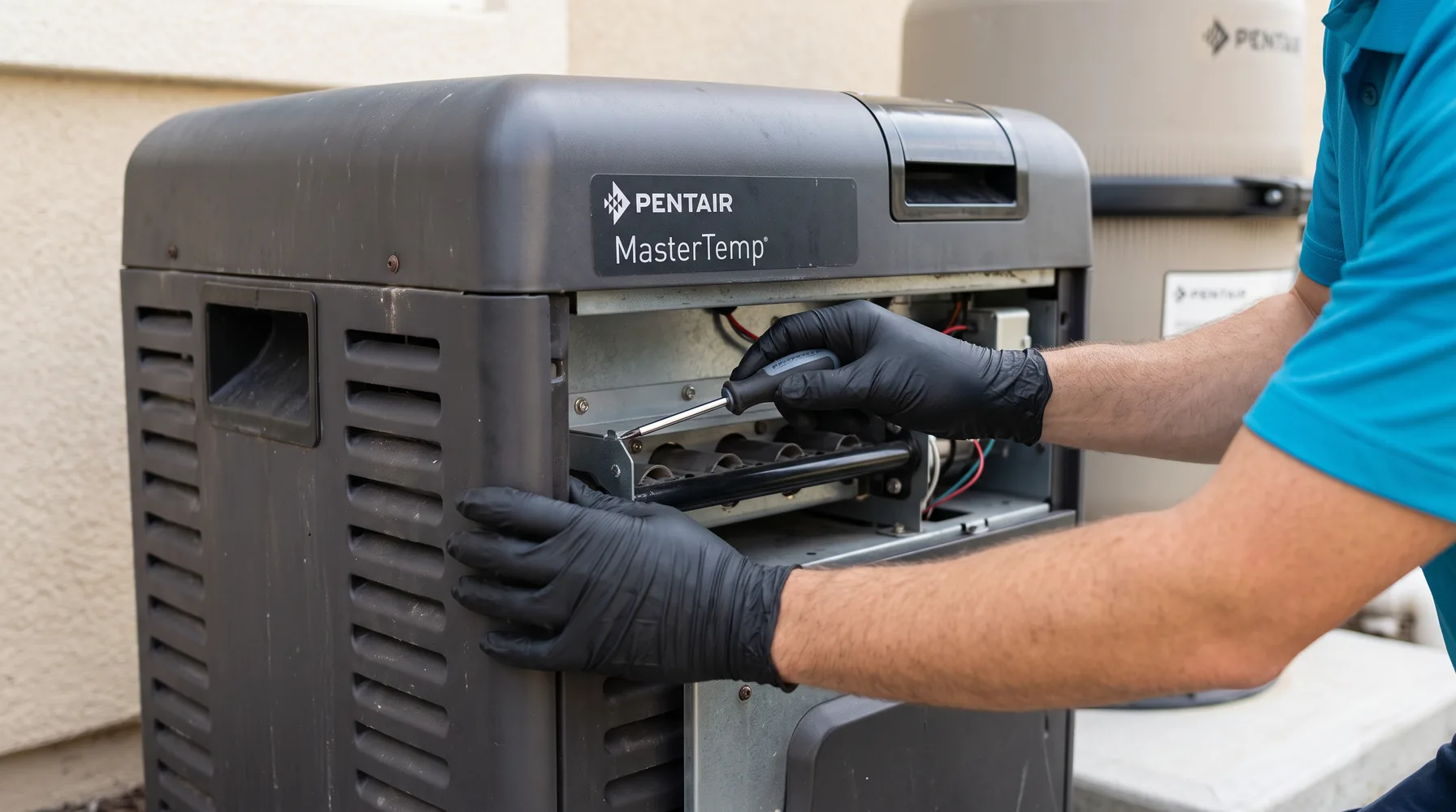
- Plan equipment shutdown and restart. Pumps and heaters must not run without adequate water. Include automatic schedules in the shutdown plan.
- Arrange refilling and balancing. Confirm water access, supervision, and follow-up testing before removal begins.
Pool volume, access, disposal arrangements, replacement amount, and restart needs affect the service scope. See our pool draining and restart service details and pricing when planning the work. Bring your latest test results and the chlorine product you use so we can assess the next step.