Lower alkalinity with measured acid doses
To lower alkalinity in your hot tub, add a spa-approved acid product in measured doses, circulate, and retest toward the manufacturer's target, commonly 80 to 120 ppm. Acid also lowers pH, so stop adding it if pH reaches 7.2 and use aeration to raise pH before continuing.
Total alkalinity measures the water's ability to resist changes in pH. Excess alkalinity can make elevated pH difficult to correct. But a high pH reading alone does not prove that alkalinity is high. Test both before choosing a treatment.
If your water is already due for replacement, consider draining before starting repeated chemical adjustments. A hot tub's small volume makes water replacement a practical option, provided you check the replacement water first.
Test alkalinity, pH, and calcium separately
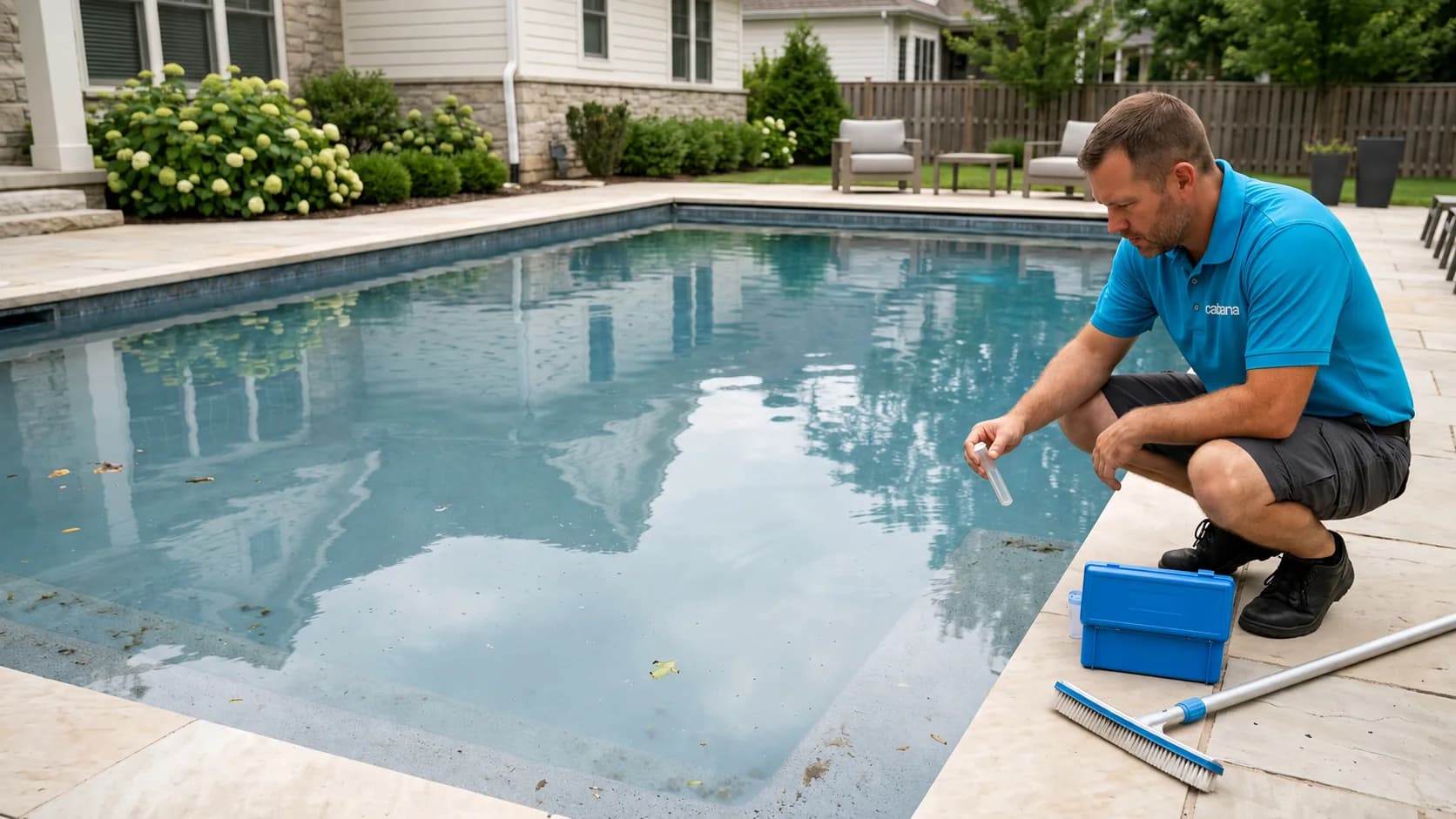
Use a drop-based alkalinity test to confirm a high strip reading, especially when the color falls between two blocks. Check pH, sanitizer, and calcium hardness too, then compare your results with the spa manufacturer's requirements.
Calcium hardness and total alkalinity both use ppm, but they measure different things. Acid lowers alkalinity; it does not remove calcium. Treating a high calcium reading with repeated acid additions can leave you with low pH and the original hardness problem.
| Your readings | What to do next |
|---|---|
| Alkalinity above target, pH above 7.2 | Calculate a controlled acid dose and monitor both readings. |
| Alkalinity above target, pH at or below 7.2 | Pause acid treatment and raise pH through aeration. |
| Alkalinity within target, pH high | Correct pH without chasing a lower alkalinity number. |
| Calcium hardness high, alkalinity normal | Evaluate replacement water hardness before choosing dilution. |
Test your hose water separately if the problem appeared after filling or repeated top-offs. Southern California supplies commonly arrive hard and mineral-heavy. Sacramento and East Bay supplies are generally softer. Neither condition replaces an alkalinity test: hard water does not automatically require more acid, and softer water can still need alkalinity correction.
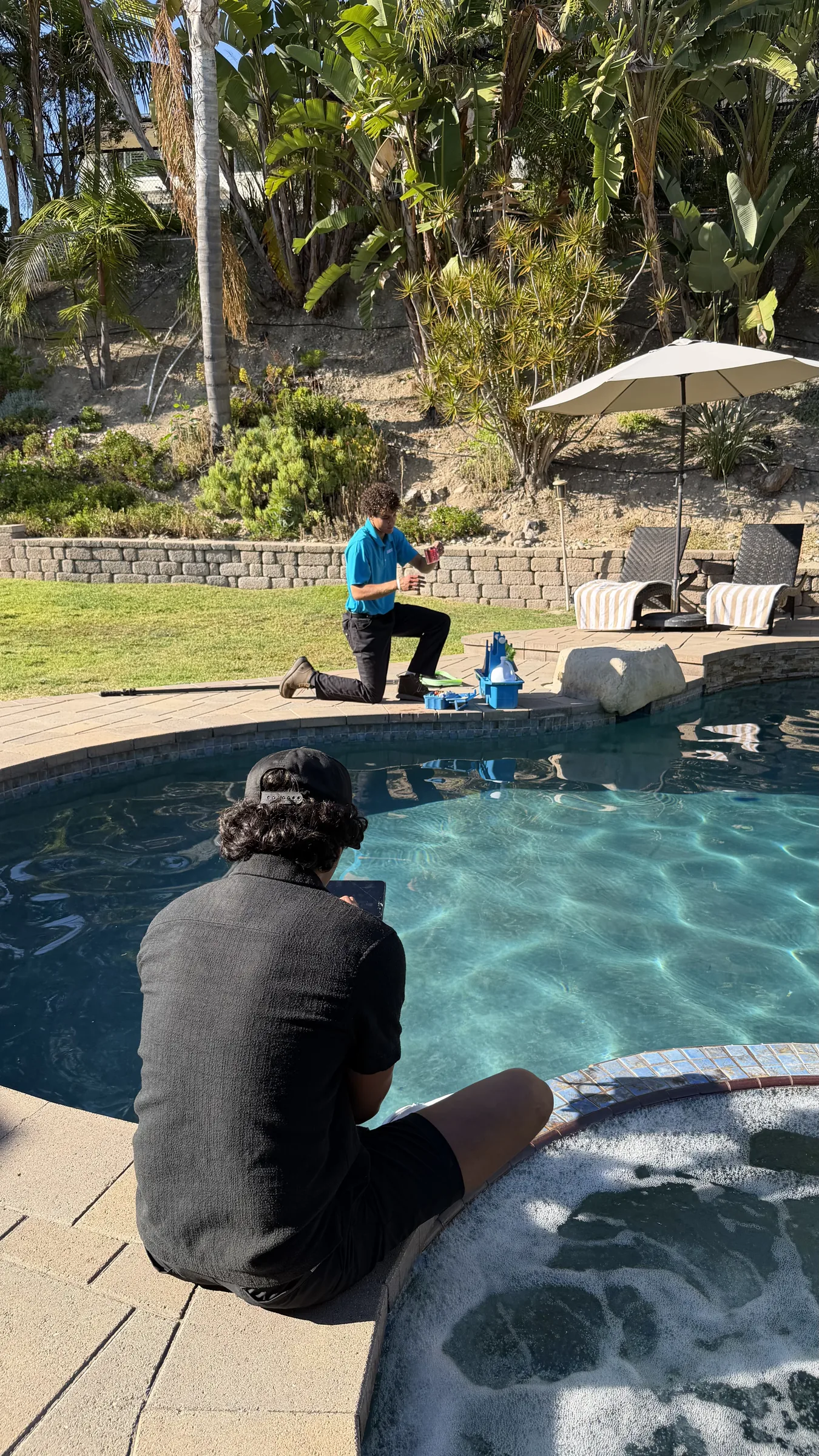
When draining beats repeated dosing
Choose acid correction when your water is otherwise in good condition and alkalinity is the main problem. Consider a partial or full drain-and-refill when the tub is near its scheduled water change, or sanitizer byproducts and dissolved solids have accumulated. Lowering alkalinity does not remove those accumulated substances.
A partial refill can reduce alkalinity when the replacement water tests lower than the tub water. You can estimate the benefit before draining: replacing half of water measuring 200 ppm with fill water measuring 80 ppm produces approximately 140 ppm alkalinity before further treatment. This is a dilution example, not a dosing instruction.
If both samples measure 200 ppm, replacing water will not meaningfully lower alkalinity. Fresh water may still be worthwhile for removing accumulated waste, but you should expect another alkalinity adjustment afterward.
In San Diego, Los Angeles, and Orange County, test fill-water calcium hardness as well. Replacing mineral-heavy water with similarly hard water offers limited hardness reduction. If you drain, follow your spa manual's shutdown and refill sequence, including switching off equipment before draining. Restore the required water level and circulation before restarting the heater.
Calculate each dose from gallons and product strength
Your dose depends on actual water volume, the alkalinity reduction needed, and product strength. Confirm capacity from the spa's documentation and account for its operating fill level. A dose intended for 500 gallons is too large for a tub holding 300 gallons.
Choose a pH decreaser specifically labeled for spa use and compatible with your equipment. Many contain sodium bisulfate. Products differ in concentration and directions, so a universal spoonful or cup measurement is unreliable. Use the label's alkalinity instructions or the manufacturer's approved dosing guidance.
Record your starting readings and the quantity added. If the label calls for staged additions, complete each mixing and testing interval before adding more. Never calculate the next dose from the original reading after the water has changed.
- Keep bathers out while adding and mixing chemicals.
- Wear the eye and skin protection specified on the label.
- Keep acid separate from chlorine and every other treatment chemical.
- Follow the label's addition method, including whether predissolving is required. Never pour water into acid.
- Keep the cover open during treatment and maintain ventilation.
Circulate and retest before repeating the acid cycle
Circulate the water during dosing as directed by the product label. Where your controls allow it, keep air injection off during initial mixing. Added air can raise pH, making the initial acid response harder to interpret.
Allow the full mixing interval specified by the product before sampling again. If its directions require 30 minutes of circulation, a test after five minutes is too early to guide another dose. Follow your product's interval rather than a universal waiting time.
Take a fresh sample away from the chemical addition point and return outlets. Record both alkalinity and pH. If alkalinity remains above target, another measured dose may be appropriate, provided pH has enough room to fall without dropping below its operating range.
If pH reaches 7.2 while alkalinity remains high, pause acid additions. Turn on aeration using your spa's air controls. Releasing carbon dioxide raises pH without raising total alkalinity. Check progress after roughly 15 to 30 minutes, allowing more time if needed.
Once pH has recovered, retest and calculate any further dose from the new readings. Never deliberately drive pH below the operating range to accelerate the process. Do not substitute baking soda for aeration: baking soda raises alkalinity. Ordinary pH increasers can also undo part of your correction.
Check pH and sanitizer before using the tub
Stop correcting alkalinity when it reaches your equipment's recommended range, with pH generally between 7.2 and 7.8. Chasing exactly 100 ppm is unnecessary when the manufacturer accepts a range and pH remains stable.
Check that sanitizer meets the product and spa requirements too. Balanced alkalinity alone does not establish adequate disinfection. Keep bathers out until the chemical label's waiting period has passed, added chemicals have dispersed, and pH and sanitizer are within their recommended ranges.
Keep a simple record of starting readings, quantities added, mixing intervals, and final results. Avoid adding an extra dose just before closing the cover and assuming it will finish the correction.
Retest after top-offs and act on recurring problems
Recheck pH and alkalinity the following day after a substantial correction. Thereafter, follow your spa's testing schedule and test again after significant top-offs or a refill.
Evaporation leaves dissolved minerals behind, while replacement water introduces more. With mineral-heavy Southern California fill water, repeated top-offs can increase the mineral load even when the water level looks unchanged. Keep the cover fitted between uses to reduce evaporation.
If pH rebounds while alkalinity stays within target, check your air controls and normal chemical routine before repeating the alkalinity treatment. Persistent aeration can raise pH without a corresponding rise in alkalinity.
Arrange our hot tub cleaning service for a drain-and-refill or water balancing if your water needs replacement, readings remain inconsistent, or repeated acid additions keep pushing pH too low. Have your spa model, chemical labels, and recent test results ready. Our technicians confirm equipment compatibility after seeing the system and choose the next measured step.