



Once debris builds up in your pool drains, it can disrupt the entire filtration system, leading to algae growth, extra wear-and-tear on your pump, and all kinds of other problems. You may be able to solve this issue on your own with the help of a vacuum or hose, or it might be necessary to hire a pool drain cleaning service — we’ll show you exactly what you need to do next below.
How To Clean Main Drains and Skimmer Drains
All swimming pools rely on a filtration system to keep the water clean and clear. The drains are a key part of this system, with most pools having main drains located at the bottom of the pool and skimmer drains at the top.
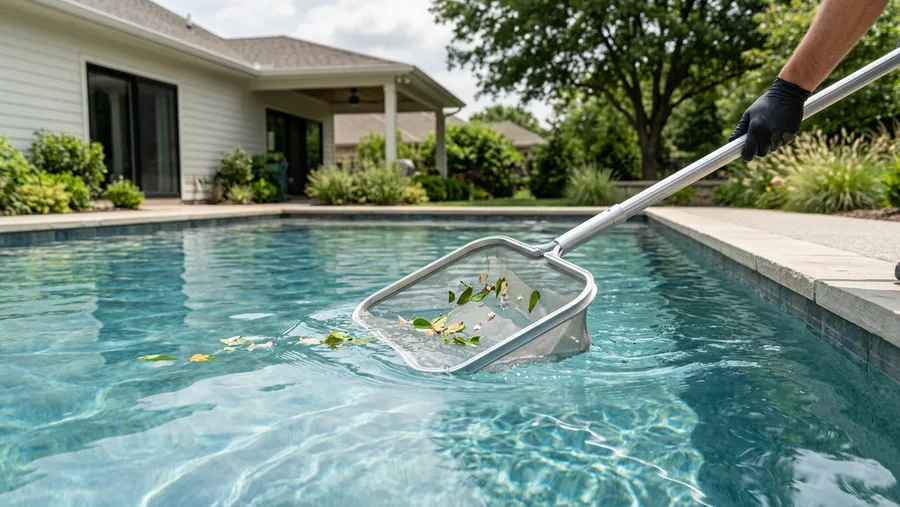
The main drains capture debris that sinks, such as dirt and sand, while the skimmer drains capture debris that floats, such as leaves and hair. Both of these types of drains have some sort of physical barrier that collects large debris (a grate in the case of the main drains and a basket for the skimmer drains), and they each run to the pool filter, which removes smaller particles from the water as well.
When these drains get clogged, the filtration system can no longer function properly. You may then notice the water getting cloudy or algae growing in your pool. A pulsing or unusually loud pump is another sign that one of your drains might need to be cleared out.
The first step is to dump out your skimmer drain baskets and remove any debris that’s stuck in the main drain grates. If that didn’t take care of the problem, then there’s probably a clog somewhere deeper in the drain pipes.
Pool systems typically have a three-way diverter valve, also known as a Jandy valve, that connects the main drains and skimmer drains to the pump/filter. While the pump is running, adjust this valve so that it cuts off the main drains, then adjust it so that it cuts off the skimmer drains — if one of these lines displays low pressure or causes the pump to lose section, then you’ll know that’s where your clog is.
Once you’ve diagnosed the issue, there are a few things you can try to solve this problem yourself:
- Flip the diverter valve on and off: Opening and closing the diverter valve a few times may dislodge whatever’s clogging your drain line. Don’t do this too quickly, though. It’s more effective to leave the line closed for a few seconds and then open it up for a few seconds each time.
- Use a wet/dry vacuum: Turn the pump off and connect a wet/dry vacuum to your pool’s plumbing system. Many pools have a dedicated vacuum line for cleaning devices — you can try attaching the hose of your wet/dry vacuum here, or you can plug the hose into one of your skimmer drain lines if that’s closer to where you think the clog is. Then just let the vacuum run and see if it draws out any debris.
- Use a drain-cleaning bladder: A drain-cleaning bladder, like the Drain King, is a fairly affordable device for clearing out clogs. It attaches to the end of a garden hose, and when the hose is turned on, the plastic bladder inflates as water runs through it, forming a perfect seal with your drain and allowing the pressure of the water to push debris out the other end.
Still have a clogged pool drain even after trying all this? In that case, it’s time to call in the professionals.
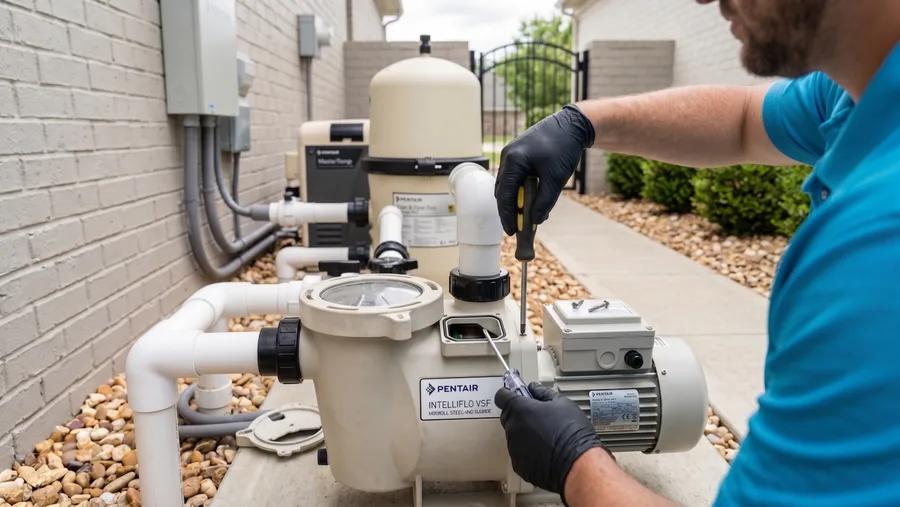
Indeed, a pool drain cleaning service can provide the expertise and equipment you need to take care of the most stubborn clogs. For example, many services will use CO2 or compressed air to blow out any debris that’s stuck in your pool drains, but this technique requires hundreds of dollars’ worth of equipment, and you risk damaging your drain pipes if you don’t know what you’re doing.
How To Clean Pool Deck Drains
Pool deck drains channel water from splashes and rain down into designated overflow areas. When these drains get clogged, standing water can collect on your deck, which is unsightly, can cause slips and falls, and feeds more debris into your pool.
These drains typically do have built-in grates, but over time enough dirt, sand, and other small particles can get through and clog up the works. And the grates can actually make pool deck drain cleaning quite difficult, as they may block you from running a hose anywhere except for where the drains let out — and attempting to run a hose through these openings will often just force debris further into the drains and make the problem worse.
The best solution here is to use a device like the Pool Deck Drain Janitor, which is a removable cover that is installed over a central point in your deck drain system. This will allow you to run a hose toward where the drains let out already, efficiently pushing debris out of the way.
Now, installing the Pool Deck Drain Janitor will require you to cut, file, and sand down a matching hole over that central point. If you don’t have the tools or experience for this task, you may want to hire a professional.
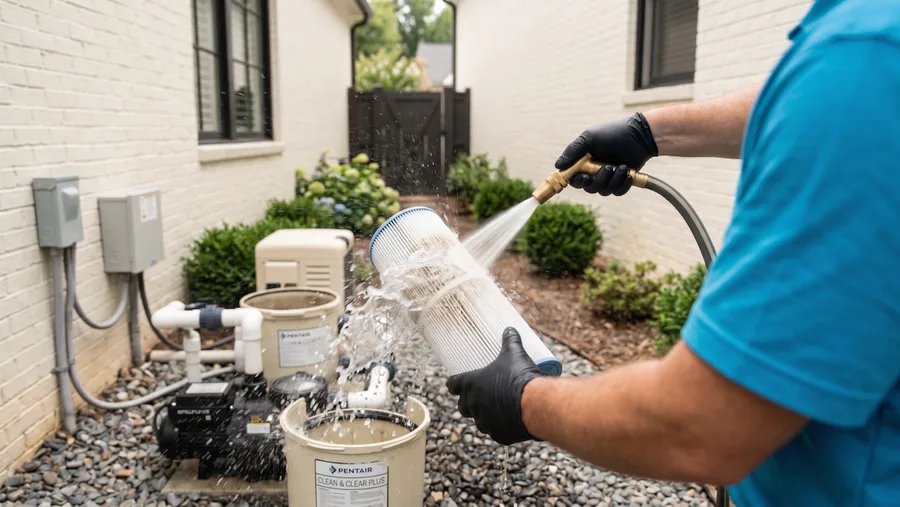
Also, a professional pool drain cleaner can use tools like a pressure hose or an auger to remove built-up debris from your deck drains after cutting the initial hole. After that, you’ll be able to keep the deck drains clean yourself by simply running a garden hose through it.
How Much Does A Pool Drain Cleaning Service Cost?
As mentioned above, there are certainly instances where you’ll need professional help to clean your pool drains.
Thankfully, this shouldn’t set you back too much. On average, the cost of a drain and filter cleaning service ranges from $60 to $125. And you would be wise to act on this issue fast, as clogged drains can cause the other components in your system to break down much more quickly — replacing a pump costs $700 to $1,300, and replacing a filter costs $1,500 to $2,000.
Need an estimate for your particular issue? Contact the experts at Cabana Pools to get started on your quote today.


